English
 Español
 Français
 Deutsch
 Italiano
 Português
![Julia Fish, Before and since : Capriccio, after Epitaph [ from J.S. Bach BWV1080- in contrario motu ] (detail), 2022-25. Courtesy of David Nolan Gallery](/attachments/f3036eb381c5beb19080a2fbe51ae766181ba9d4/store/fill/930/523/83e2732d922820457f8e7cbd5ff09dd423f55bd6fd48e73a82070217041c/Julia-Fish-Before-and-since-Capriccio-after-Epitaph-from-JS-Bach-BWV1080-in-contrario-motu.jpg)
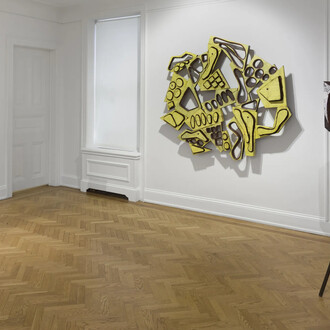
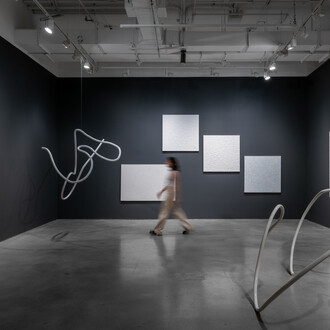
Poetry, music, architecture presents drawings that reflect the natural connection between sound, language, and built form: three ways we shape and experience the world. Like a sonnet’s structure, musical notation, or an architect’s blueprint, drawing becomes a tool for thinking, planning, and giving form to ideas. Of the three media, music alone is formless in its completed state, yet it continues to inspire artists who work with and through structure. Poetry, music, and architecture share rhythm, harmony, and cadence. The works by Richard Artschwager, Barry Le Va, Louis I. Kahn, Julia Fish, and Jorinde Voigt each engage with language, sound, and structure in unique ways. Together, their art offers a new understanding of the interconnected nature of words, rhythm, and space—one that puts drawing at the centre of this triple Venn diagram, the core condition for thought to become form.
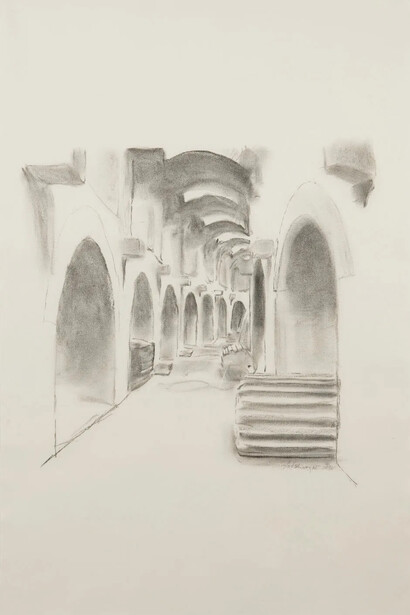
Richard Artschwager’s Arched passageway draws directly from architecture and interiors, and carries a sense of sound moving through space, as does Window with its rhythmic lines. The everyday object was a central part of Artschwager’s imagination. “Door, Window, Table, Basket, Mirror, Rug”—six objects he regularly returned to—became a long-standing vocabulary from the 1970s onward, appearing across drawing, sculpture, and painting. One example from this series is included in the exhibition.
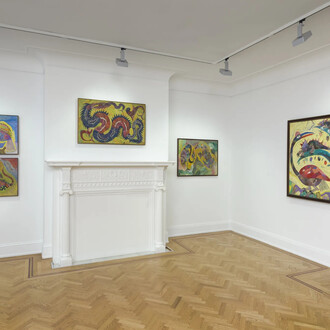
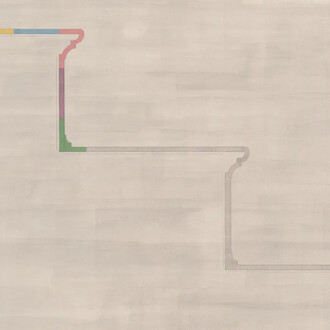
Julia Fish’s Capriccio works connect music and architecture through language and the dual meaning of the term: in painting, an architectural fantasy that assembles imagined spaces; in music, a composition that is free in form, fast, expressive and virtuosic. Her works reference through their title and refer to these qualities, uniting structure, variation, and a sense of interior rhythm.
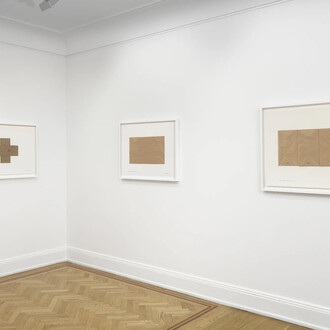
Louis I. Kahn’s drawing Battlement, Carcassonne, France is an expression of architectural observation with markings that resemble asemic writing. His View from the parthenon, Acropolis, Athens, Greece reflects the period he spent in Rome and Greece—years that shaped his understanding of light, structure, and the poetic clarity that defined his later work and philosophy.
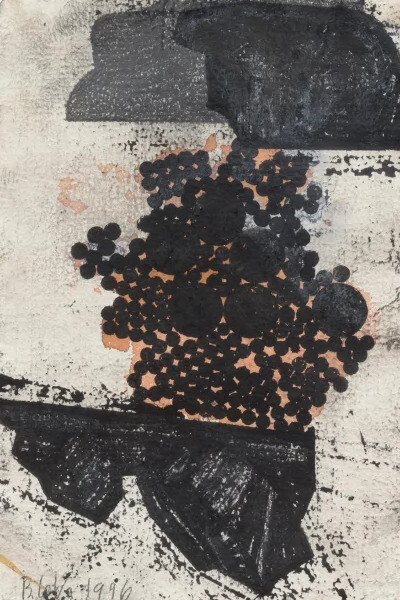
Barry Le Va’s Studies for a bunker sculpture draw on Paul Virilio’s Bunker archaeology, which documents the rounded concrete bunkers built along the Atlantic Wall. Designed to absorb and deflect impact, these structures represent an architecture of violence. In his drawings, silhouettes of bunkers appear alongside dense “coagulations,” which are symbolic of blood and its capacity to seal and protect. Large forms press inward around smaller circular shapes creating a feeling of tension—a body protecting itself, or from another perspective, looking out as through a mask—an inward-turning architecture that is both defensive and aware of outside force.
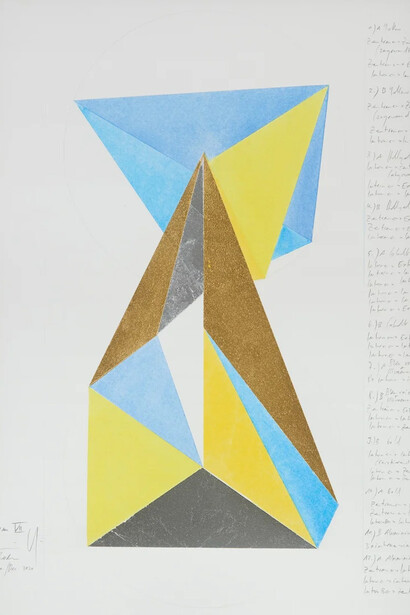
Jorinde Voigt’s Poem series puts experimental architectural forms into dialogue with written text. The geometric structures carry a sense of complex architecture, with the poem itself embedded within the form. Working primarily through drawing, Voigt creates compositions that read like musical scores or conceptual diagrams, mapping the movement of perception, memory, and thought.