English
 Español
 Français
 Deutsch
 Italiano
 Português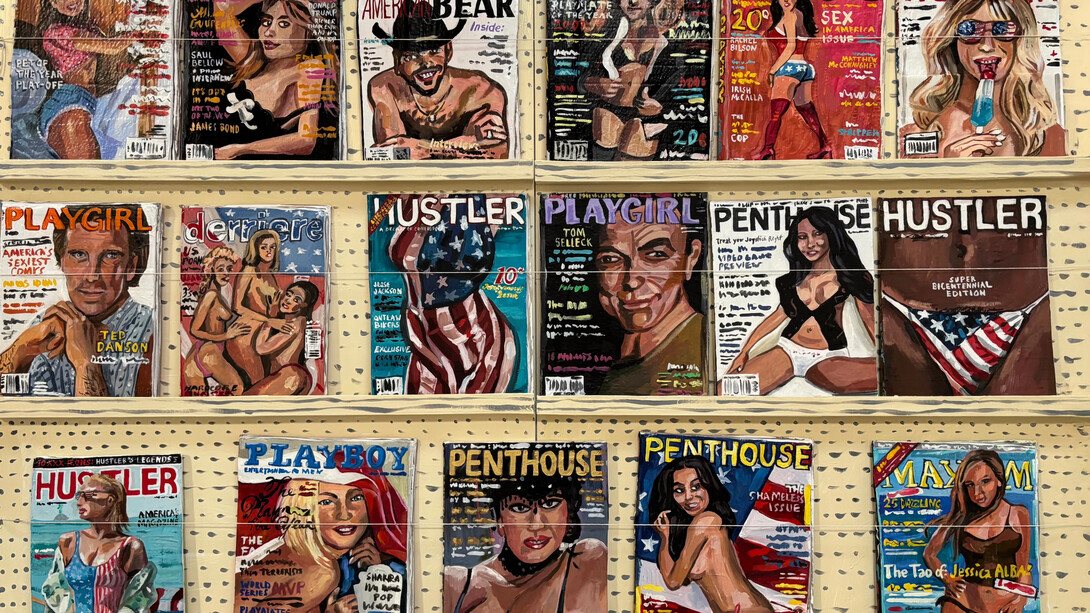
Before the internet mediated desire, Generation X—my generation—learned about sex through experience: messy, human, and unfiltered. Our education unfolded in bedrooms, cars, and nightclubs entered with fake IDs, soundtracked by the ragged defiance of Courtney Love and the unapologetic fury of 1990s riot grrrl feminism. Unlike our younger counterparts, we came of age—and defined ourselves sexually—before the onslaught of internet porn and the slow erosion of intimacy brought on by smartphones and digital distraction. In an era when a screen can dull the libido and physical sex is in decline, that pre-internet reality of tangible, erotic self-discovery feels like a bygone luxury, as imperfect as it was.
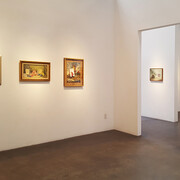
SeXObjects at Craig Krull Gallery playfully and earnestly revisits that visceral era, when intimacy was chaotic, risky, and real—before swipes, screens, and algorithms reprogrammed how we connect and feel. Fueled by nostalgia and yearning, the exhibition invites viewers back into a tactile, pre-internet universe, when desire was discovered in the hushed corners of sex shops, the thrill of a secret club, or the glossy pages of a magazine—through the work of six artists whose contributions are challenging, personal, honest, and sex-positive.
With her signature blend of wit and cultural critique, artist Jean Lowe presents Newsstand (Cracker barrel), a life-sized magazine stand stocked with hand-painted papier-mâché facsimiles of vintage issues of Playboy and Hustler. Lowe reflects on how once-“naughty” images—artfully photographed nudes paired with serious journalism—now seem “almost wholesome in relation to the online and anonymous, fast, fragmented, decontextualized and stimulation/gratification focused sexual media of today.” Lowe’s work brings us back to a private nostalgia, recalling the thrill of finding a hidden copy of an adult magazine in a parent’s drawer, while offering a meditation on the dizzying pace of cultural change around the subject of sex.
Interdisciplinary artist Alia Malley presents Laid, a custom scent that conjures the messy, smoky, chaotic intimacy of pre-internet sexual adolescence. Notes of boozy dive bars, second-hand leather jackets, cigarettes, and charged static evoke nights full of chemistry, adventure, and sticky vulnerability. Housed in a vintage CK One bottle that denotes the transitional era of the 1990s, the scent is an invitation: viewers can dip a blotter into the open bottle and carry it through the gallery, engaging with desire on their own terms. “Everything was grainy with sloppy borders, like a 35mm party photo from a Yashica T4.” Malley writes, “There were complex systems at work, but they were human—instinctual and organic in nature, not machine-driven or derived. We had no idea what we were doing, but we did it anyway.”
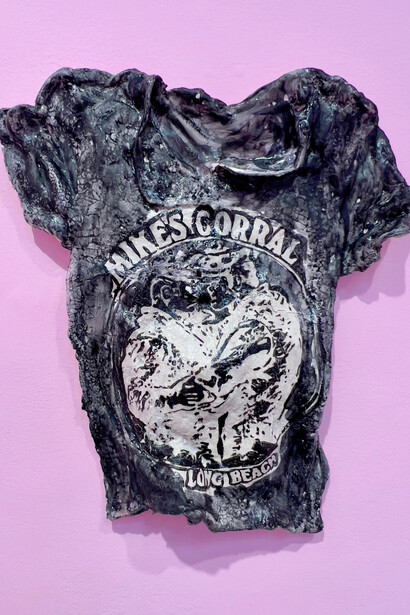
Elizabeth Scott’s ceramic “t-shirts” act like mixtapes of memory, desire, and longing. Drawing on her upbringing in San Jose, California and the Bay Area’s queer counterculture, Scott translates the secret codes of underground sexual communities into tactile, sculptural forms. Her adroit handling of clay brings the folds and creases of her t-shirts to life, as if they carry the intimacy of having been recently worn by a young body. She writes: “Before the internet collapsed everything into the same screen, desire moved differently. I learned (about sex) through record stores, books, mom and pop video shops, and whatever I could get my hands on. I became fascinated by how people used codes: language, fashion, symbols, visual cues. These signals created informal systems of trust and recognition, where access often depended on being able to read between the lines. This work pulls from that visual and emotional language: leather bar flyers, Folsom Street Fair photos, and the subtler cues embedded in music, television, and film. It is a love letter to California’s history of self-invention and the ways people have carved out space for identity, kink, and intimacy, often by hiding things in plain sight.”
Artist Abby Aceves channels adolescent memories of desire and defiance into Ezequiel, a bondage mask that is both a symbol of temptation and transformation. Employing the fine leatherwork and resin detailing that define her recent practice, Aceves gives physical form to the “forbidden” thrills and impulses that society has long sought to repress. Rooted in recollections of a “sinful” sexual awakening, her work confronts the shame and silence historically imposed on women’s pleasure. By reclaiming and materializing these impulses, Aceves challenges the cultural narrative that female desire must remain concealed under a mask of modesty. As she writes, “My work explores this tension—the space between repression and freedom, guilt and pleasure. I reclaim those hidden feelings and give them form. I want to challenge the narrative that female desire is something to be concealed. By confronting these taboos openly, I hope to create space for others to see that sexuality, in all its complexity, can be a source of power, self-understanding, and liberation.”
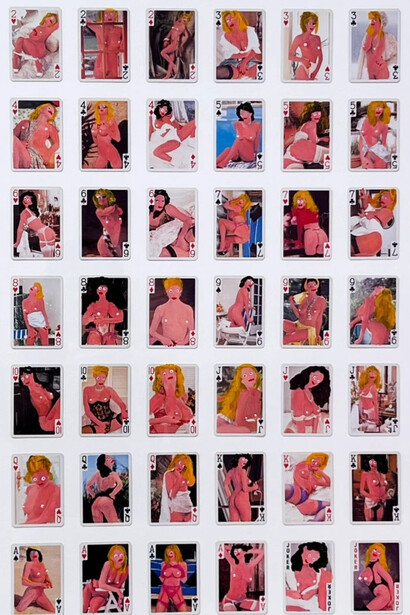
Costa Rican artist Valiente Pastel is drawn to what has been forgotten, discarded, or deemed inappropriate, transforming it into work that is intimate, poetic, and provocative—often using found materials such as vintage porn magazines and everyday objects. In his recent series, he paints playfully over the explicit imagery of vintage erotic playing cards, reimagining them as objects that capture the tactile, sensorial pleasures of erotic imagination in a pre-digital age.
Multimedia artist Lavialle Campbell is often motivated by the personal pleasure of meticulous craft. For SeXObjects, she offers Fringed, a luxurious hot pink, flocked butt plug layered with 10,000 Czech glass seed beads, loomed and strung on bonded nylon thread. The texture renders the object extremely tempting, daring the viewer to reach out and touch it.