English
 Español
 Français
 Deutsch
 Italiano
 Português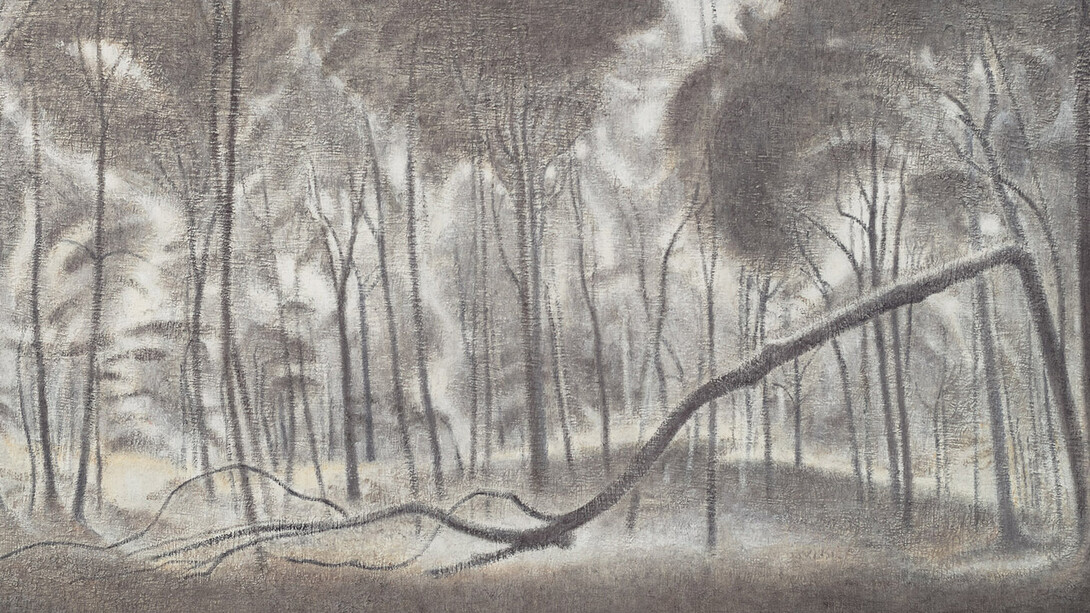
Bookstein Projects is pleased to announce an exhibition of recent paintings by Ron Milewicz. This is the artist’s first solo exhibition with the gallery.
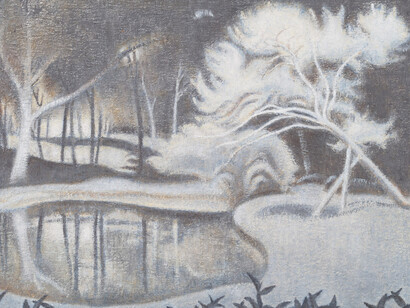
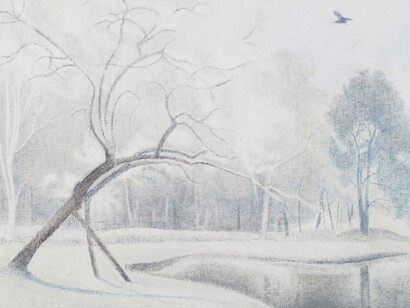
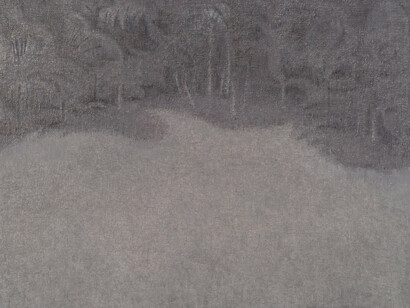
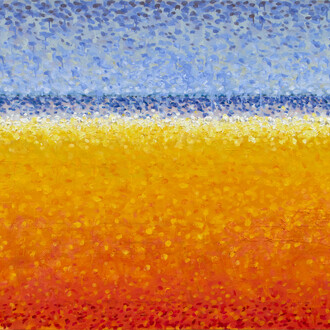
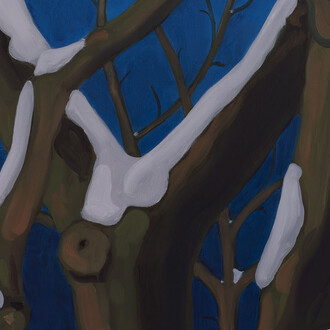
Ron Milewicz makes luminous images of the woods, meadows, and ponds of his immediate Hudson Valley environment using oil on wood panels. His paintings are meditations on the experiences of light and stillness that he first recorded in graphite drawings made directly in nature. While Milewicz made those subtly nuanced tonal drawings on site in a few sessions, he completed the oil paintings featured in this exhibition in his studio over considerably longer time frames. Deploying forthright, understated brushwork and thin, dry, transparent paint, Milewicz delicately layers a restrained palette of silver grays that shift imperceptibly toward darkly burnished golds and shadowy blues. In doing so, Milewicz forsakes a literal reliance on memory in pursuit of a distillation and transfiguration of his subjects—he reimagines familiar locales as otherworldly havens. Whether picturing a moonlit pond, the brightness of a July noon, the frenzy of a snow squall, a dark forest interior, or the long light shafts of the rising sun piercing through trees, these numinous paintings encourage an absorptive contemplation of their woodland settings that mirrors the slow process of discernment involved in their making.
Consistent with their limited, nearly monochrome palettes, these works are restricted in dimension. Because of, and not despite, their small size, they paradoxically encompass the committed viewer. As writer Christina Kee has observed of Milewicz's work:
Once drawn into the worlds Milewicz has created, the viewer’s eye and mind can travel freely through to the silent places, pathways and distances they offer up. Their space is as big as the experience of sight. The scale of Milewicz’s small works suggests other associations: they are invitational rather than confrontational, and by necessity built through brushstrokes that favor clarity over gesture. This implication of humility as applied to the works is accurate, but also inadequate. Given the artist’s forceful abilities of depiction they seem informed by what might be better described as a radical receptivity, a disappearing of self into the subject, which by extension offers the viewer an open-eyed engagement with nature’s wild and beautiful impulses.
Milewicz's landscapes are a call to silent, devotional attention. They offer viewers a poetic respite while urging them, without fanfare, to recollect the primacy of the natural world.