
 English
 Español
 Français
 Deutsch
 Italiano
 Português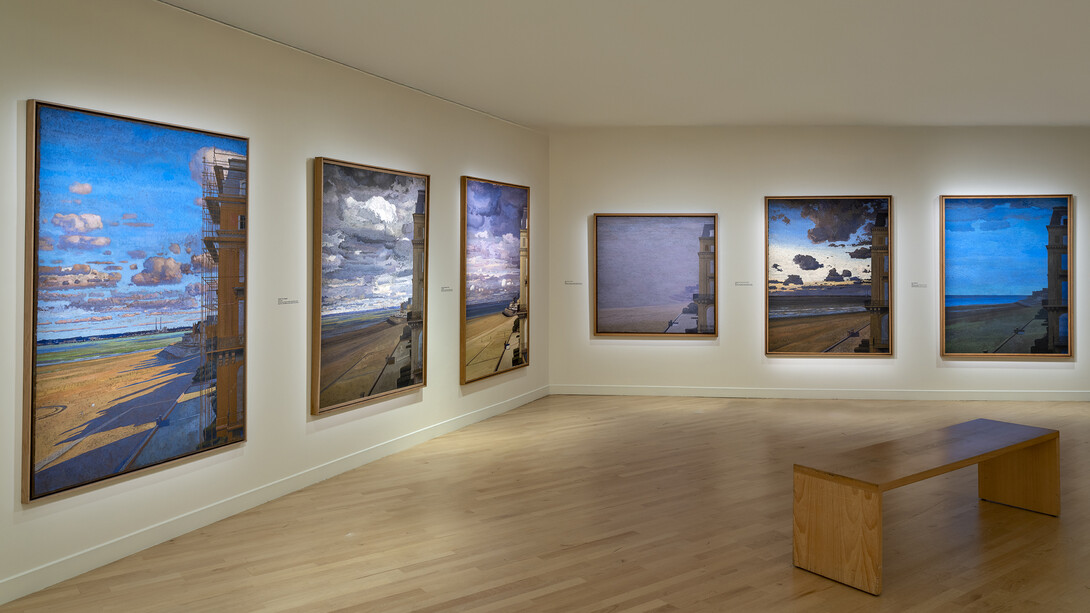
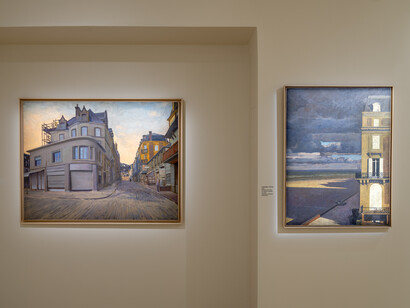
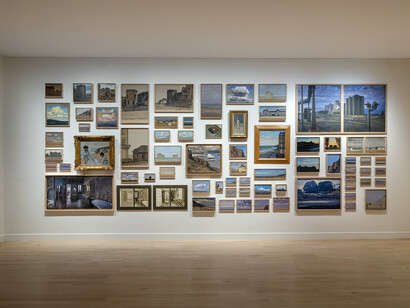
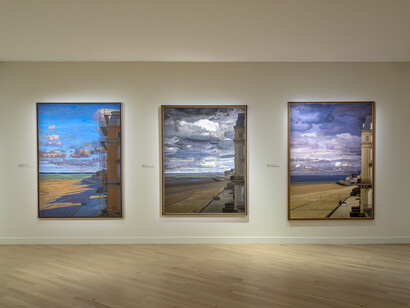
Jean-Baptiste Sécheret (born in 1957) is the tenth artist invited by the Musée Marmottan Monet to conceive an exhibition in dialogue with works from its collection. A painter whose practice unfolds through sustained series and repeated engagement with specific motifs, Sécheret focuses on landscapes shaped by human presence—monuments, industrial sites, houses, and urban structures. Working both en plein air and in the studio, he captures the immediate experience of place before transforming it through memory and painterly reflection.
For the Musée Marmottan Monet, Sécheret presents a group of paintings dedicated to the coastal landscapes and expansive skies of Trouville. Central to this body of work is the Hôtel des Roches Noires, a historic landmark that once stood within the artist’s daily field of vision during his time living in the city. Through nuanced variations of light, atmosphere, and perspective, Sécheret’s paintings reflect an attentive observation of place and the slow passage of time along the Norman coast.
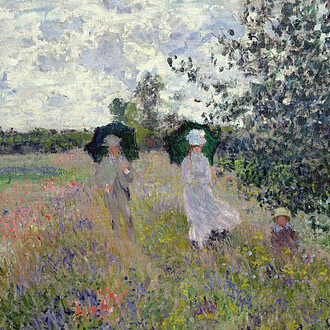
This focus naturally leads to a dialogue with two seminal works by Claude Monet held in the museum’s collection: Sur la plage de Trouville (1870) and Camille sur la plage (1870). As with Monet, the landscapes of Normandy are familiar and lived-in spaces for Sécheret, serving as sites of personal memory as well as artistic exploration. The encounter between their works highlights shared concerns with light, weather, and perception, while underscoring the continuity and evolution of landscape painting across generations.
![Mary Cassatt, Fillette dans un fauteuil bleu [Enfant dans le salon bleu] (detail), 1878. Courtesy of Musée d’Orsay](/attachments/3ddcf3630b2e6b21d055a8488350d949784be8fa/store/fill/330/330/9b97dc5b17cad42577b6453f0968e961b1231ceb2b8b5ceb2c09057b2695/Mary-Cassatt-Fillette-dans-un-fauteuil-bleu-Enfant-dans-le-salon-bleu-detail-1878-Courtesy-of.jpg)