English
 Español
 Français
 Deutsch
 Italiano
 Português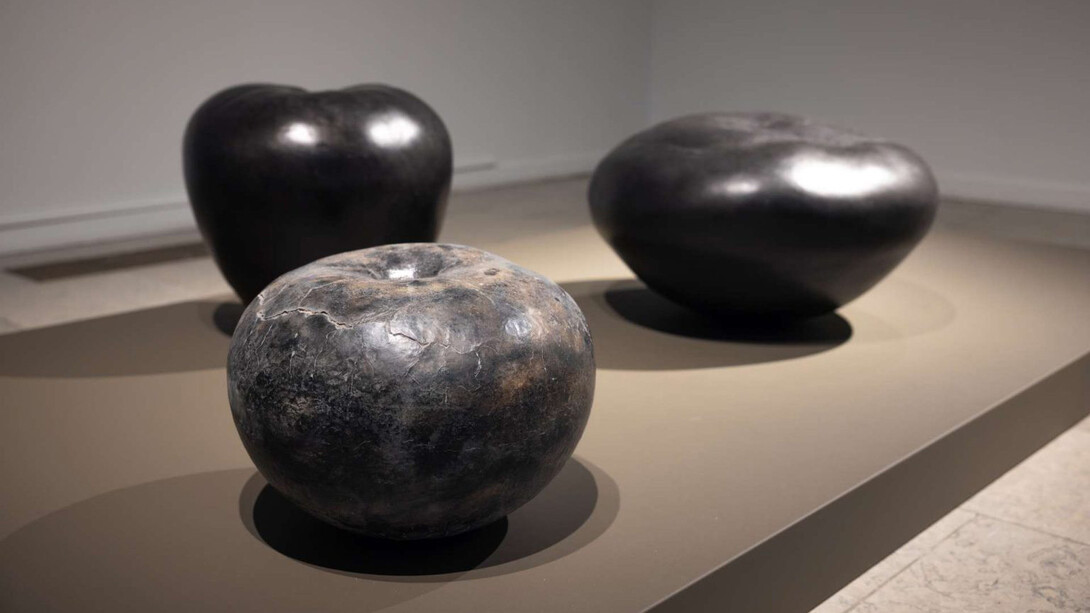
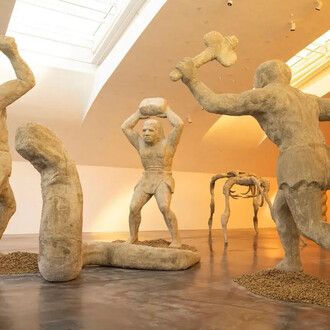
Umppa Niinivaara’s solo exhibition, Cave, invites viewers to dive beneath the surface and explore the multi-sensory, unique dimensions of sculpture. Behind the material-driven aesthetics lies a profound experience of nature.
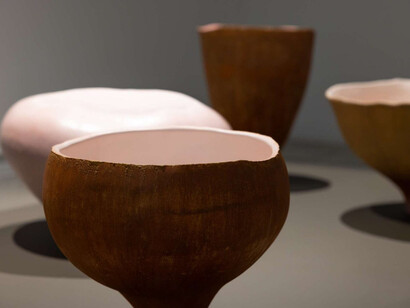
In recent years, ceramics has taken centre stage in Niinivaara’s artistic practice. In addition, she manually sculpts wood and molds polyurethane into artworks that create their own consistent world.
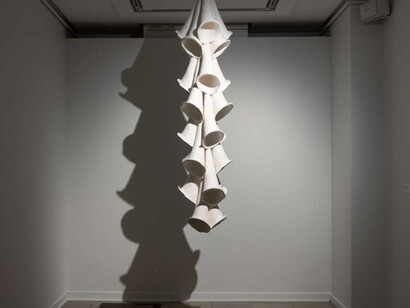
Ceramics is a sensuous art form: clay is shaped by hands, transferring bodily gestures into the material. Niinivaara creates her works through hand-building casting and using press-moulds. Working with clay is at once a rigorous and delicate work combining technique with intuitive formgiving.
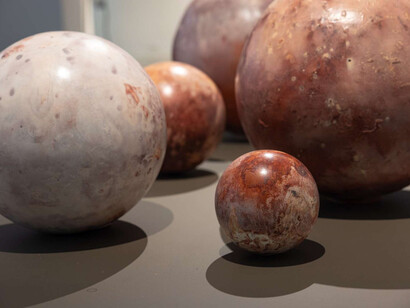
Niinivaara’s artworks are characterised by her free approach to sculptural techniques. At times, she chooses a traditional method, such as the Japanese raku, where thermal shock and smoke create distinctive surface patterns and colours. On the other hand, she may also produce an artwork using surface treatments or polyurethane. The technique itself does not justify the artwork’s form but rather serves Niinivaara’s aesthetics.
The expressive potential of ceramics lies in its haptic nature, as the feel of the material invites a sensory engagement from the viewer. The experience goes beyond looking, blending in with other senses.
Shaping the material transfers traces of the artist’s emotions and states of mind into the artwork. Niinivaara’s organic and timeless forms convey a profound sense of serenity and bliss. At the same time, they also embody darker aspects: intense fear and fearlessness, even intensive aggression and horror.
Niinivaara’s artworks emerge from views of pristine nature and underwater landscapes. Cave, signifying a realm distinct from the surrounding world and time, is associated with an intense emotional experience. As the earth’s inner space, a cave contains something eternal, secret, sacred and dangerous.
A cave is a strong metaphor for the unknown and the unconscious. In ancient philosophy, the cave served nly an illusion of reality, a world of shadows. Mystics and hermits retreated to caves to meditate and deepen their spiritual connection. In the psychoanalytical framework, a cave serves as an archetype of the inner journey or personal transformation.
Much like the process of creating sculptures, being in the presence of sculptures prompts viewers to confront themselves. The viewer becomes a participant: we carry our own world wherever we go. What do you find inside your cave?
The cave you fear to enter holds the treasure you seek.
(Joseph Campbell)