English
 Español
 Français
 Deutsch
 Italiano
 Português
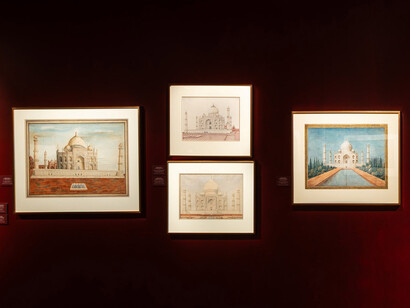
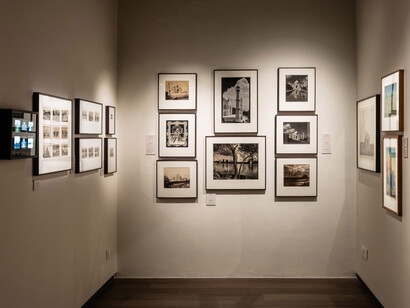
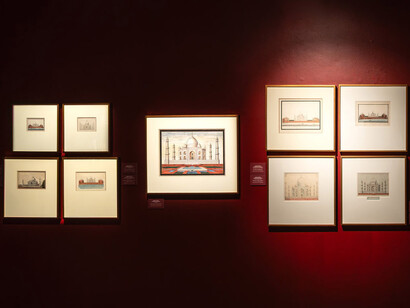
Is there anything left to be said about the Taj Mahal? India’s most famous building has inspired a vast range of writing, from paeons of praise penned by court historians and enthusiastic foreign travellers, to scholarly analyses and travel agents’ blurb, covering every aspect of its character and history. Artists too have responded with a plethora of images from paintings, prints and photographs to tourist posters. Yet always the Taj seems to ask for more. Against the commonly uttered remark that ‘words cannot describe it’, we feel the need to add some appropriate further response of admiration.
Rana Safvi, our guest curator, turns this problem on its head by positioning the Taj itself as the ‘speaking’—though ironically silent—agent. Taking a cue from Shah Jahan’s court chronicler Abdul Hamid Lahauri who spoke of the ‘mute eloquence’ of what he called the ‘Rauza-i Munawwara’, she shows how the tomb’s design and details speak to us of the beliefs, aspirations and condition of Shah Jahan and his beloved wife Mumtaz Mahal. They do so, for example, through the careful selection and judicious placement of quotations from the Quran, and through the language of flowers, in the exquisite pietra dura decoration on the cenotaphs and screen.
Other less explored aspects of the tomb and its complex that are explored in this exhibition (and book) include the Taj’s role in the commercial life of the city through the almost forgotten market sector known as Taj Gang; and the role of other women besides Mumtaz in the court of Shah Jahan as well as in the architectural ensemble itself. New light is also thrown on more familiar aspects, such as the role of the Taj simultaneously as a private family monument and a public imperial one; the interplay between the river and the gardens on both banks that serve as its setting; and the journey of the Taj in the colonial and popular imaginations.
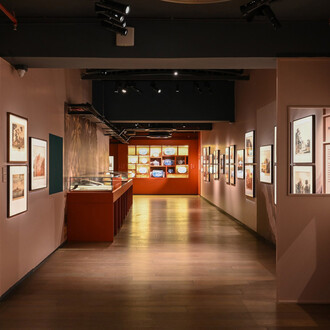
As you peruse the images assembled here, we hope you will agree that a building that we might be all too ready to dismiss as a cliché has the power to surprise us still.