English
 Español
 Français
 Deutsch
 Italiano
 Português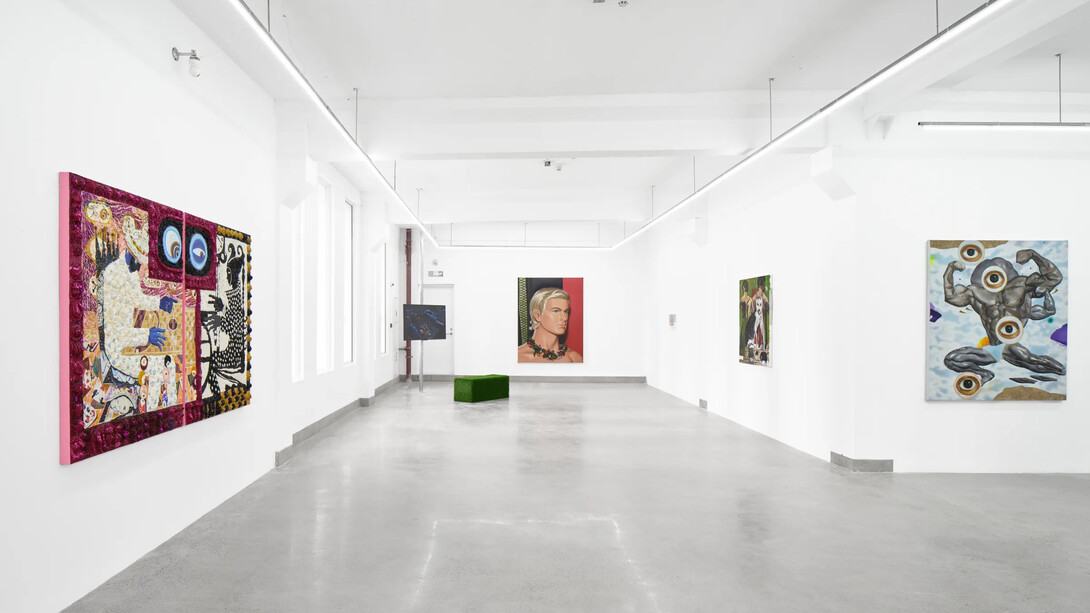
The world itself dreams, and we give voice to its dreams.
(Gaston Bachelard, The poetics of space)
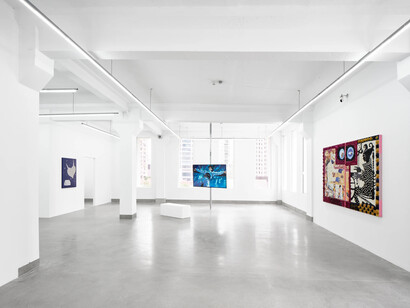
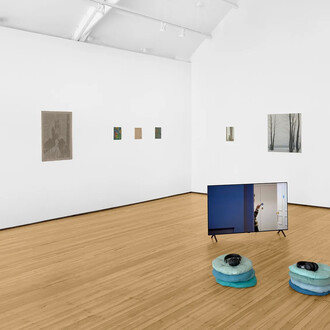
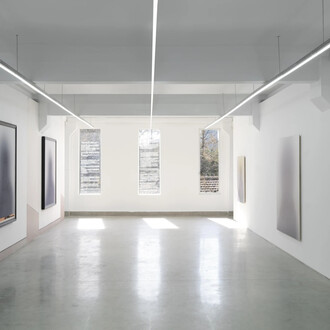
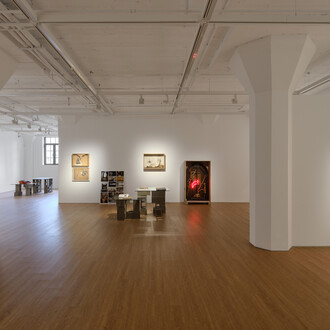
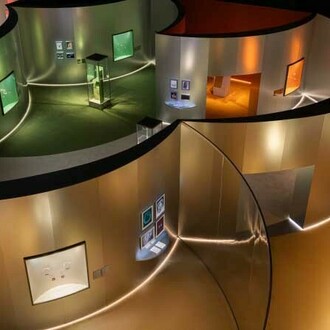
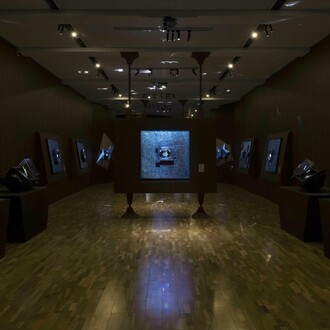
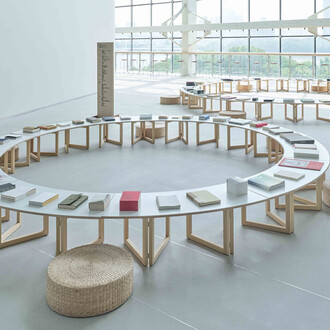
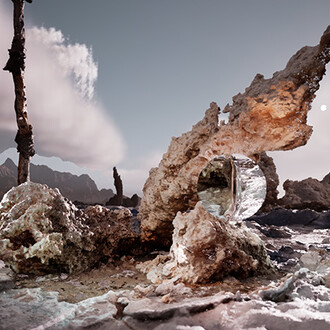
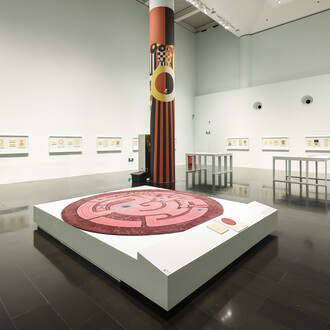
In Olga Tokarczuk’s House of day, house of night, reality and dreams aren’t clearly divided, but form a two-way passage. Linearity and reason belong to the waking day, while night belongs to secrecy and the subconscious. Artists have long conflated the real and imagined, dreaming up their own worlds or depicting dreams bestowed to them. This exhibition showcases artists for whom dreams open a portal between perception and that which is perceived.
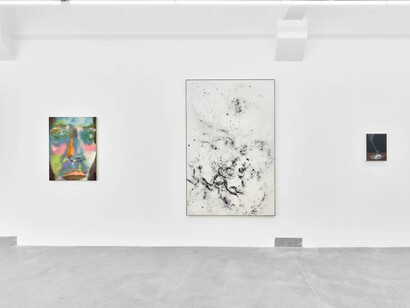
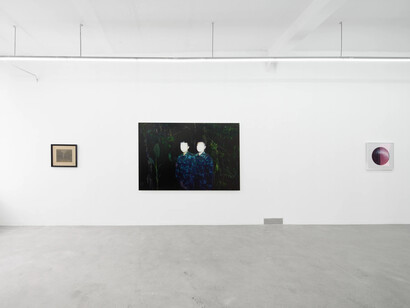
Zhang Yibei conjures unexpected associations by assembling disparate elements, like the logic of a dream, into large-scale sculpture. Two soldiers, faces awash in light, frustrate the viewer’s grasp of identity in Apichatpong Weerasethakul’s haunting photograph, while the moody, fictional portraits of Jiang Cheng evoke the Buddhist concept of non-self—that we are collections of impermanent aggregates. Similarly, Doku, artist Lu Yang’s AI progeny, through countless alter-ego transformations, explores the meaning of “I.” The illusory nature of internet pop culture surfaces in the work of Wang Rui, Wenjue, Gong Hengzhi, and Geng Yini, who weave animation and mythology into idiosyncratic caricature worlds. Nearby, Laure Prouvost’s provocative imagery echoes their mischievousness, while personal, anticipatory nostalgia lingers in Laurent Grasso’s ink drawing.
Elsewhere, the future appears as collective hallucination. Michael Najjar embodies sci-fi fantasy through real images of France’s Iter, a fusion reactor aiming to meet the planet’s power demands while humanity’s spiral into artifice unfolds in Sun Yitian’s computationally generated “man.” Through HD video, Wang Yuyan reframes petro-capitalist logic and techno-solutionist vision, while Ching Ho Cheng merges the individual and the universal to describe the celestial divine in a 1970s gouache. Liang Hao’s image of an unblemished hand nods to AI’s total manufacturing takeover—temporarily foiled by what Elon Musk calls “the hand problem.”
Together, these artists merge myth and machinery, memory and speculation, reminding us that dreaming is not an escape from reality but a concept of it—a continuous passage where perception and what is perceived coalesce.