English
 Español
 Français
 Deutsch
 Italiano
 Português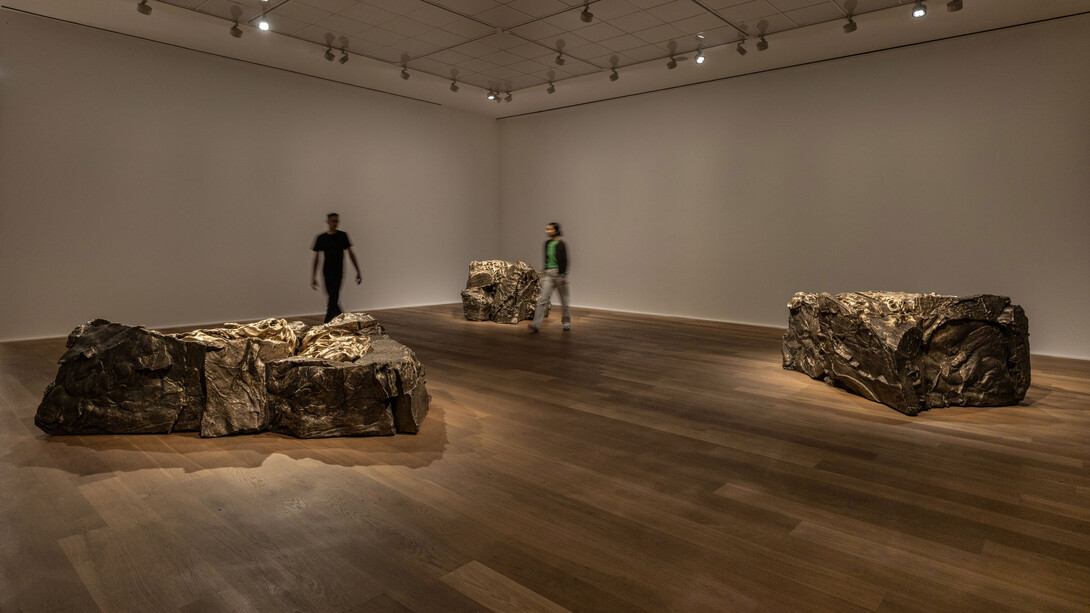
This fall marks the first exhibition by Spanish artist Cristina Iglesias at Hauser & Wirth since joining the gallery. Iglesias is known for her unique sculptural vocabulary developed over four decades, creating immersive and experiential environments that reference and unite architecture, literature, psychology, mechanics, natural elements and site-specific content. Combining the conventional matter of sculpture—familiar materials such as glass, steel, bronze—with non-traditional materials like water and sound, Iglesias has forged an extraordinary visual language that feels simultaneously unexpected and inevitable.
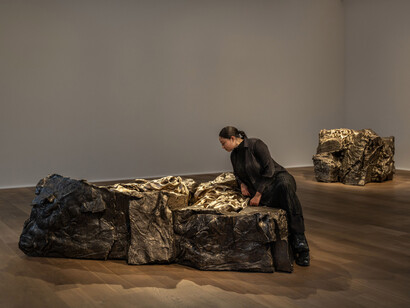
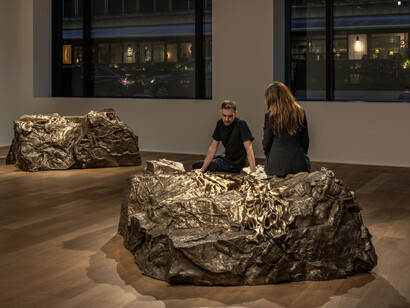
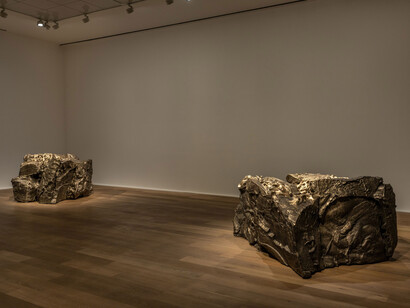
The exhibition features three newly created large-scale bronze works from the artist’s Littoral (Lunar Meteorite) series, part of her ongoing exploration of geological themes. The word ‘littoral’ refers to something relating to or situated along a coast or shore, or the region where the land meets the water. Remarking that ‘the geological time of our planet can be perceived in the coasts,’ Iglesias’ sculptures touch on ideas of memory. The artist also imparts an unearthly quality by referencing lunar meteorites, rocks originating from the Moon that subsequently land on Earth. Each of the bronzes on view have a rock-like luster and unique porous form, their meteorite appearance symbolizing the collision of outer space and Earth.
Fusing the manmade with the organic, Iglesias’ use of water establishes further connections to geological processes. Water has featured as a significant element in Iglesias’ practice since the early 2000s, fundamental to large-scale installations such as Tres aguas (2014) in Toledo, Spain; Forgotten streams (2017) for the Bloomberg headquarters in London; and Hondalea (2020 – 2021), a monumental work located within an excavated lighthouse on the island of Santa Clara off San Sebastian, Spain.