English
 Español
 Français
 Deutsch
 Italiano
 Português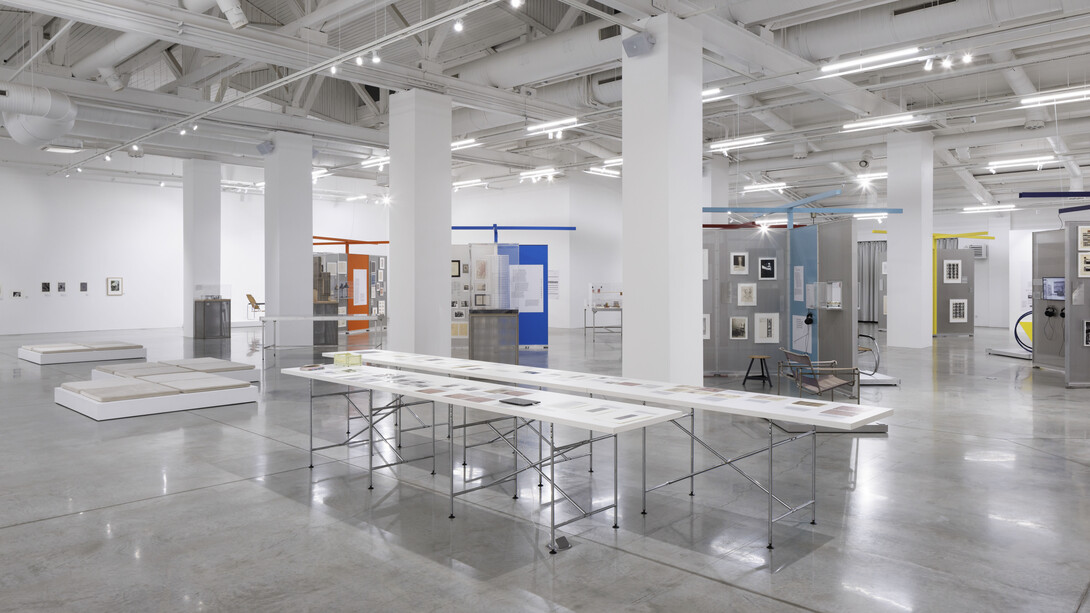
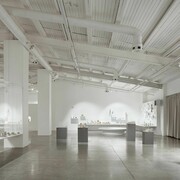
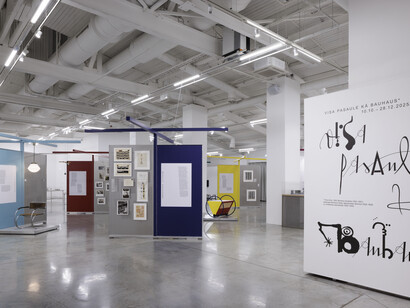
Art Museum Zuzeum is proud to announce the opening of The whole world a Bauhaus, a compelling exhibition that delves into the enduring legacy and often-untold stories of the Bauhaus, a pivotal institution in modern design and art. On view starting 10 October 2025, the exhibition invites visitors on a captivating journey through the history and lasting appeal of modernism, offering a fresh perspective on the Bauhaus and its profound global impact.
The whole world a Bauhaus is a touring exhibition that has been traveling internationally since 2019. Until now, it has been presented in Europe only in Germany and Poland, making its arrival in Riga a unique and significant opportunity for Baltic audiences.
The reception of the Bauhaus has become both a celebrated and yet controversial symbol of modern design and avant-garde approaches to life. Although the school was only in existence from 1919 to 1933 at different locations (Weimar, Dessau, Berlin), it has a unique standing as an exemplary representative of a modernist new start. In these years, only around 1,300 students trained at the Bauhaus – how did this school achieve such a remarkable influence, as the epitome of radical renewal in society, in design and in teaching? What makes the Bauhaus so special? Why are its products still made today?
The exhibition title, The whole world a Bauhaus, taken from Bauhaus student and teacher Fritz Kuhr (1928), is in many ways programmatic. It alludes to the fact that the Bauhaus redefined the parameters of art, the crafts, and technology, when Walter Gropius declared the aim of design to include the whole spectrum of design and also social practice in every sense. The exhibition title also refers to the fact that this is a touring exhibition which will address connections and look at the role of modernism at different venues, where it will serve as a platform for learning.
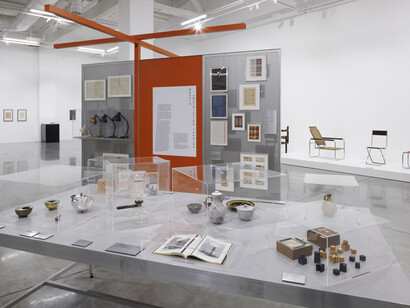
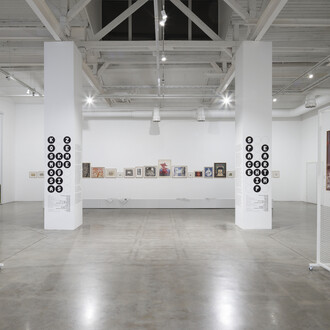
The whole world a Bauhaus is divided into eight different chapters, each focusing on an aspect of work and life at the Bauhaus between 1919 and 1933. It explores topics such as the experimental use of materials, the integration of art and life, and innovative teaching methods. Attention is also given to everyday experiences at the school, political and social ideals, and the Bauhaus’s global connections – including its dialogue with institutions like Vkhutemas in Moscow and outreach to the USA. Together, these chapters provide a nuanced understanding of how the Bauhaus forged a lasting legacy in modern design, architecture, and cultural thought. In just a few years, the Bauhaus addressed many of the pressing issues associated with the fast pace of industrialisation in Germany. Influential modernist artists taught at the Bauhaus, and many of them emigrated and spread its heritage all over the world.
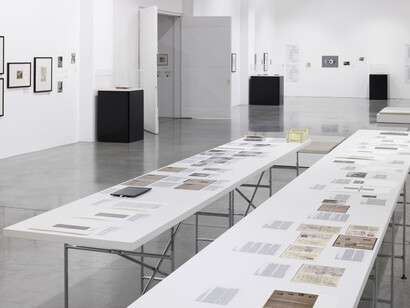
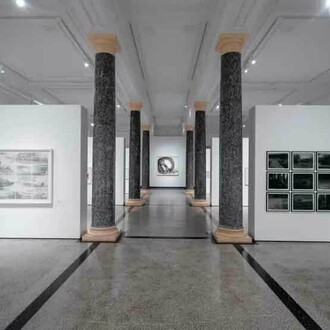
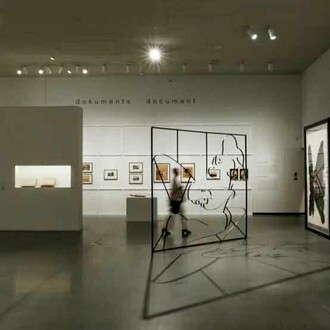
This exhibition shows photographs, works on paper, documents, films, texts, and objects that present the emergence and development of the Bauhaus, all of which later served as a source for understanding the history and appeal of modernism.
In addition to the core exhibition, we invited two curators to develop contributions closely related to contexts in Riga. The two perspectives on the topic are also reflected in the different titles: Boris Friedewald's contribution, ‘6 Bauhaus Women from Riga’, traces the biographical paths of the Riga-born artists Ida Engelien, Toni von Haken-Schrammen, Ida Kerkovius, Ljuba Monastirskaja, Tonja Rapoport and Harriet von Rathlef-Keilmann, using documents and works of art. All of these women studied at the Bauhaus in Weimar or Dessau. They brought their experience and knowledge to the Bauhaus and, through their subsequent work, carried what they had learned at the Bauhaus out into the world.In her article ‘A Bauhaus of One's Own’, Estere Kajema focuses on three of these women – Ljuba Monastirskaja, Tonja Rapoport and Harriet von Rathlef-Keilmann. She presents selected aspects of these artists' lives from an individual curatorial perspective.
For the first time, the paths of these Bauhaus women are brought together, previously unpublished works are shown, and artists whose art has received little attention in academic discourse are honoured.
The exhibition is prepared by ifa (Institut für Auslandsbeziehungen) in Stuttgart, Germany, which as an independent intermediary organisation, plays a leading role in international artistic and cultural exchange, and its work helps to shape Germany’s international cultural relations. The exhibition is realised in cooperation with the Goethe-Institut Riga and the Embassy of the Federal Republic of Germany in Riga.