English
 Español
 Français
 Deutsch
 Italiano
 Português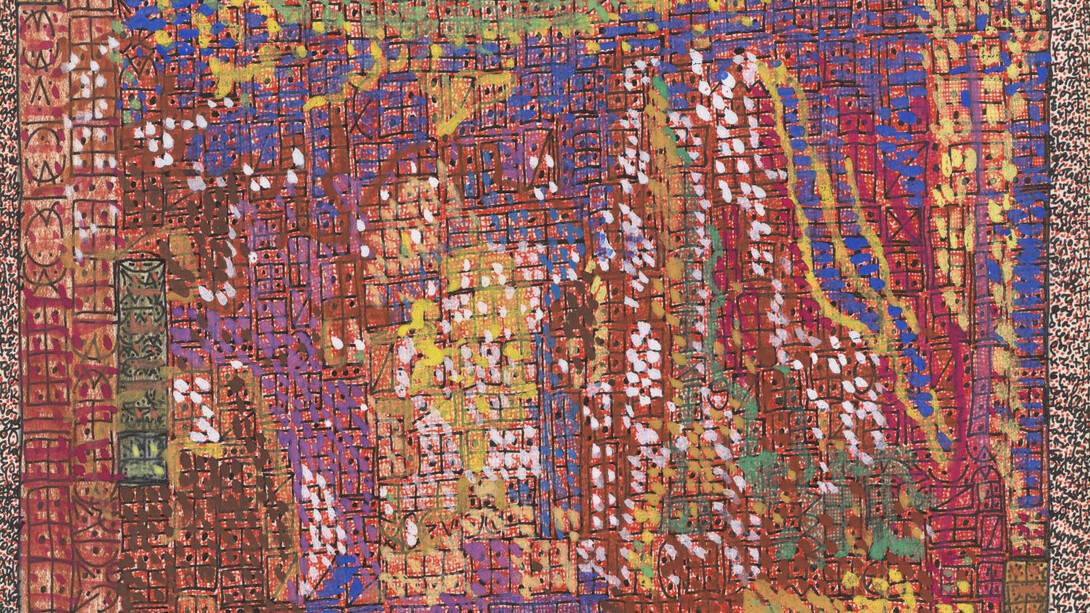
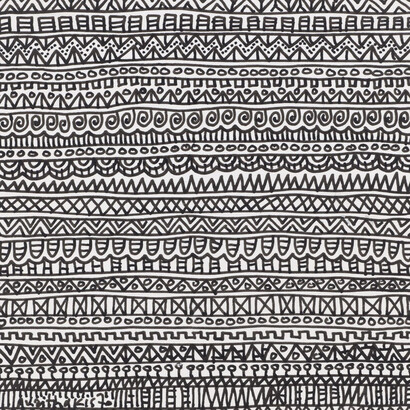
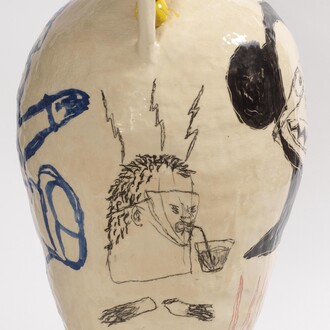
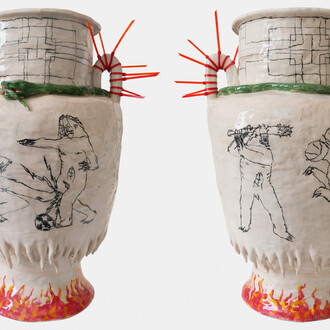
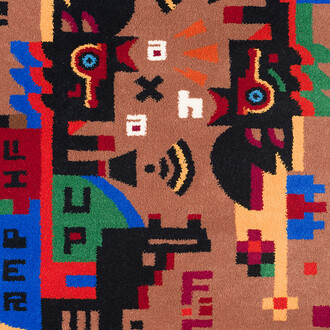
The exhibition 4ensic drawings at Kalfayan Galleries stages a dialogue between two emblematic figures of post-war Greek art—Nikos Gabriel Pentzikis and Alexis Akrithakis—and two contemporary voices: Karolina Krasouli and Konstantinos Mouchtaridis. The shared premise is simple: each builds images from small, repeated actions that, in turn, open up dense fields of association. The show does not trace a linear chain of influence; instead, it sets questions in motion: what links artists of different generations? how do techniques and attitudes converse across time? What can we learn when detail becomes ritual, pattern becomes notation, and trace becomes surface? The affinities here are not merely formal; they are methodological, even ontological. They concern the very experience of focus, of devotion, of the repeated act that shapes images, memories, and states of mind.
The exhibition offers a diagonal reading across the four—not to prove direct kinships but to set a study condition. They arrive from different routes: the discipline of prayer; the sweep of a pen that saturates the page; the rigor of a dated log; the sensitivity of color. Yet they meet in core concerns: time, repetition as both freedom and discipline, near-and-far viewing. Their work also plugs into a broader lineage beyond the local frame—names that surface in notes and conversations include Georges Seurat, Paul Klee, Agnes Martin, Ellsworth Kelly, Sol LeWitt, and Keith Haring. This is not a checklist of influences but a field of references illuminating variants of the same obsession: how small acts build large images.
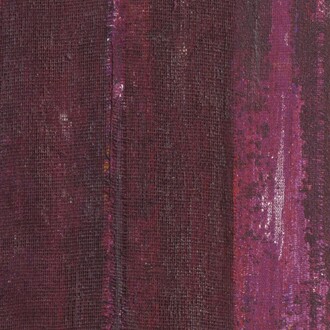
These relations should not be reduced to mere imagery. Their affinity is a way of being present at work: choosing duration over spectacle; investing in materiality—the dot, the pencil stroke, the tempera’s breath, the pen’s trace—and letting time inscribe itself on the surface. The works function as dynamic fields activated by the eye. The show invites us to shift distance: approach to read decisions, deviations, and productive “misalignments”; step back to see overall cadence and structure. In this oscillation, the surface changes: from two meters, an austere grid; from a few centimeters, the hand’s mark, concentration, fatigue, and effort turning into image.
Ultimately, the exhibition resists easy answers about the (Greek) present and avoids forced bridges between generations. It proposes a viewing laboratory: a space to consider painting and drawing as practices that organize time and memory through material means. Here detail is meaning; repetition is an attitude; technique is an ethics of seeing. If anything binds these four, it is their insistence on the minimal act that, seen rightly, reveals the monumental. The invitation is simple: spend time—move closer, move away—and let the images work within you at their native tempo: slow, iterative, attentive. In that motion, relations appear not as lines of influence but as living convergences, where dot, line, motif, and breath become points of meeting. Against the speed of the outside world, the exhibition speaks for the humble labor of the hand—the smallest gesture building the whole, the personal turning shared.
(Text by Nicolas Vamvouklis, curator)