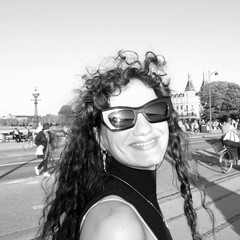
Malisa Zymberi (b. 1992, Gjilan, Kosovo) is a Berlin-based mental health provider, author, and curator whose work brings together psychology, storytelling, and visual expression. With a degree in psychology from the University of Pristina and over eight years of international experience, her approach is both personal and grounded in practice. Her work is rooted in empathy, connection, and a deep belief in the power of healing through creativity and presence.
Her humanitarian career began as a volunteer on the border with Syria in 2015, where she helped with the influx of refugees arriving in Turkey. This early experience in the field shaped her understanding of trauma and displacement in real-world contexts. Years later, she was hired by the Icelandic Red Cross in Reykjavik, where she led projects supporting the integration of refugees. These projects involved psychosocial activities, cultural mediation, and advocacy for refugee inclusion. In 2019, upon returning to Kosovo, she was employed by a UNHCR program, where she provided mental health services to over 400 refugees over a span of three years. Her work included trauma-informed therapy, emotional support, and well-being programs. Her final commitment to working with refugees was in 2022, when she developed a manual for the integration of refugees in Kosovo in a project with Swiss Caritas, combining field knowledge with policy insight.
After moving to Berlin, Malisa joined online platforms that allow her to offer virtual therapy to people around the world. Being part of Maven Clinic and Modern Health gave her the opportunity to connect with individuals from various cultures and backgrounds—an experience she considers one of her greatest assets. Working in these global digital spaces, she continues to broaden her understanding of cultural identity, collective trauma, and human resilience. Her multicultural work allows her to integrate global perspectives into therapeutic practice, making her approach both compassionate and inclusive.
What makes Malisa’s work stand out is her unique ability to combine creativity with the human experience. In 2020, she authored One Breath at a Time, an illustrated mental health booklet offering simple tools for understanding trauma and finding calm. The booklet has since been translated into eight languages, making it accessible to a global audience and used in diverse therapeutic and educational settings. The same year, the article ‘Meaning-Making of War Experiences: Stories From Kosova’ was published in the SAGE journal, where Malisa was a coauthor.
A year later, she published Meet My Soul, a photo book featuring eye portraits and short stories, giving voice to the inner worlds of people who have been displaced and disconnected. In 2022, in the book Groupwork with Refugees and Survivors of Human Rights Abuses, Malisa was a coauthor of one of the chapters, ‘The Art of Healing in a Transitory Context,’ where her contribution was writing the article, as she was the main focal point for the transition of the healing process for refugees in the camp in Kosovo. Her chapter reflects direct practice and insight into healing within temporary living conditions.
In addition to writing, Malisa has curated four exhibitions exploring themes of identity, memory, and healing. Three of these exhibitions specifically focused on vulnerable groups, offering them a space to express their stories and emotions through visual media, dialogue, and community engagement. Her most recent show, Returning Home—To Dad!, captured the emotional journey of a father-daughter bond through photography. It illustrated her ability to translate intimate emotional landscapes into art that resonates with broader audiences.
In 2025, Malisa released Dear Anxiety, a therapeutic card deck published by metaFox. Designed to help individuals understand and manage anxiety, the project was born from her clinical work and passion for hands-on, human-centered tools. The deck offers gentle prompts, exercises, and reflections that can be used in daily life or integrated into therapy sessions. Dear Anxiety reflects her belief in accessible, creative resources that empower people to engage with their mental health in meaningful ways.
Whether providing therapy, writing, or curating stories, her work always returns to one core belief: that sharing what we carry through words, images, or connection can lighten a heavy chest.

 English
 Español
 Français
 Deutsch
 Italiano
 Português