English
 Español
 Français
 Deutsch
 Italiano
 Português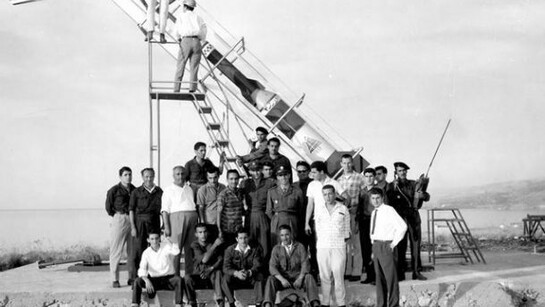
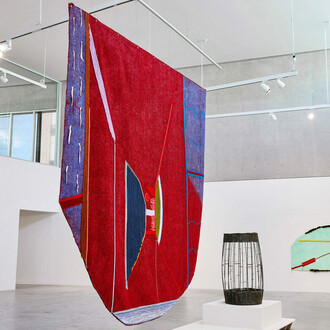
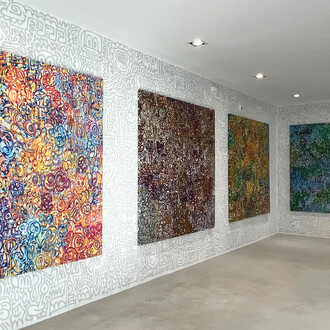
Waterside Contemporary presents Long ago, and not true anyway, an exhibition that brings together works by Slavs and Tatars, Joana Hadjithomas and Khalil Joreige, Rabih Mroué, Libia Castro and Ólafur Ólafsson, and Mekhitar Garabedian, who engage in the re-assembling of historical narratives affected by migrations, invasions, economic interactions, time or memory.
In the exhibition, national mythologies meet personal anecdotes, official fact mixes with subjective creation, and an opportunity arises to consider the role of fiction in constitution of the prevailing world order.
Migration and exchange go hand in hand with globalisation; in parallel, conflict has led to movement of millions across borders. With surprising speed, communities emerge whose individual heritage has no intrinsic affinity to that of their neighbours’.
If ‘multiculturalism has failed’, such blending of identities, as participated in by the mixed-heritage native, refugee or the economic migrant, cannot be thought of as only a matter of individual experience. Instead, the sum total of the unlikely stories is the very foundation of any society’s mythology, and we are today participating in the creation of the memory for future generations.
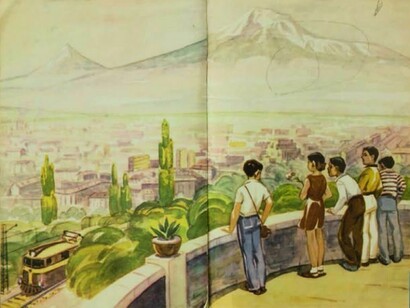
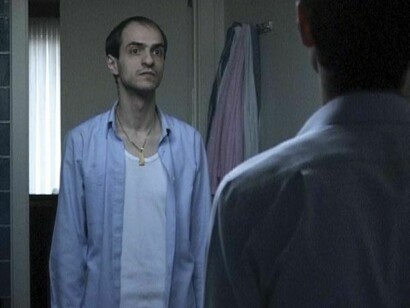
The work of Mekhitar Garabedian is a performance of memory, in which we witness processes of recollection and acquisition. The artist makes reference to the diasporic tradition of Armenia that he grew up with, drawing on memory of events that precede his. With ambivalence and intimacy that open up possibilities for the past and present to be one, he alternately reconstructs histories and brings his own into being.
Garabedian asserts himself and the memory available to him into existence through repetition - with schoolboy diligence, he writes out alphabets, pronounces his own name, and catalogues his findings. It is as though a matter of chance that these actions play themselves out in Ghent, and not at the feet of Mount Ararat.
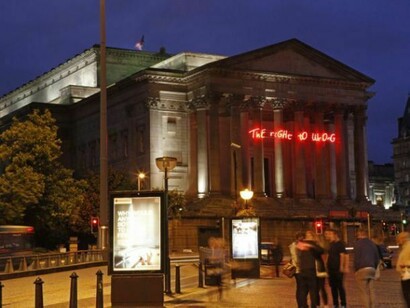
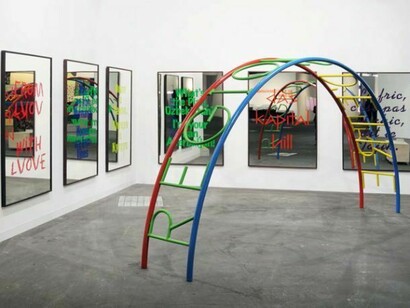
Slavs and Tatars highlight unlikely parallels between disparate histories, ideas and geographies – the collective’s very name engages it with issues the breadth and width of Eurasia. With elusive polyglot eloquence, their meticulously constructed works-cum-theses bring together notions usually separated by borders, language or time. In one such iteration, their Friendship of Nations proposes an unlikely affinity between the Polish Solidarity movement and the Islamic Revolution in Iran. Another introduces a vacuum between major narratives: ‘not Moscow, not Mecca’, ‘not Bahamas, not Baghdad’. Repeated with deadpan humour, Slavs and Tatars’ mantras begin to ring true.
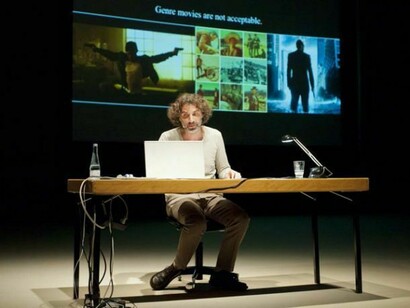
In a manuscript short story I miss the bad old days, Rabih Mroué unravels an account of a political incident from 1984 that involved Soviet diplomats being held hostage in Beirut, in the style of One Thousand and One Nights. Through a narrative form deeply rooted in folklore, that when applied to a contemporary event reads like a cross between science fiction and a detective story, Mroué collapses the distinctions between fact and its portrayal. Through the process of exposing the stories behind documents and images, the artist erases their weight – evidence shared becomes evidence forgotten.
In the course of their itinerant collaboration, Libia Castro and Ólafur Ólafsson have related their work to the places and communities they have encountered. In London, they invited the Ambassador of Iceland to the United Kingdom to help them produce a painting-by-numbers that spreads the message of their on-going campaign and project: Your Country Doesn’t Exist. Highlighting the presumed insecurities of a small nation, they send a seemingly antagonistic message – either a self-annihilation opportunity for the creator, or hostility towards the recipient.
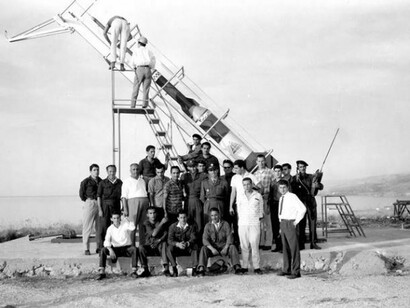
Joana Hadjithomas and Khalil Joreige question the power of images to reveal and to mute. Engaging with the history and representations of Lebanon, they discovered an almost unthinkable situation – an event in the country’s recent history that has all but disappeared, missing even from Wikipedia. Spurred on by a discovery of a postage stamp depicting a rocket that eludes their imaginary, the artists pieced together a peculiar story of the Lebanese space exploration programme of the 1960s. By bringing together images, documents and accounts – and later rebuilding the rocket itself – Hadjithomas and Joreige reconstituted the original fact, its remembering, and its forgetting.
Waterside contemporary
2 Clunbury Street
London N1 6TT United Kingdom
Ph. +44 20 34170159
info@waterside-contemporary.com
www.waterside-contemporary.com
Opening hours
Wednesday - Saturday from 12pm to 6pm
Thursday from 12pm to 9pm and by appointment