English
 Español
 Français
 Deutsch
 Italiano
 Português
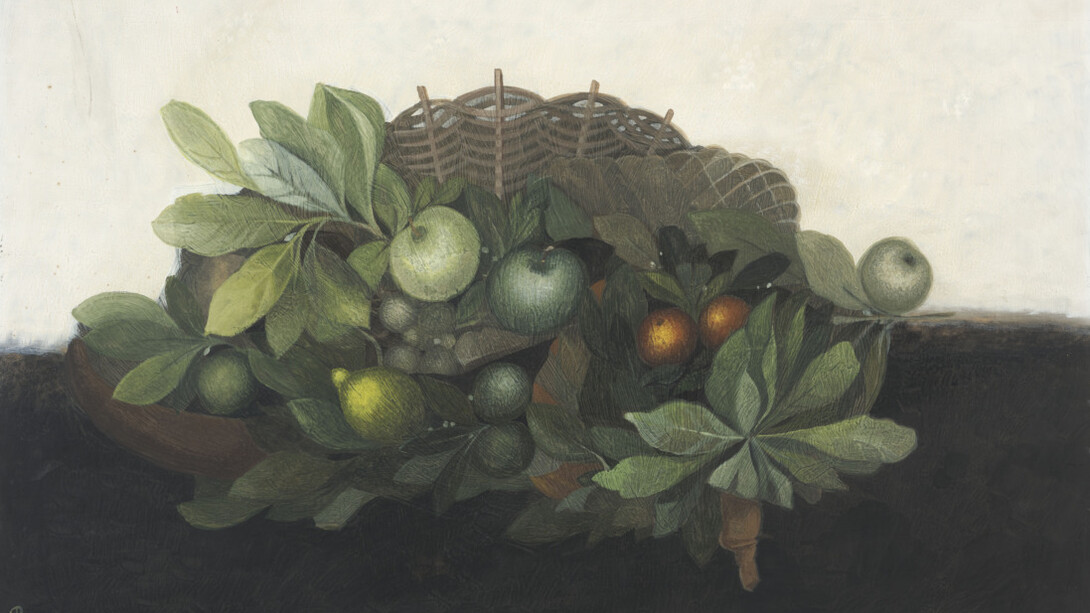
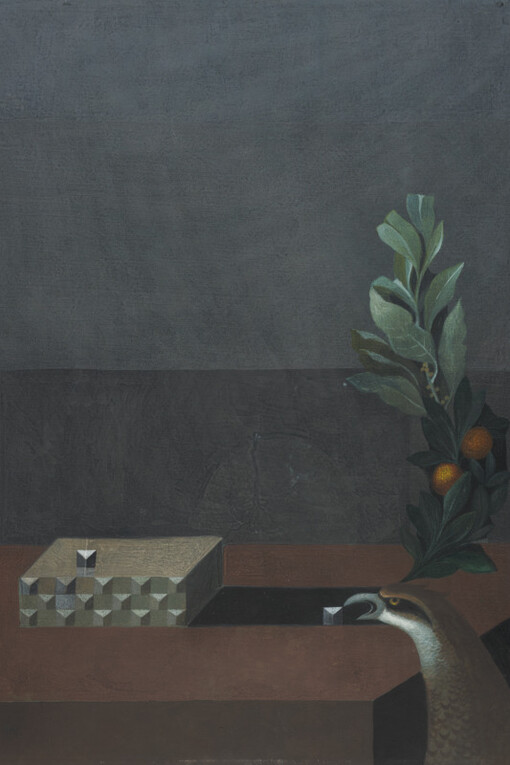
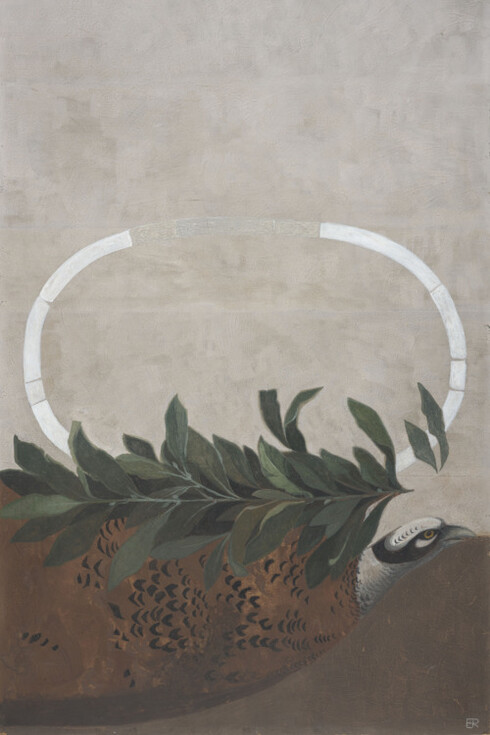
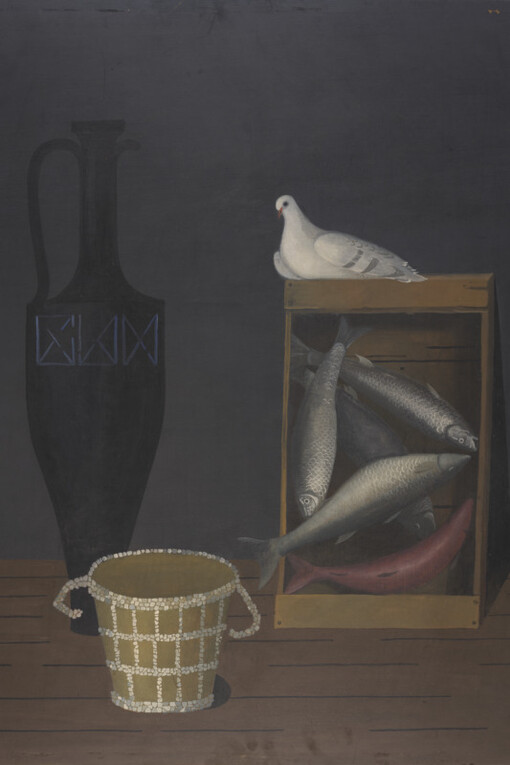
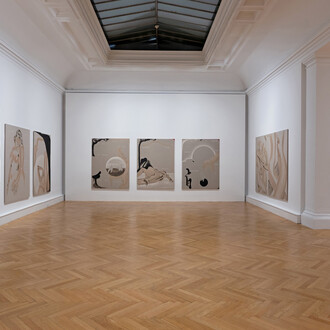
Lentos presents a major solo exhibition devoted to the painter erika roessing in Linz. Around 100 paintings reveal a rigorously developed body of work dedicated to still life. Birds, fruit, baskets, pitchers, and vases appear in everchanging arrangements, combining with geometric ornament to create quietly poetic, sometimes melancholic pictorial spaces.
roessing's Œuvre, documented in her notebooks, comprises about 180 still lifes. Working primarily in tempera on hardboard, she developed a muted palette, textured surfaces, and carefully balanced compositions. What initially appears calm and familiar often proves enigmatic and unexpectedly surreal on closer inspection: objects float, fragment, or dissolve into ornamental structures.
At the heart of the retrospective is a gift of 50 tempera paintings from the estate of the artist, who died in 1977, made in 1979 to the Neue Galerie der Stadt Linz, the predecessor of Lentos. Works from the collection are complemented by private loans from her longlost early Œuvre of the Nazi era, presented here for the first time. Selected works by her husband, Karl Rössing, a leading Austrian printmaker of the twentieth century, also illuminate the couple's lifelong artistic dialogue.
erika roessing's largely unknown Œuvre reveals a remarkable brilliance in her first retrospective since 1980. She consistently developed her artistic voice within a single genre: still life. Representational and abstract elements are held in balance; the images remain enigmatic and imbued with quiet poetry. With this exhibition, we continue our work to bring visibility to significant yet underrepresented women artists in our collection and to examine their biographies in all their complexities.
(Hemma Schmutz, Director, Lentos Kunstmuseum Linz)
With this exhibition, Lentos brings renewed public attention to erika roessing, an artist whose work is closely linked to the history of our municipal collection. Karl Rössing's gift in 1979 makes it possible to present around 100 paintings today. This rediscovery demonstrates the importance of highlighting the work of women artists in our own holdings and addressing difficult chapters of their biographies transparently.
(Doris LangMayerhofer, City Councilor for Culture, Linz)