English
 Español
 Français
 Deutsch
 Italiano
 Português
That which withdraws the more you struggle to reveal, but reveals itself the more you withdraw—I am interested in this paradox.
(Myoung Ho Lee, 2026)
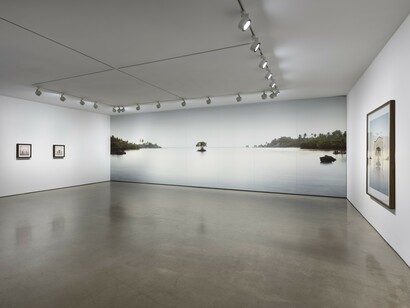
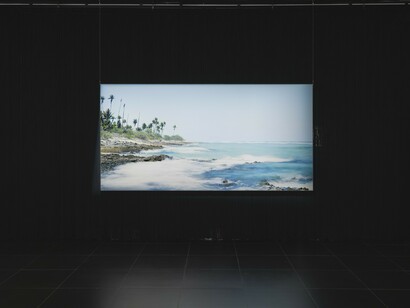
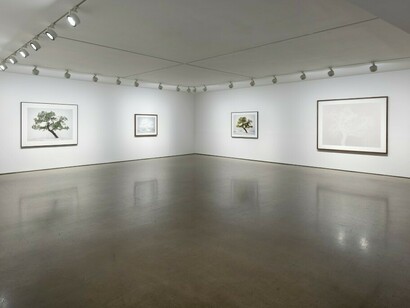
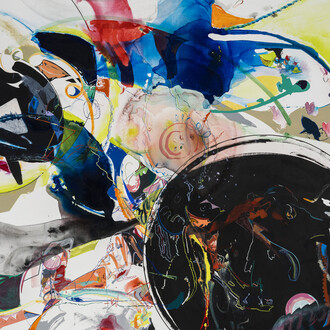
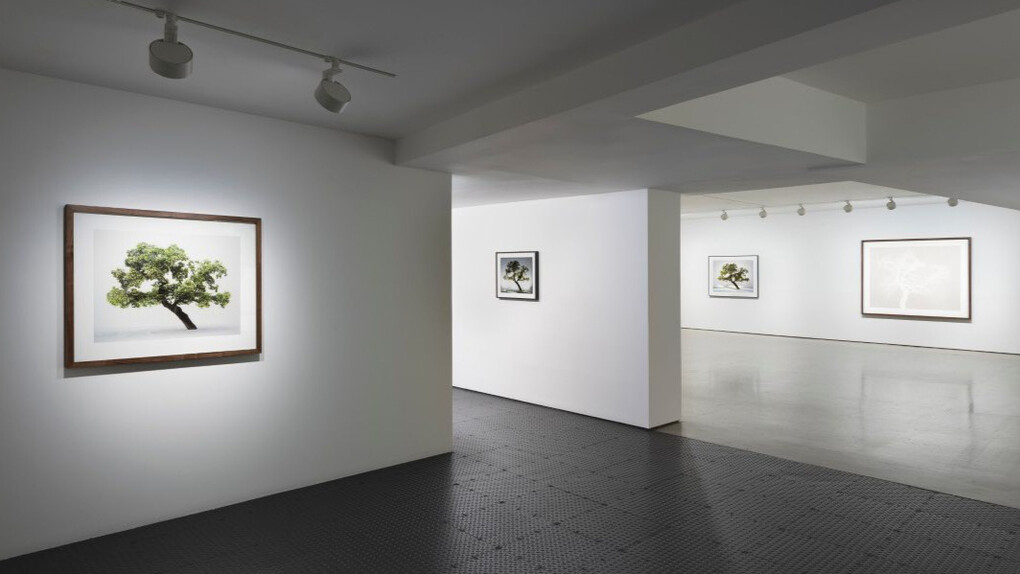
For the past two decades, Myoung Ho Lee has used photography to explore the boundaries between photography and painting, representation and reproduction, and presence and absence. This exhibition marks Lee’s first solo exhibition at Gallery Hyundai in eight years, following Nothing, but in 2018, tracing the expansion of his practice into historical and social dimensions through new series. The exhibition centers on Kiribati (2026), a series documenting the Pacific island nation whose land and communities are threatened by rising sea levels due to climate change, and the Heritage series (2024–2026), which captures a pagoda tree that has stood within the Seonwonjeon Hall of Deoksugung Palace. Bringing together approximately thirty recent works, the exhibition includes photographs, images in which forms have been meticulously cut away, and large-scale works on canvas.
Beyond photography as a medium for documentation and representation, Lee has expanded its possibilities to encompass the artist’s interventions and the acts through which an image is produced. Initiated in 2004, his ongoing Photography-act project explores the relationship between subject and object, representation and reproduction, seeing and being seen, and the spaces both between and beyond these distinctions. Lee intervenes at specific sites by installing a large white canvas within a landscape and then photographing the resulting scene. Positioned behind a tree, the canvas isolates what was once part of the surrounding landscape, bringing the tree into focus as an independent subject. This gesture constitutes both an act of “re-presence,” through which something already in existence is made newly visible, and an act of “re-production,” through which a scene previously absent from reality is brought into being. The insertion of a canvas in natural environments estranges the canvas as an alien element, unsettling the boundaries between the real and unreal, visible and invisible.
As such, re-presence and re-production are not mutually exclusive but continually intersect in Lee’s work; what already exists is revealed anew, even as an image of something that did not previously exist is created. His interventions pose questions on the divide between photography and painting, reality and image, while prompting us to consider what is revealed and what remains concealed, and how we come to perceive the world around us. These questions extend beyond the visual to encompass presence and absence across the temporal dimensions of past, present, and future. Sculptural interventions on photographed images involving carefully carving out the contours of objects are similarly positioned at the convergence between representation and reproduction. When the act of removing figures recalls the existence of the object even more vividly, the paradox of an object “revealing itself the more you withdraw” becomes apparent.
The exhibition title, (no)thing, encapsulates this dynamic between presence and absence—the “no” in parentheses creates “nothing”; without it, “thing” remains. Rather than placing presence and absence at opposite ends, the title implies their interdependence. We become aware of absence through what is present, just as absence invites us to reconsider the meaning of what exists.
Kiribati and Heritage encompass two distinct temporal perspectives. While Kiribati evokes the prospect of future loss through landscapes threatened by rising sea levels, Heritage looks back upon the accumulated layers of history through a pagoda tree that remains standing on the site of Seonwonjeon Hall at Deoksugung Palace, where the architecture itself has long since disappeared. Together, the two series allow us to anticipate future absence through what exists in the present, while recognizing present existence anew through what has been lost to the past. In doing so, they reveal presence and absence as inextricably intertwined. Ultimately, Lee’s work invites us to reconsider what it means to see, where the boundary lies between what is visible and what remains unseen yet perceptible, and how these questions might lead us toward a deeper reflection on our own existence and that of the world around us.