English
 Español
 Français
 Deutsch
 Italiano
 Português
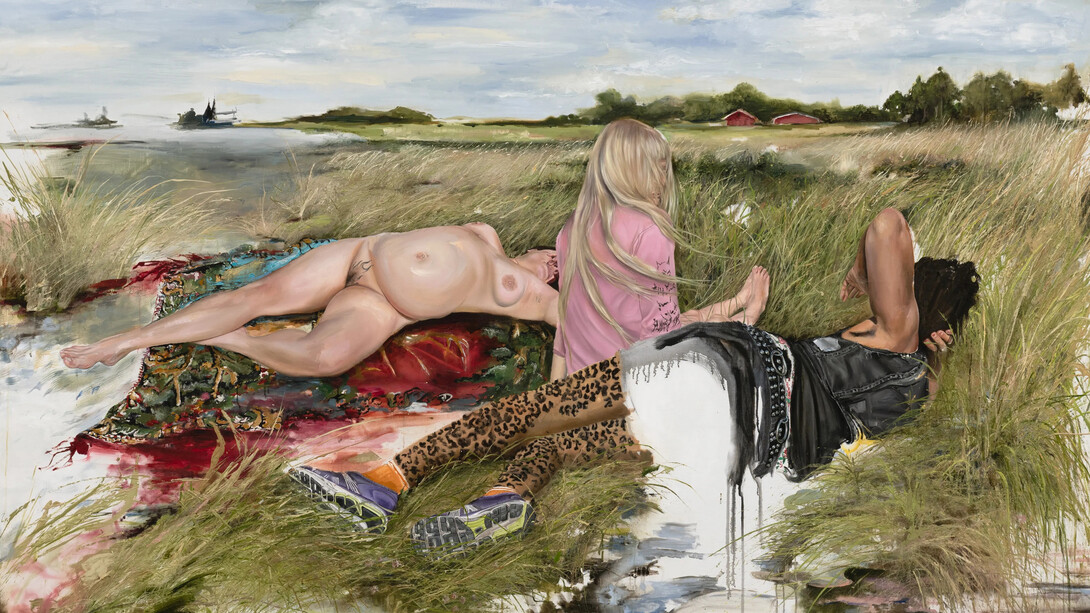
Andréhn-Schiptjenko has the pleasure of presenting Shifts, Sixten Sandra Österberg's second solo exhibition with the gallery in Stockholm.
The changing seasons have always anchored humankind in time, and have been associated with both transience and rebirth. In a Nordic context, the contrasts between winter and summer are striking - even in a contemporary, urban setting - and affect those who live there on both a practical and a mental level. In her new works, Sixten Sandra Österberg reflects on this subject, and for her the seasons have become a way of exploring questions about time: how it passes, how it changes us and how we age. Rather than depicting specific landscapes, or the body as a motif within them, she has sought, on a more introspective level, to portray humanity in interaction with the seasons.
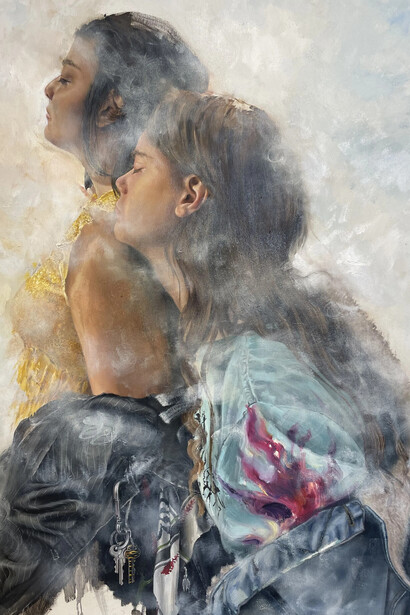
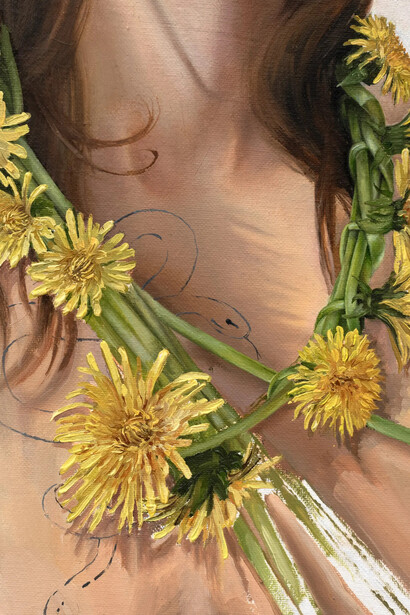
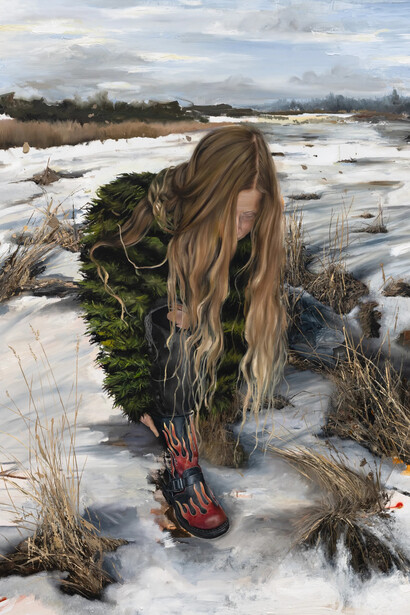
The works in the exhibition often focus on fine details or bring the viewer close to the people and objects they depict: a glance down at shoes on a snow-swept surface, a wreath woven in summer, or a narrowly framed bedroom scene. The works in the exhibition are full of contrasts, both in relation to one another and within the individual paintings. Darkness is set against light, warmth against cold, and the elements are contrasted with one another. The seasons and their changes are depicted more or less clearly in the motifs and can be perceived through a detail, a view out of a window, or in the movement of turning one's face towards the first warm rays of spring sunlight. What the works in the exhibition have in common is that the seasons are allowed to emerge through people and their gestures rather than through the depiction of nature itself.
Contrasts are also evident in a very tangible way in Sixten Sandra Österberg's paintings. Within a single painting, richly detailed and finely rendered areas often contrast with sections featuring free brushstrokes and impasto. These contrasts create a sense of movement across the canvas, and as a painter, Österberg finds the freedom to seek the ideal, painterly expression for each object in its own right. At first glance, her subjects appear to be based on a single model, but each painting is a constructed universe in which she intuitively brings together elements from various sources. The process is reminiscent of Pre-Impressionist landscape painting, where the painter would take impressions and sketches from nature back to the studio to piece together an idealised version of nature there. In her painterly process, Österberg does not in any way seek to depict an ideal, but just like the Pre-Impressionist painter, she guides our gaze. In the contrast between the staged and the seemingly lifelike, Österberg has created a unique visual world.