English
 Español
 Français
 Deutsch
 Italiano
 Português
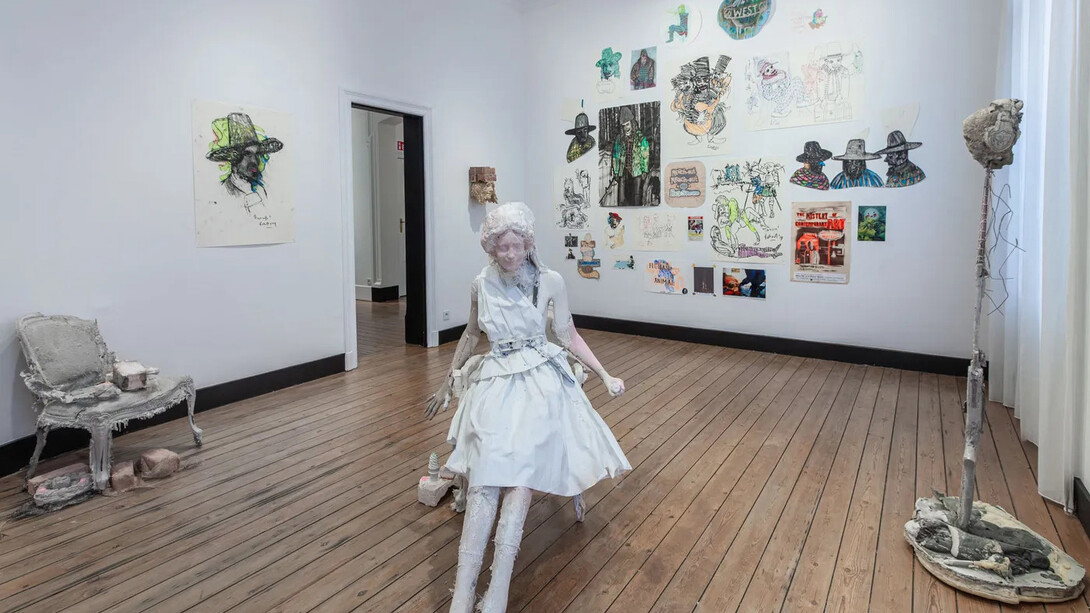
Christophe Gaillard Gallery Brussels is pleased to present Old DNA, the first solo exhibition by Dutch artist Folkert de Jong at the gallery.
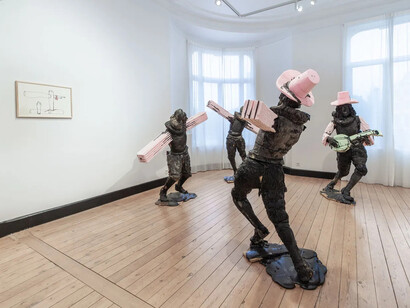
Known for his distinctive use of industrial materials, Folkert de Jong develops a sculptural body of work that interrogates notions of power, memory, and transmission. Working with materials drawn from the petrochemical industry -traditionally intended for insulation or construction- he overturns established hierarchies between noble and ordinary materials, while questioning the historical narratives and cultural values that shape our perception of the world.
The figures that populate his installations seem to belong to different eras and different worlds. Yet they share common questions : how does the past continue to shape our present? What remains of an era once its narratives fade and its beliefs evolve?
With Old DNA, Folkert de Jong explores the enduring traces of our history. History never appears here as a fixed narrative, but as a living heritage that transforms upon contact with new ideas, images, and identities.
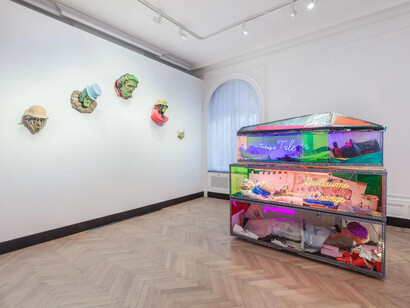
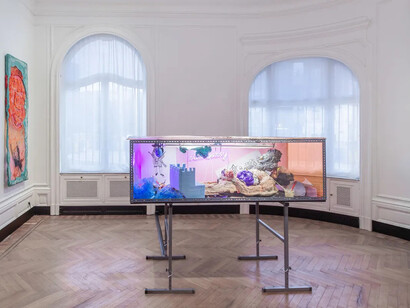
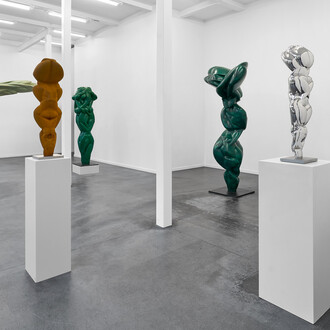
The title first evokes an ancient, genetic memory: a set of vestiges, recollections, and cultural codes passed down from generation to generation. In de Jong’s work, these invisible layers take on tangible form. Sculptures and installations occupy the space as embodiments of a collective memory, at once familiar and foreign, monumental and fragile.
But Old DNA also points to the paradox of progress. The desire to correct the mistakes of the past, to alter an inherited programming, carries within it the possibility of failure, decline, or new forms of degeneration. Caught between the aspiration for renewal and the impossibility of erasing what came before, the exhibition sheds light on the complexity of our relationship to history.
Bringing together several sculptural ensembles, Old DNA invites visitors to reflect on the narratives they inherit, the roles they take on, and the futures they build from this memory. Between decay and rebirth, memory and imagination, Folkert de Jong composes a universe in which ancient beliefs resurface in forms that are at times unsettling, at times absurd, but always deeply human.
Since the beginning of his career, Folkert de Jong has established himself through life-size sculptures made from polystyrene and polyurethane foam, materials typically used in construction, architecture, or film set design. By repurposing these ephemeral, industrial materials, he composes scenes that intertwine violence, power, catastrophe, and human tragedy.
Drawing as much on art history as on political and social current events, his work stages grotesque and theatrical worlds set in a post-apocalyptic future. Fascinated by the darker recesses of the human psyche, the artist confronts viewers with ambiguous figures in which the grotesque meets vulnerability.