English
 Español
 Français
 Deutsch
 Italiano
 Português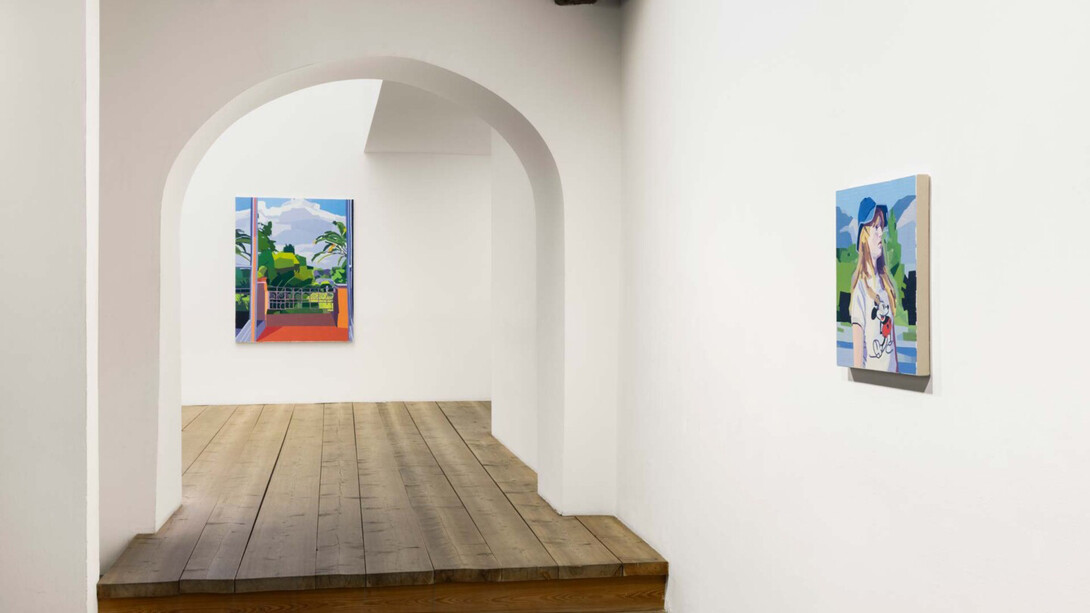
Monica De Cardenas is pleased to announce Guy Yanai’s first solo exhibition in Switzerland.
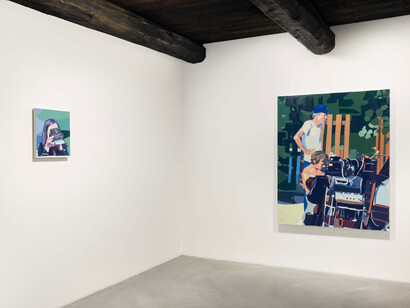
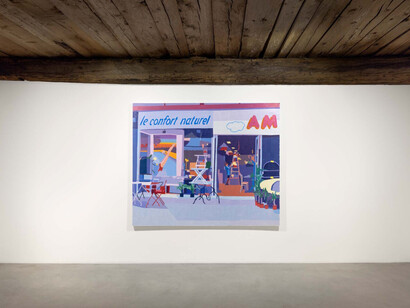
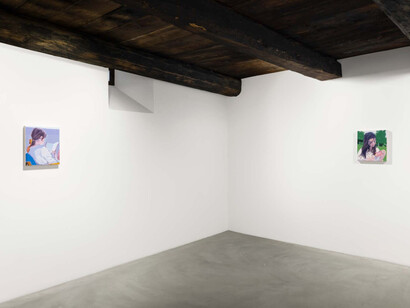
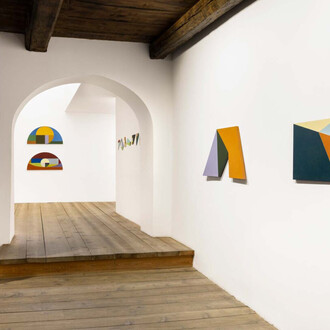
Yanai’s painting stems from a process of selecting and translating images, isolated from their original contexts and reconstructed through a rigorous formal grammar of sharp lines, compressed depth and saturated colors. In this process, the ceaseless flow of images that characterizes contemporary experience slows into contemplation. Everyday life thus becomes a space of focus and permanence, where the familiar takes on an unexpected and poetic quality.
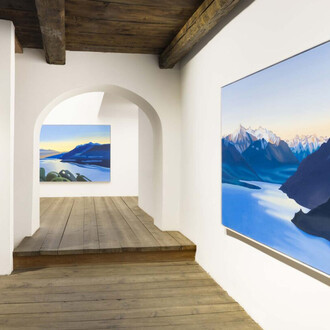
In his paintings, domestic interiors, Mediterranean landscapes, film stills, everyday objects and urban views emerge as suspended images, stripped down to their essence yet charged with memory. Through a pictorial approach that prioritizes synthesis and formal clarity, the artist transforms ordinary subjects into near-iconic presences, capable of evoking a sense of quietude and introspection. Rather than depicting specific places, his works convey an experience of space shaped by recollection, observation, and imagination.
Guy Yanai’s artistic practice investigates the ways contemporary images are produced and internalized. Drawing on a diverse range of sources – including personal photographs, modern architecture, cinema, literature, and fragments of everyday life – he has developed a distinctive visual vocabulary, characterized by luminous fields of color, pared-down compositions, and a particular tension between emotional intimacy and contemplative distance.
Whilst Yanai’s work engages with contemporary visual culture, its roots also lie in the history of modern painting. A genealogy that recalls the interiors of Pierre Bonnard, the Mediterranean light of Henri Matisse, David Hockney’s focus on lived environments, the poetic life of Cy Twombly, intertwines with an interest in the literature of Vladimir Nabokov, Marcel Proust, and Walter Benjamin where the observation of ordinary things becomes a means of knowledge and imagination. In Yanai’s work, these references converge in a language that oscillates between direct experience and mediated imagery, reaffirming painting’s ability to imbue everyday experience with new intensity. His works reflect a sensibility shaped by an age of visual overabundance, in which painting continues to offer a privileged space for observing, filtering, and reinterpreting what endures in memory.