English
 Español
 Français
 Deutsch
 Italiano
 Português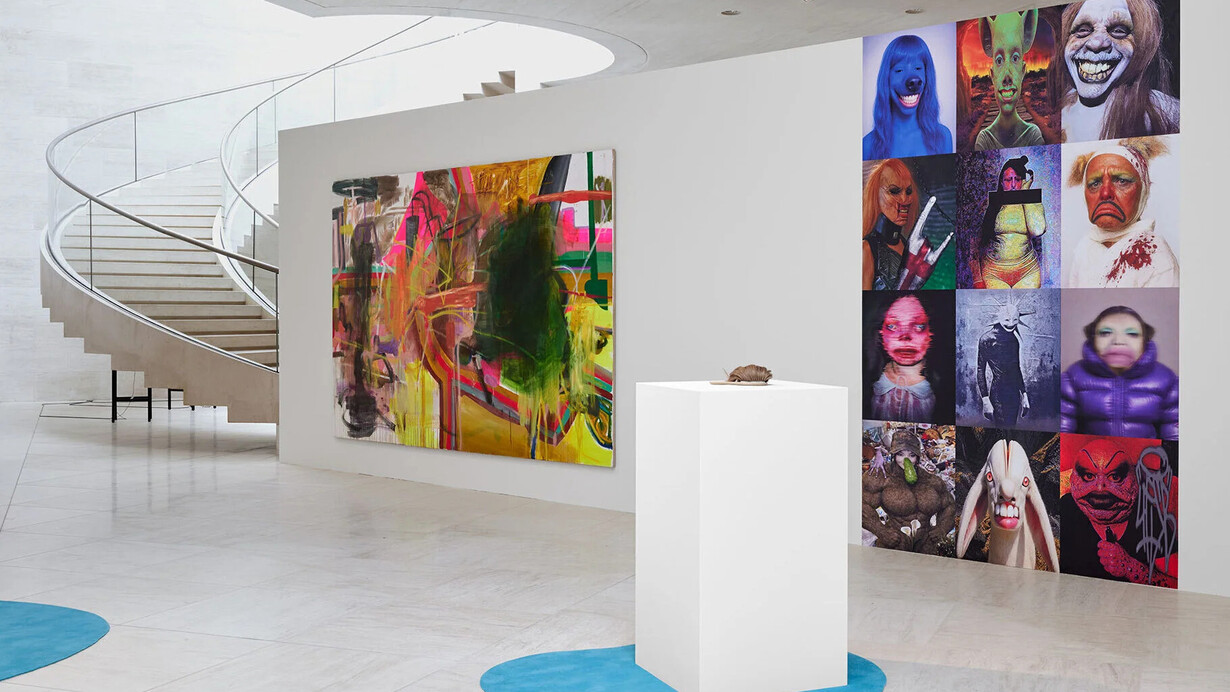
From the rise of neoliberalism under Margaret Thatcher and Ronald Reagan to the last events of the Cold War, the 1980s marked a profound reorientation of Western culture. The decade was shaped by the last years of the 1970s, which saw the emergence of postcolonial, queer and feminist discourses challenging the then-dominant cultural paradigm and was defined by paradoxes increasingly mediated by images. Pop culture’s gleaming surfaces encountered the deep fractures of global politics; new technologies collided with old ideologies; MTV’s debut and Chernobyl’s fallout reached audiences through the same screens.
Drawing from the Mudam Collection, international loans and archival materials, Video killed the radio star: the 1980s and their cultural echoes revisits the ‘long 1980s’, a pivotal period starting in the late 1970s and ending in the early 1990s, in which image overtook voice, access replaced ownership and aesthetics assumed a new political and cultural force. The exhibition examines the shifting perceptions and sensibilities of a world on the cusp of hyper-mediation.
On the occasion of Mudam’s twentieth anniversary, Video killed the radio star reflects the collection’s longstanding and formative engagement with the period. By revisiting this decade and tracing its reverberations, the exhibition explores how the transformations of the 1980s still inform the present. In dialogue with contemporary history, it invites viewers to question what is often overlooked by Western art history. From this standpoint, the exhibition incorporates more recent artistic practices, as well as archival material, to develop a broader argument around the 1980s.
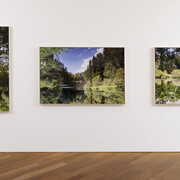
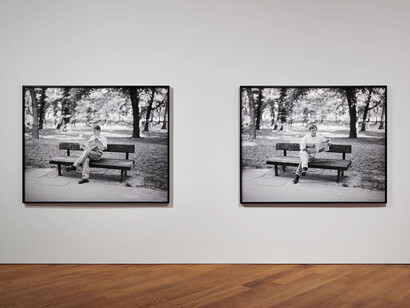
The encounters resonate across generations in a critical re-examination of the era’s cultural preoccupations and aesthetic forms and reveals their persistence into the present. Critical engagement with photography and cinema spans the exhibition, moving from staged portraiture and institutional spectatorship to the mediated construction of historical events.
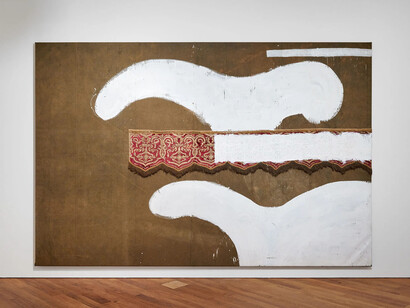
The exhibit is divided into two sections. The first examines how artists from the 1980s and today have challenged dominant regimes of representation in photography, painting and fashion, as well as through practices of institutional critique. The second turns to the geopolitical and media transformations of the end of the decade, from the collapse of communism to an emerging globalisation in which the concepts of the centre, periphery and marginality grew increasingly complex. The two sections are connected by the Foyer, an interstitial space built from archival material which plots the transition from mass consumerism to the attention economy.
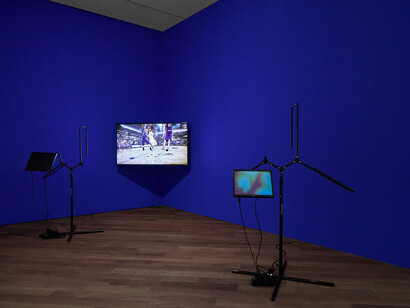
Video killed the radio star is a portrait of the 1980s as a cultural turning point and origin of contemporary technologies, contradictions and desires. It invites us to consider what remains of that era now, what is relevant from it in today’s algorithmically shaped information environment, in internet-mediated intimacy and post-truth politics and to trace how the visual codes and political undercurrents of the 1980s have informed intersectional interpretations of postmodernism. Ultimately, the exhibition approaches the decade as an unfinished project whose images and vocabulary continue to organise perception, belief, ideology and power.