English
 Español
 Français
 Deutsch
 Italiano
 Português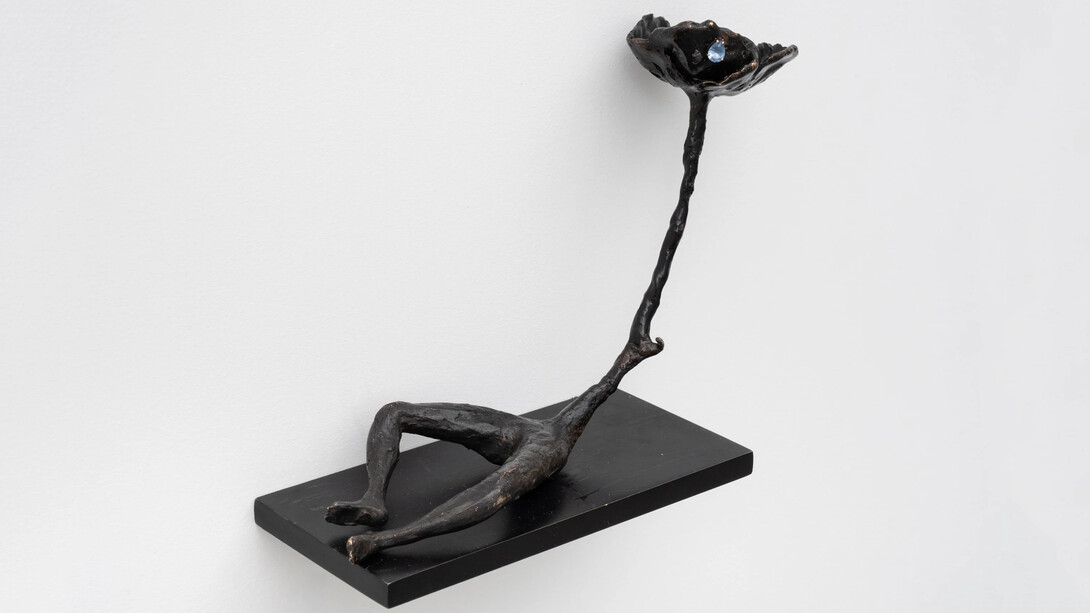
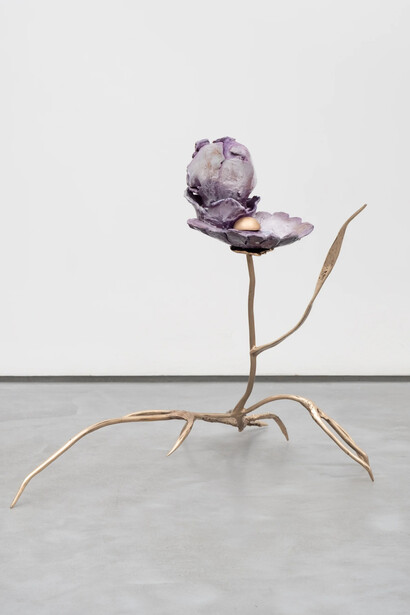
Growing along the margins of well-travelled paths are the unlikely strays of the wayside, foliage surviving despite the odds. They channel a persistence echoed in the long history of women’s voices that refuse to be buried, that rise, insistent, from the margins. Taking these “roadside survivors” home, Apollinaria Broche reimagined the roadsides of Pietrasanta from which they were gathered, and attended to the slow performance of their blooming and fading. Patiently observing this dissolution, these flowers became anthropomorphic portraits of existence.
What colour is your scream is a collection of these portraits. In conversation with the women in her life, Broche asked what colour their scream might take, seeking to visualise the sounds of this existence. With her brother, the sound artist Manus1ck, she gathered these sounds. There is, for many women in particular, a desire to let this ancient sound out from within, to untether it from the primordial prison to which it has been confined.
Women’s vocal rituals have long been disciplined and pathologised, classified as deviant, dangerous, or diseased. From the ecstatic mountain rites of ancient Greece to the keening women of Celtic Ireland, from hysteria diagnoses of 19th century Paris to the broader, persistent silencing of women’s voices, the instruments of suppression may have changed but their underlying intention has not. Broche’s work occupies the same territory, and refuses these limitations. If not a symptom, then the scream she returns to these women is an announcement, of joy, of pleasure, of pain, of grief, of being alive.
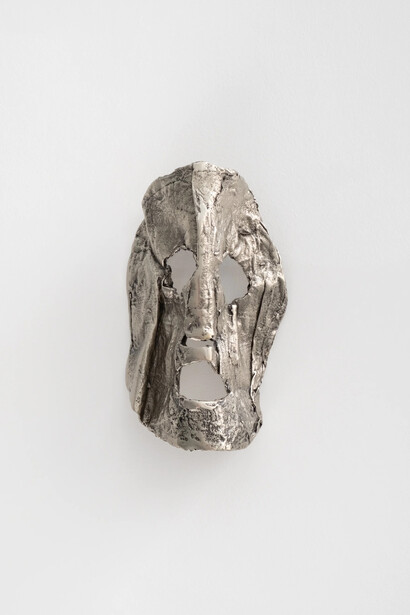
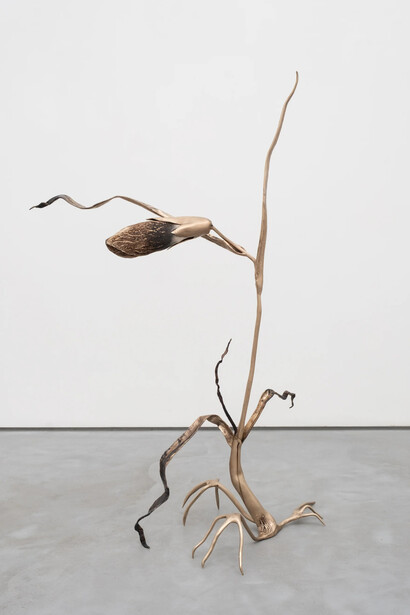
The sculptures themselves, portraits of these screams and their makers, are imposing in their scale, standing close to human height. Moving from wax to bronze, their ceramic and metal surfaces are in some places left exactly as they fell. Several of the ceramics were crafted through raku, a technique originating in Japan, where the works are pulled from the kiln burning, plunged into smoke and left to be claimed by ash and residue.
One still carries the faint scent of fire, recalling those who described their scream as fire itself. Its scorched patina, formed through heat and chemical reaction, resists concealment; marks, stains, and imperfections remain visible as evidence of the work’s making. Through form and process, Broche opens these portraits, at once human and non human, to the experience of the original “roadside survivors,” wearing their history on their skin.
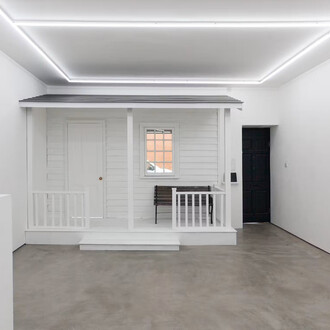
Together, they record the full range of their process, nothing concealed and enduringly imperfect. Arranged across the gallery as a verge might grow, they occupy the room separately, at a distance, individually distinct. Moving from flower to flower, each sculpture releases a voice, gradually gathering into a field of screams. A spine within each work balances its ceramic bloom, reacting to touch; they begin to seem conscious, aware of their environment and the space they now exist in.
Born in Moscow in 1995, now living between Pietrasanta and Paris, Broche has spent many years building a practice around the chimerical and the intimate, sculptural worlds that operate according to their own internal logic. This new body of work feels like a turn toward something more exposed; these portraits have existed before, made privately, given as gifts between friends. The question at hand brings this to the public; Broche asked it of her friends, and What colour is your scream asks it now of whoever walks through the door.
(Text by Isabella Pens)