English
 Español
 Français
 Deutsch
 Italiano
 Português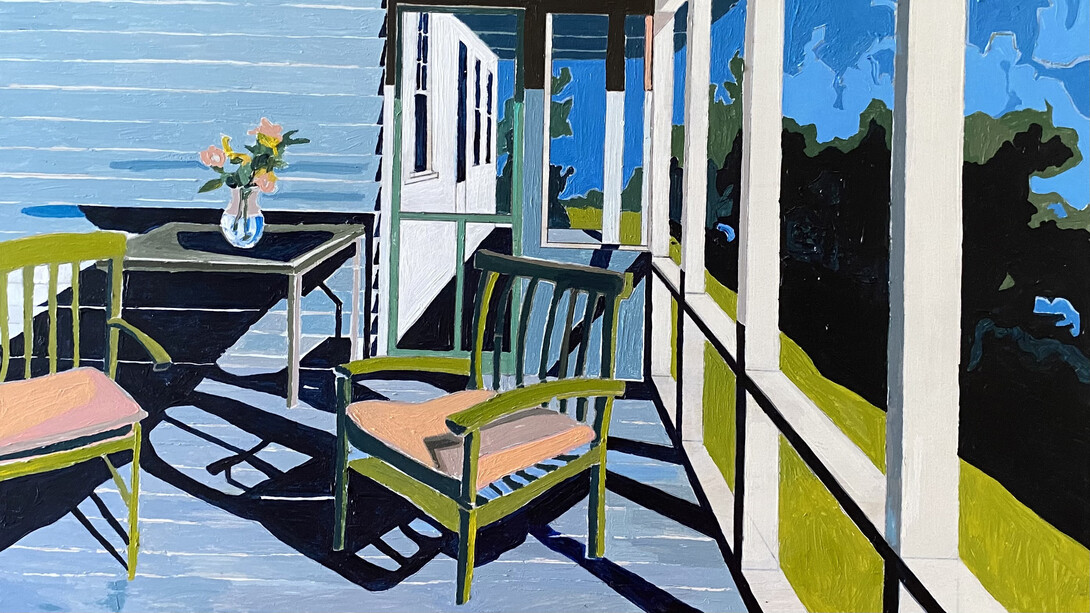
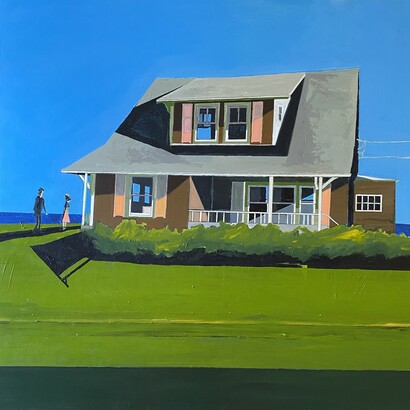
New American stillness by Gustave Carlson explores the quiet psychological presence of the contemporary American landscape. Focusing on ordinary architecture—coastal houses, open lawns, interiors, still lifes, and expansive skies—these paintings place absence at the center of experience.
Rather than narrative, Carlson emphasizes observation, structure, and atmosphere. Buildings act as anchors within broad fields of light and color, suggesting both stability and solitude. Subtle tonal shifts allow spaces to feel at once specific and timeless, inviting viewers to consider how shadow, memory, and perception shape place.
While Edward Hopper often conveys psychological isolation and Fairfield Porter captures domestic intimacy, Carlson draws from both to explore architecture as a perceptual construct rather than a narrative stage. In these restrained scenes, stillness is not emptiness but presence—an invitation to look longer and see more. His work suggests that the contemporary American landscape, when closely observed, continues to offer moments of quiet depth and reflection.