English
 Español
 Français
 Deutsch
 Italiano
 Português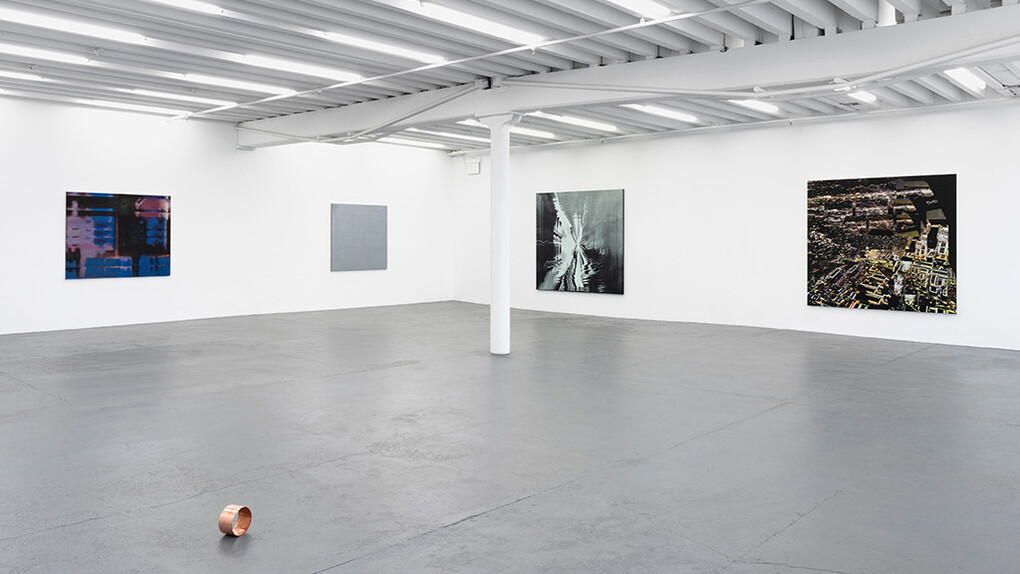
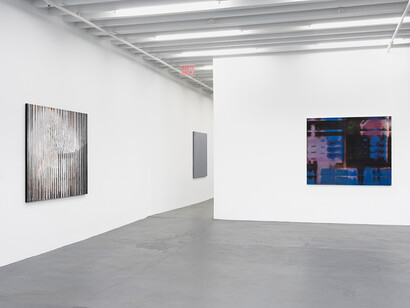
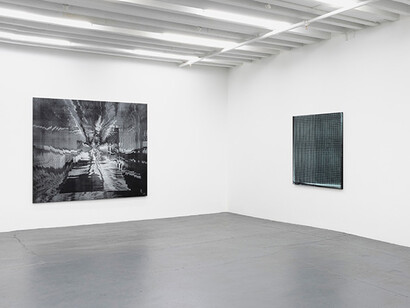
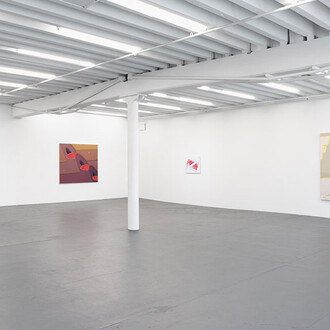
Miguel Abreu Gallery is pleased to announce the opening, on Friday, May 15, of Blast beat, Kate Mosher Hall’s second solo exhibition at the gallery. Comprised of ten new silkscreened paintings alongside a group of etchings and several metal elements, the exhibition will be inaugurated with a performance by the artist on opening night.
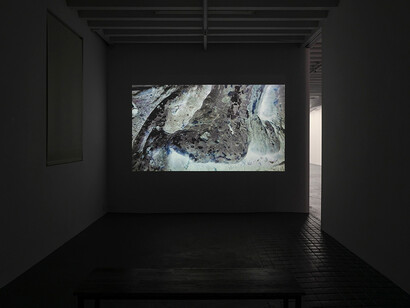
Organized by Andrew Lampert, the late Ken Jacobs’ short video, Other urban lives, from 2023, will be screened on a loop in the small entrance gallery, as part of The whole shebang: celebrating Ken & Flo Jacobs, a city-wide tribute to the two giants of experimental cinema.
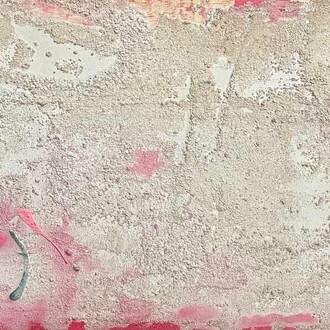
Kate Mosher Hall’s new body of work takes its title from the drummer’s blast beat—a high-density rhythmic structure associated with hardcore punk and grindcore, wherein meaningful signals crescendo into a mass of sensation. Employing her method of layering multiple image-making regimes—photography, digital composition, photo-etched copper plates, intaglio prints, and silkscreens—and multiple screens within one image, Hall upends the classical notion of the spectator as an autonomous ‘maker-of-meaning’ looking before a virtual world. The viewer is rather folded into an immanent process of image creation, the digital screen through which we encounter contemporary art objects churning another recursive movement. Each interface imposes its own logic to produce flickering moments of structural slippages.
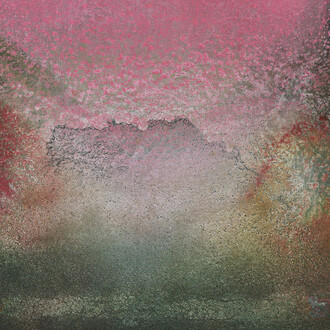
“Rather than the world being absorbed into the screen, the embossed texture of the offset silkscreen reverses the logic,” says Hall. “The digital comes out into the physical, and the computer emerges into the body of the painting.” Extending the formal techniques of 1960-70s video artists who intended to program digital apparatuses to work against themselves, Hall’s spatial montages manipulate one source image (a dog standing atop a mountain at sunset, a bird’s-eye view from an airplane) and submit it to obfuscation tactics resembling glitch artifacts. By toggling between the analog and digital, object and process, communication unfolds through a series of feedback loops (mis)registering varying bandwidths. The results are maniacal images that produce the feeling of standing within a hall of mirrors.
For Air, Hall collaged a photograph captured during an aerial descent into Los Angeles at night into a grid-like formation using multiple frames. These stacked screens, sites of projection and introjection, familiarize the surveillance operations of the American Semi-Automatic Ground Environment (SAGE) in the 1950s, to whom we owe the existence of the modern computer screen. “The illuminated city assumes a formal resemblance to a computer motherboard,” notes the artist. Transcoded into a multi-layered silkscreen composition, the memory-image splinters into chromatic subpixels and linear vectors spangling the canvas like digital debris, or what appears like cosmic dust.
Affirming the electrifying beauty of technical traces, Hall abandons memory as an originary presence, or as an image that represents “time embalmed and change mummified,” as in Bazin’s photographic realism. In her paintings, memory is always post-produced. Hall reorients our attention from the search for a lost object to the perceptible madness, or structural delirium, that conditions our contemporary life.