English
 Español
 Français
 Deutsch
 Italiano
 Português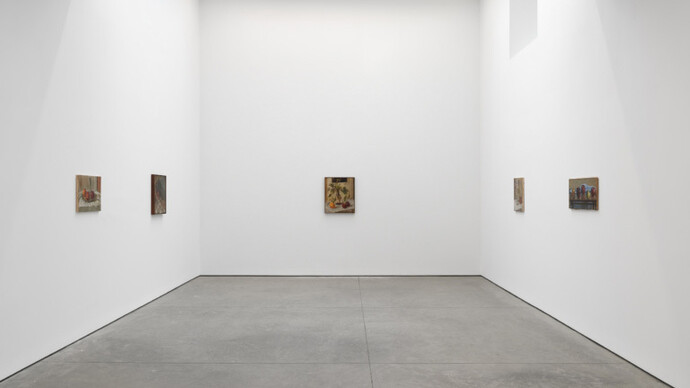
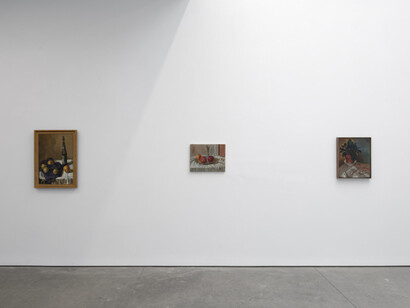
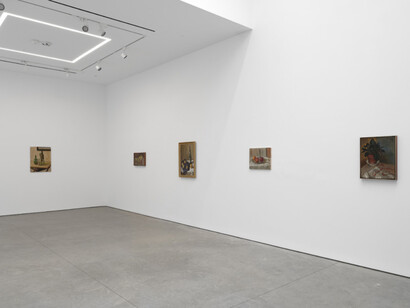
Hughie Lee-Smith (1915–1999) made still lifes regularly throughout his career alongside the enigmatic scenes for which he is best known. “The artist who has learned to see selectively,” he wrote, “communicates by means of symbolic use of real world objects.” The first exhibition to focus on his work in this traditional genre, Still lifes spans from 1944, the height of his Social Realist phase, to 1982, when Lee-Smith was working within a signature “metaphysical” style where anonymous figures, crumbling architectures, and unplaceable vistas become metaphors for alienation. Though painted from observation, his still lifes are another manifestation of the artist’s exploration of heightened reality.
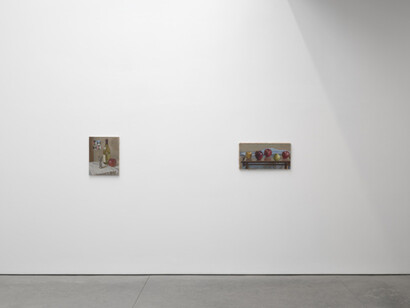
Lee-Smith’s creative investment in the spatial arrangement of objects dates back to the late 1930s, when the young artist designed sets for Cleveland’s Karamu House, the longest-running African American theater in the United States. Seen in relation to his lifelong interest in the theatrical, which is manifest in the dramatic, surreal lighting of many of his metaphysical paintings, each still life is a small mise-en-scène, the objects’ carefully blocked into arrangements that grant each equal significance within the composition. The fruits in Five apples (1960) rest in a line on a glass table, each rendered with particular attention to the singular character of its burnished skin.
These works are also self-reflexive: the ribbons that appear in Still life with potted plant (1944) and Untitled (Still life with three wine bottles) (1975) thread these works together with his landscapes, in which lengths of the textile float across desolate terrains, suggesting a connection between unearthly realms and the material world. The title of North Bergen memory (1982), where plant clippings rendered with a loose, quick hand tumble out of a glossy carafe, confounds distinctions between painting from life and from recollection. “Touching the raw edge of reality,” as art historian Leslie King-Hammond wrote in her 2010 study of the artist, Lee-Smith sought to imbue even the observed world with the quality of a dream.