English
 Español
 Français
 Deutsch
 Italiano
 Português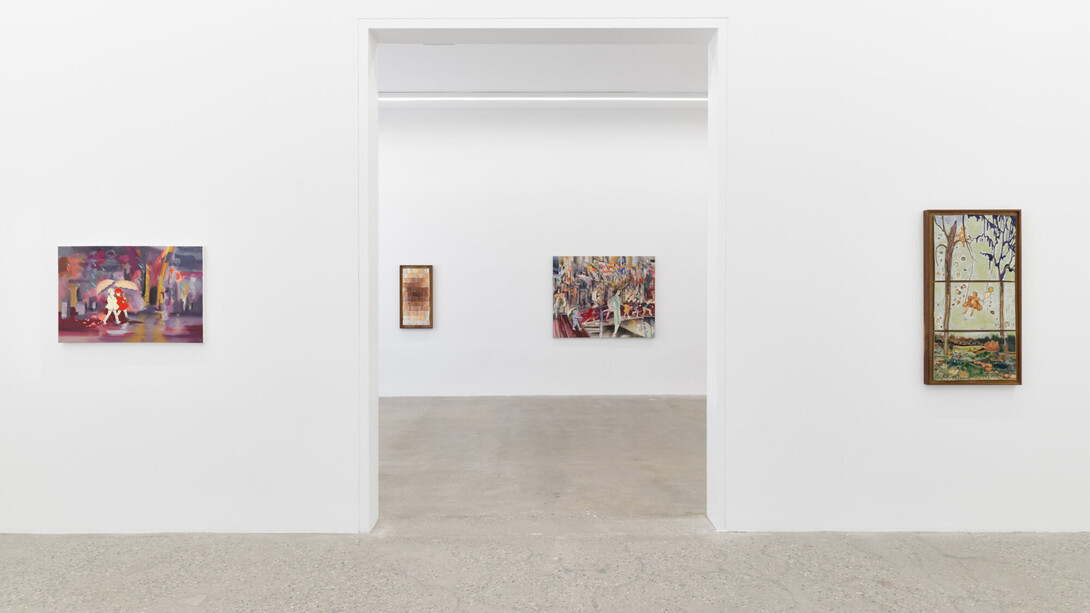
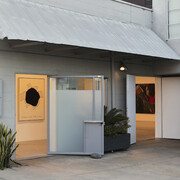
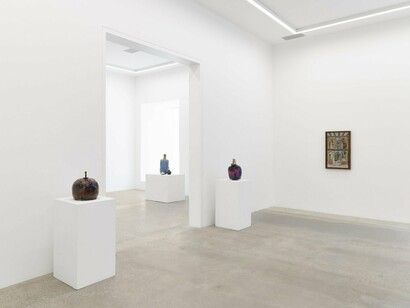
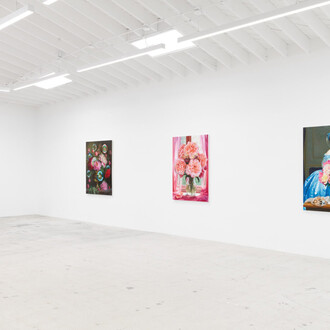
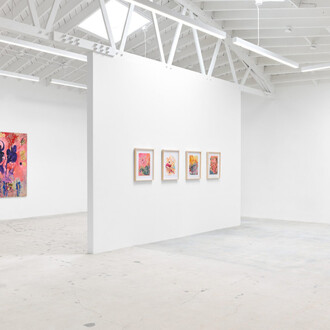
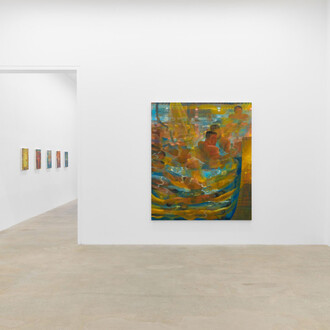
Anat Ebgi is pleased to present Rehearsals for living, a solo exhibition of new multi-tile ceramic tableau, paintings, and sculptural vessels by Los Angeles artist Olive Diamond. The exhibition is on view at 6150 Wilshire Blvd from April 18 through May 23, with an opening reception Saturday, April 18, 6-8 pm.
Rehearsals for living is a poetic response to the world of childhood—to its innocence and imagination as well as the structural conditions through which knowledge and morality are first encountered. Across Diamond’s recent works, dense and dissipating scenes depict children at play alongside fragments of the industrializing world of steam engines, scaffolding, and factories. Dripping, bubbling, and pooling glazes, along with the gestural brushwork of the paintings, contribute to Diamond’s atmospheres of delight and discovery.
Through toys and play activities, children scale down and rehearse the adult world. The exhibition centers on these formative moments, where children begin to model cultural understandings of law, ritual, love, and war. Diamond treats toys as interfaces for human ambition, technological progress, belief systems, and fantasy. Objects such as teddy bears, dominos, and swing sets become exploratory structures that shape perceptions of time, causality, and morality.
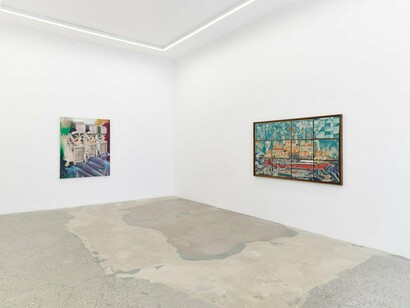
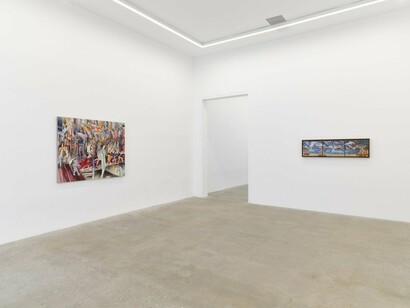
Across the exhibition, individual works articulate these ideas through distinct formal strategies. In a composition titled Play things that recalls early industrial production, three women assemble identical teddy bears, while the space around them fractures into pure color and gesture. In a vertical ceramic tableau titled Sticks, rocks, and Building blocks, a young girl swings between trees as the world below—constructed from building blocks—compresses landscape and architecture into an imaginative axis of daydream suspended beneath her.
Nearby, a grid of ceramic tiles titled Chrome and Tin unfolds as a chromatic gradient anchored by a row of toy icons progressing along its base. The sequence recalls Rudolph Zallinger’s The march of progress; in Diamond’s version, a young girl assumes the leading position. Subtle variations in glaze, produced through incremental shifts in the proportions of chrome and tin additives, generate a highly ordered abstraction. This measured progression echoes the spatial and temporal instability of Cabaletta, in which a figure in a pale green frock and children move rapidly along a bridge-like structure. Across the exhibition, development, motion, and experimentation emerge as recurring formal and conceptual concerns. This fractured sequencing of figures and space recalls Duchamp’s Nude descending a staircase, linking the language of movement to broader values of progress and futurist ideals.
Diamond’s experimental studio practice parallels the generative logic that fuels childhood discovery, while echoing the process of invention and industrial transformations pictured throughout the exhibition. Her glazes emerge through trial, chance, and reaction—adjusting compounds, temperatures, and firing conditions to produce surfaces that range from glassy translucence to mineral variegation. Diamond’s work registers a responsiveness to material, foregrounding contingency, variation, and the open-ended logic of play. The exhibition holds scientific and symbolic meaning in tension, balancing rigid structures with fluid surfaces, and calculated systems with a strong sense of playful and aesthetic resonance.