English
 Español
 Français
 Deutsch
 Italiano
 Português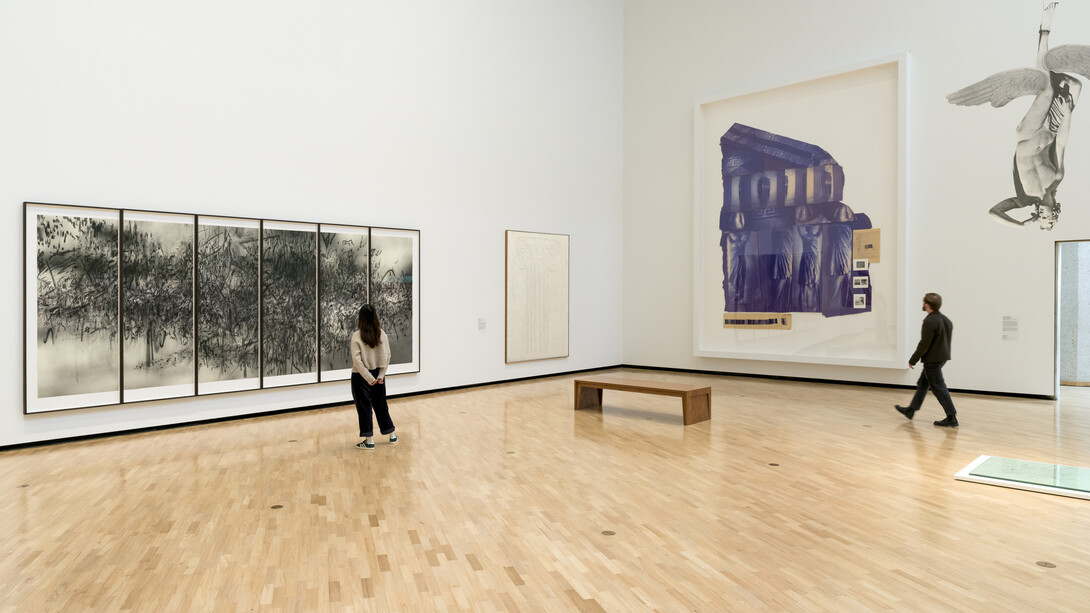
This winter I concentrated on building a temple…I wanted to talk about lofty and calm things since my life is neither…and get away from the very intuitive personal pieces that have carahterized [sic] my work in recent years.
(Francesca Woodman, 1980)
Witness an exploration of the relationship between body and architecture across cultures and millennia. To celebrate the acquisition of American photographer Francesca Woodman’s monumental collage Blueprint for a temple (II) 1980, this display brings together sculpture and assemblages, paintings, prints and photographs that map connections across architecture, classicism and the human form.
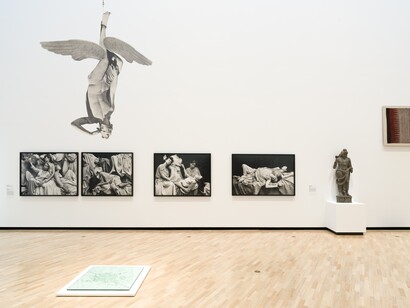
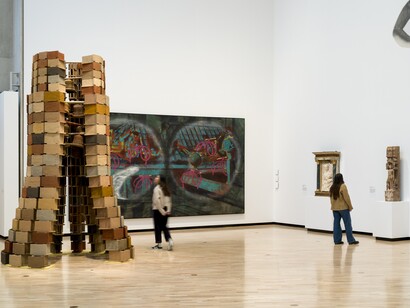
The earliest work, the Gandharan Standing bodhisattva from the 3rd century, shows the impact of Grecian traditions through costume, physical characteristics and the naturalism of the figure. Several other sculptures explore bodies within an architectural setting and the ways in which caryatids, angels and other figures reoccur in art and architecture. The bronze angel by Italian Renaissance artist Giambologna, for example, finds a 20th-century echo in the suspended winged figure in Giulio Paolini’s Air 1983, while Montien Boonma’s towering multisensory sculpture Temple of the mind: sala for the mind 1995 suggests the importance of physical senses for contemplation.
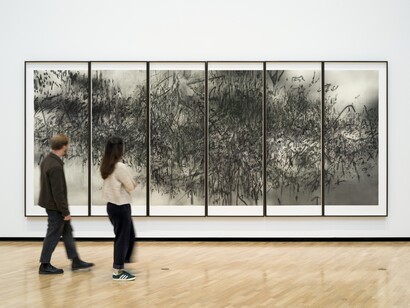
Photography and architecture are intertwined. In the early years of the twentieth century Eugene Atget’s idiosyncratic views of ‘Old Paris’ feature statuary, ornate doorknobs and stairways. In New York toward the end of that century, Francesca Woodman transforms patterned bathroom tiles into the building blocks of a classical temple, while Australian artist Anne Ferran explores the drapery and gendered language of posing in monumental sculpture. The columns, arches and porticoes in Julie Mehretu’s monumental print work Epigraph, Damascus 2016, another new acquisition, are overlaid with a dense tangle of marks to suggest the impact of history and politics.
Across time, place and very different material traditions, the works in this display showcase the uses and reuses of symbols and imagery, as artists pose new ways of experiencing spaces of contemplation, the subject of art and our place in the world.