English
 Español
 Français
 Deutsch
 Italiano
 Português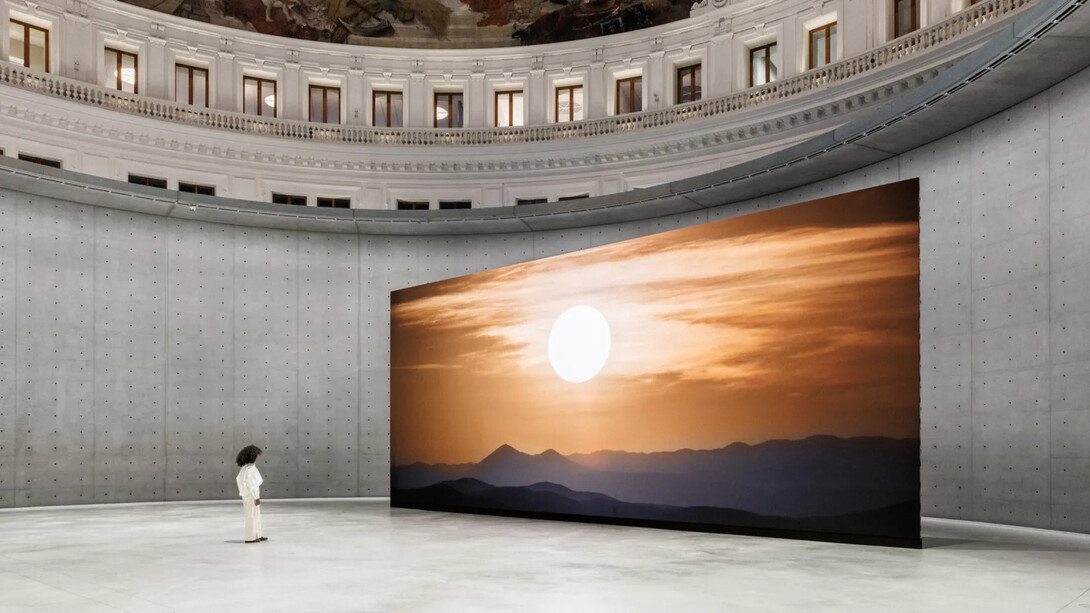
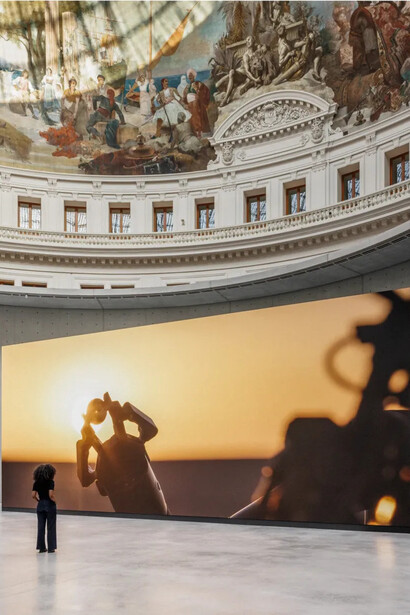
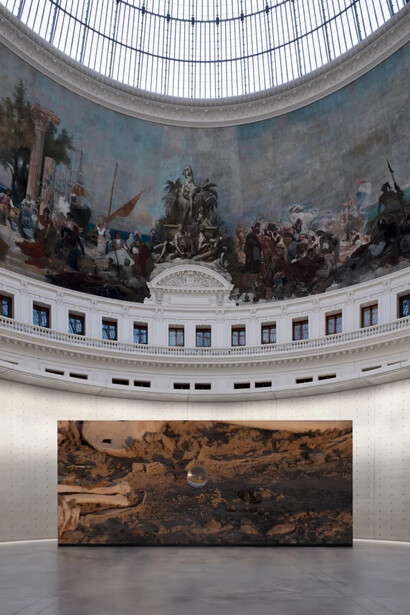
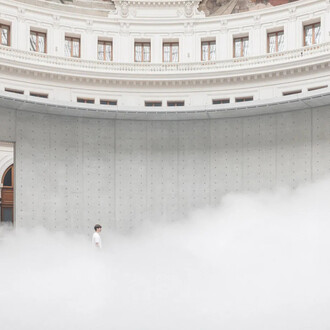
Pierre Huyghe’s film Camata (2024) unfolds in the museum’s Rotunda as a meditation in which life and death, reality and fiction, the human and the non-human are replayed to question humanity’s place within a universe shaped by technology.
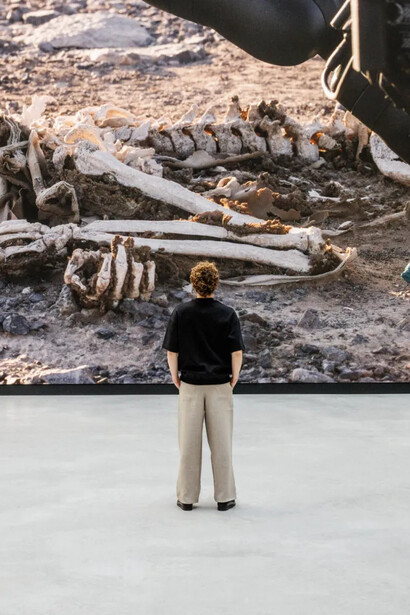
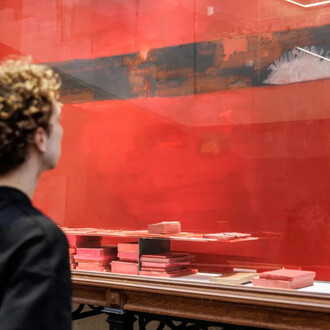
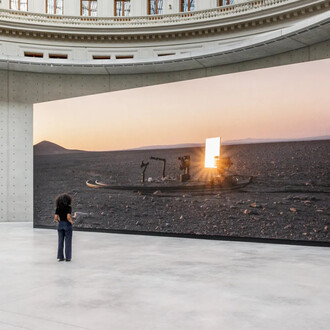
As part of the exhibition Clair-obscur, the film Camata (2024) by French artist Pierre Huyghe is is majestically featured in the very centre of the museum, inviting viewers to contemplate the place of humans in a world ruled by technology. It reenacts ad infinitum a hybridisation of life and death, reality and fiction, body and landscape, past, present and future, night and day, shadow and light, earth and sky, ritual and cosmos, and human and non-human.
In the Rotunda, Camata portrays a landscape between day and night in which a strange, robotic ballet plays out. Orchestrated by machine-learning algorithms, the pace of the images is in perpetual transformation. A set of machines performs an unknown ritual involving an unburied human skeleton that was discovered in Chile’s Atacama Desert. Obsessed by the discovery of this unburied corpse lying between the ground and the infinity of the cosmos, Huyghe invented a ritual that is at once archaic and technological, in which mechanical arms powered by solar panels move around the skeleton in a choreography that is as slow and precise as an autopsy. They delicately handle glass balls and amulets, engaging in gestures of a metaphysical and funerary ceremony that asks us to meditate on humanity’s place in a changing world ruled by technology
![Mary Cassatt, Fillette dans un fauteuil bleu [Enfant dans le salon bleu] (detail), 1878. Courtesy of Musée d’Orsay](/attachments/3ddcf3630b2e6b21d055a8488350d949784be8fa/store/fill/330/330/9b97dc5b17cad42577b6453f0968e961b1231ceb2b8b5ceb2c09057b2695/Mary-Cassatt-Fillette-dans-un-fauteuil-bleu-Enfant-dans-le-salon-bleu-detail-1878-Courtesy-of.jpg)