English
 Español
 Français
 Deutsch
 Italiano
 Português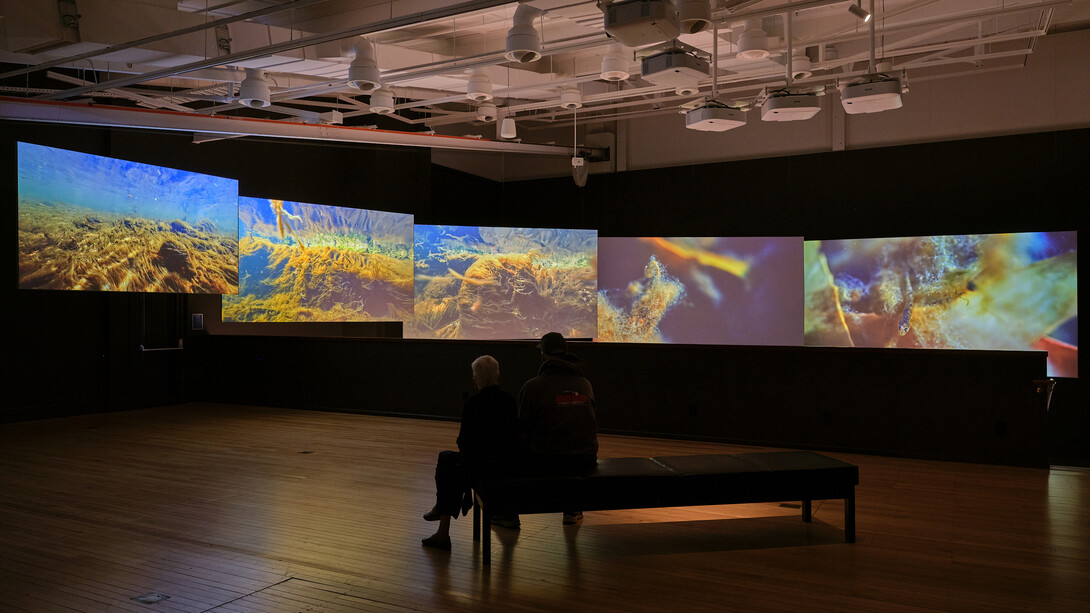
Whiria ko te iwi tuna is a major newly commissioned project by artist collective Toiaa Taiao: Tihikura Hohaia (Ngaati Moeahu), Alex Monteith (Clans Mitchell, Monteith & Doherty), and Maree Sheehan (Ngāti Maniapoto, Waikato, Ngāti Tuwharetoa, Raukawa, Ngāti Tahu- Ngāti Whaoa, Clan Sheehan, Clan Marshall).
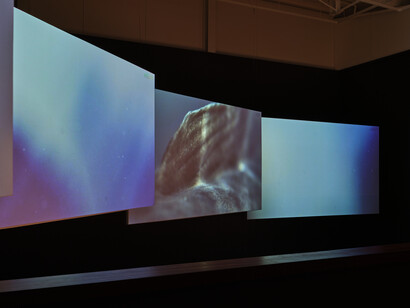
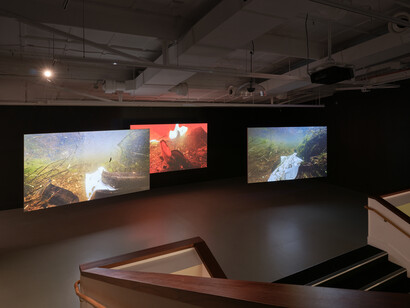
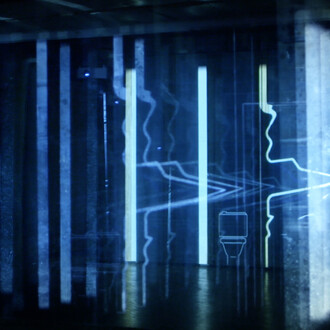
Through immersive visual and sonic storytelling, the project gives form to the underwater lifeworlds of Te Whanganui—a manga in the rohe of Ngaati Moeahu, which meets Te Moana-Taapokopoko-a-Taawhaki near the western-most point of Taranaki. Focussing on the ngutuawa—the last 100-meters of the manga before it meets the sea—this body of water experiences the cumulative impacts of more than a century and a half of settler-colonial land and water mismanagement.
Within the environment of Whiria ko te iwi tuna, the voice of the manga embraces audiences—through underwater images and frequencies usually out of the realm of human comprehension. The beings who inhabit the manga are pictured at different stages of life, many in juvenile form, through varying weather patterns and seasonal changes. Tuna and piharau gliding in shadow, iinanga shimmering like silver threads, kooaro drifting through dark currents, and kooura moving quietly among stones. Through a soundscape composed from field recordings gathered over years, the listener is connected to ihirangaranga—the delicate vibrations and deep resonance of life which unfolds and ripples through water, stone, and non-human beings. Every sound, from the faintest shimmer to the deepest rumble, becomes part of an intimate chorus rising from beneath the surface, revealing the unseen state of Te Whanganui.
Seeking to develop an underwater poetics, the artists position themselves within a lineage of activism and change. The project foregrounds the impact of continuing legislative failures, which enable capitalist exploitation of land and waters, and undermine hapū authority in enacting kaitiakitanga.
Alongside the exhibition, a newly commissioned text by Rachel Buchanan (Taranaki iwi, Te Ātiawa, Taranaki Whānui ki Te Upoko o Te Ika) locates the project within “a whakapapa of care and protest” within Taranaki, honouring generations of hapuu and community-led efforts to protect waters from industrial ruin, and affirm the inseparable relations between Taranaki’s waters and its people.