English
 Español
 Français
 Deutsch
 Italiano
 Português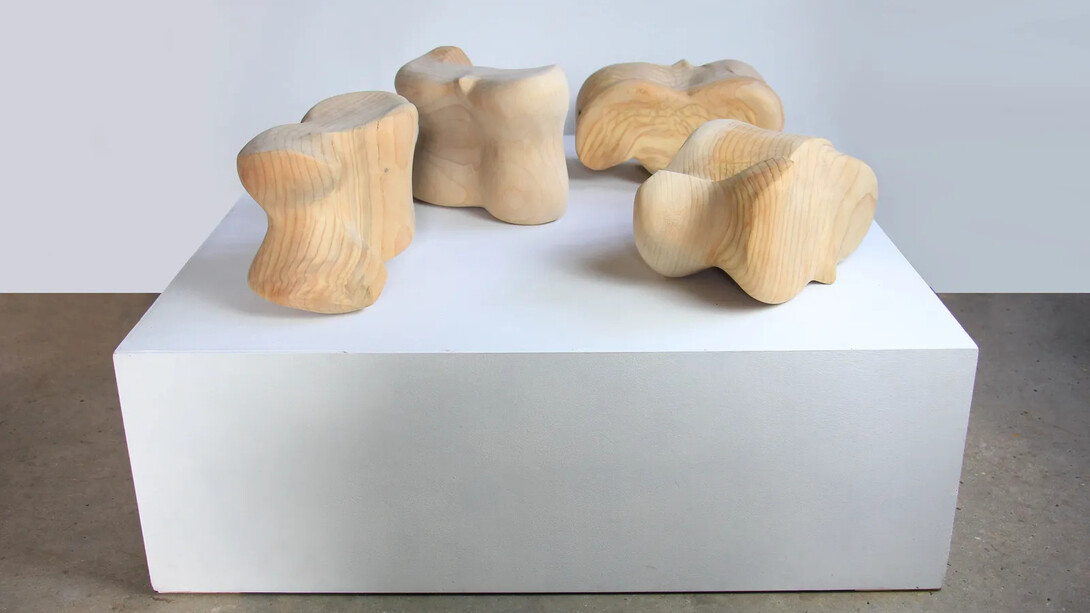
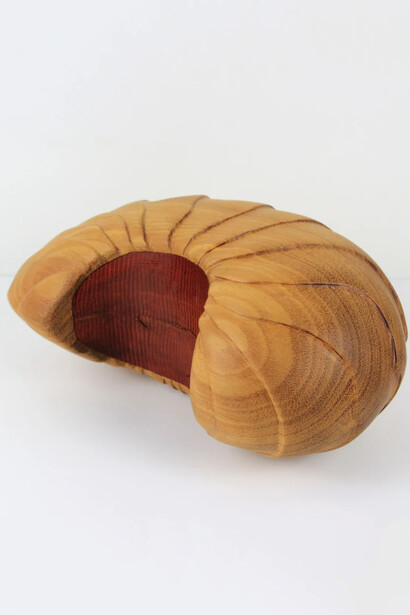
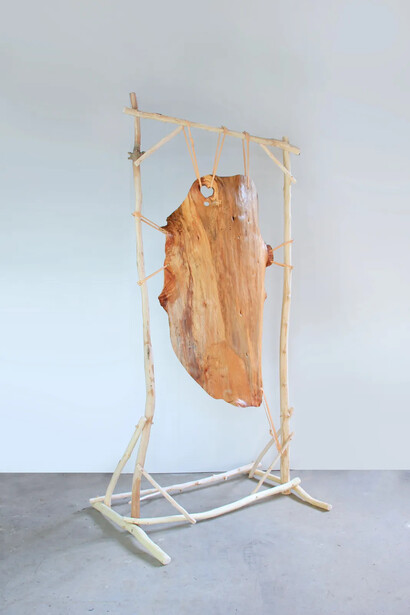
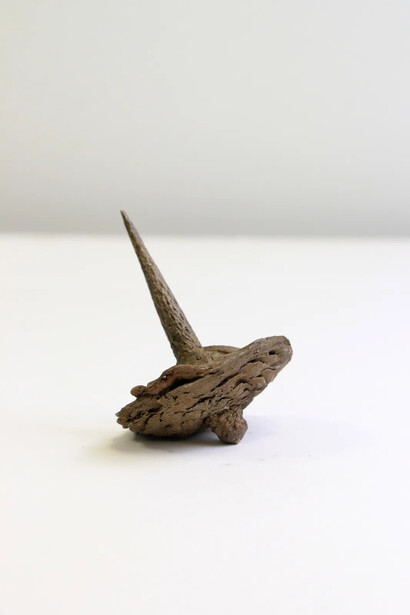
The gallery By Lara Sedbon is pleased to present the second solo exhibition by Lélia Demoisy. Through this exhibition, the artist continues her exploration of the circulations and hybridizations of living forms.
Elysia is the name of a very particular genus of marine mollusks whose remarkable characteristic was discovered only in 2008. This sea slug is the only photosynthetic animal known to date. It is believed to have “stolen” from the algae it feeds on (Vaucheria) the ability to transform light into energy. This phenomenon is known as horizontal gene transfer, a process in which an organism incorporates genetic material originating from another organism without being its descendant.
Polyfaunie Polyflorie sets out to reveal hypothetical exchanges of genes between the animal and plant kingdoms. Only the plant kingdom and certain bacteria are capable of creating new living matter from inert resources. This matter, passing through successive cycles of life and death, merely moves from one body to another with sufficient success to multiply, again and again, the diversity of life on Earth.
Humankind seems troubled by this entropic multiplication of life and strives to simplify and essentialize the species on which we feed, as well as waterways, land, and forests. Polyfaunie Polyflorie is an ode to plurality and to chance, to drift and to fortuitous genetic convergence.
These carefully gathered materials are reanimated through this hybridization sometimes with violence, sometimes with humor for the mixing of genes is indifferent. In this blending of sylvan and animal bodies lies the desire to restore the tree to its place as a living being within our consciousness, which is often indifferent to the fate we reserve for the plant kingdom.
Through this necessity to reveal the value of such diversity, one can sense both the fear of this indifference and our hopes for the future. There is a fierce conviction that knowledge of, and curiosity for, the other easily create an indestructible bond. Sometimes this attachment becomes so strong that the need to pay homage arises of its own accord, and the emotions we believed reserved for our fellow humans urge us to care for and protect. Engaging with the frameworks of human justice, sacralization, pragmatism, or poetry are among the paths through which the polyphonic song of the living might be heard.
(Text by Lélia Demoisy)
![Mary Cassatt, Fillette dans un fauteuil bleu [Enfant dans le salon bleu] (detail), 1878. Courtesy of Musée d’Orsay](/attachments/3ddcf3630b2e6b21d055a8488350d949784be8fa/store/fill/330/330/9b97dc5b17cad42577b6453f0968e961b1231ceb2b8b5ceb2c09057b2695/Mary-Cassatt-Fillette-dans-un-fauteuil-bleu-Enfant-dans-le-salon-bleu-detail-1878-Courtesy-of.jpg)