English
 Español
 Français
 Deutsch
 Italiano
 Português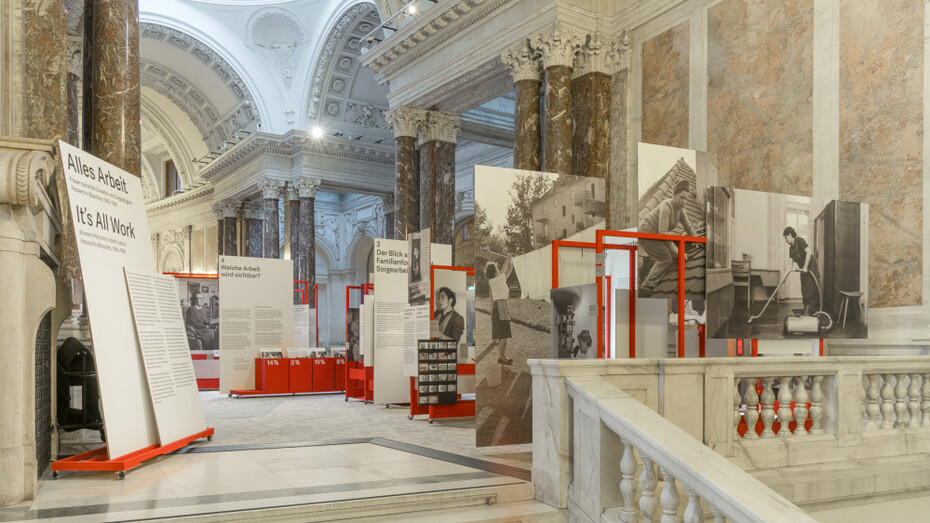
A job with a salary? Responsibilities at home? A to-do list of tasks?
There’s always something to be done. Some kinds of work come with recognition and a wage. Others just arise – unpaid, unseen and most often done by women. But, isn’t it all work? Care work is still regarded as a “female resource” on which our society relies as a matter of course. Today, terms such as care crisis, gender pay gap and part-time work trap describe an inequality in work and pay with deep historical roots.
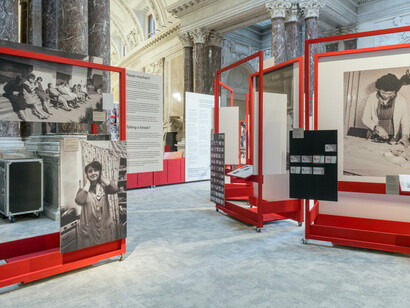
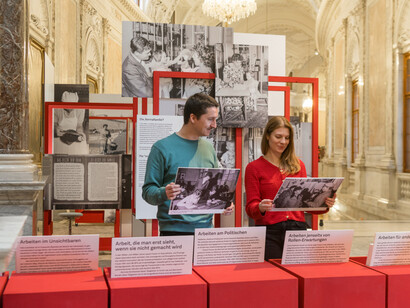
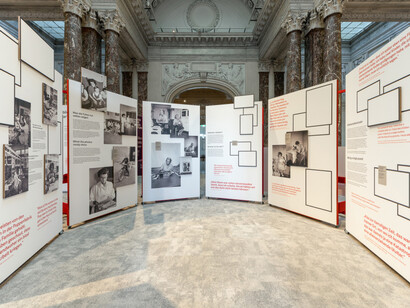
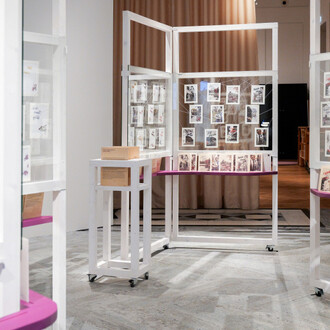
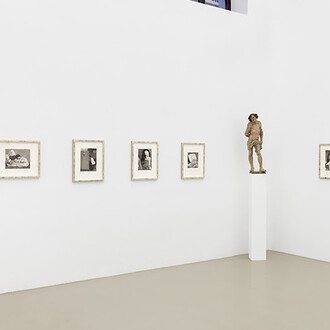
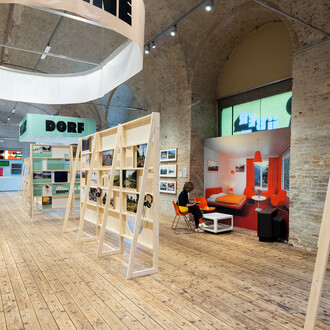
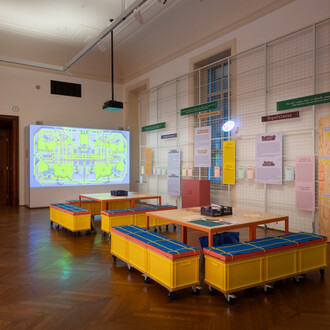
These themes are explored by the exhibition It’s all work. Women’s paid and unpaid labour, fotoarchiv blaschka 1950–1966. Based on the archive of a press photo agency in Graz, the exhibition approaches the material through the lens of contemporary questions about work and gender.
At its core is the relationship between paid, unpaid and precarious work in the lives of women in post-war Styria. It asks which forms of work were visible in the media – and which remained hidden. It also invites reflection on concepts of work and gender relations. After all, ideas about gender shape social reality, and both can change.
(It’s all work. Women’s paid and unpaid labour, fotoarchiv blaschka 1950–1966 is an exhibition by the Museum of History, Graz [Universalmuseum Joanneum], presented in cooperation with the House of Austrian History)