English
 Español
 Français
 Deutsch
 Italiano
 Português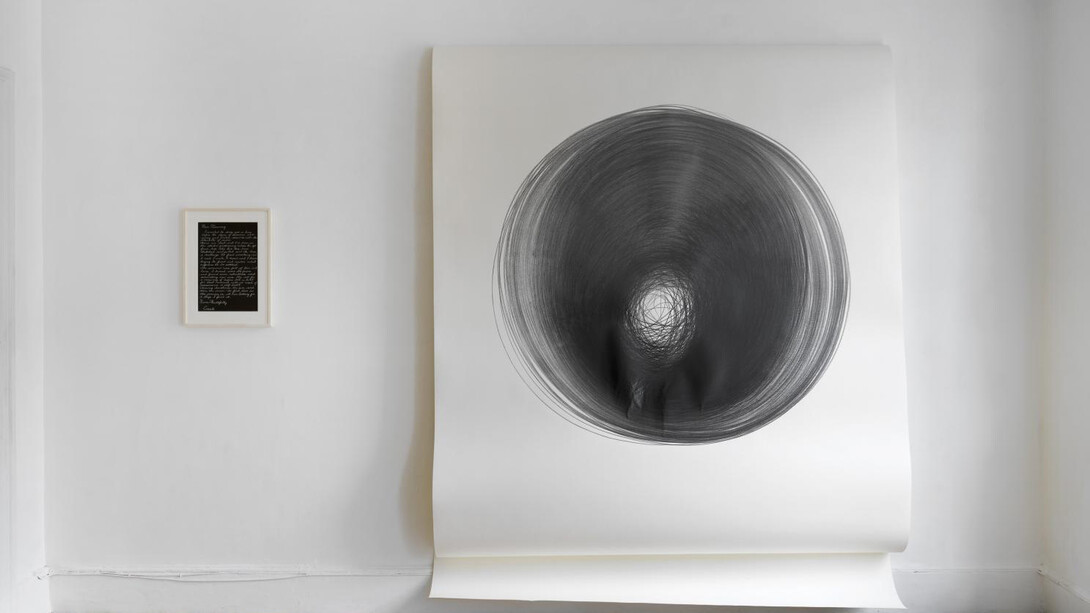
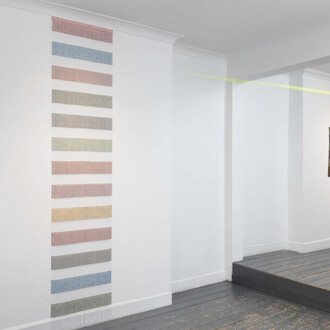
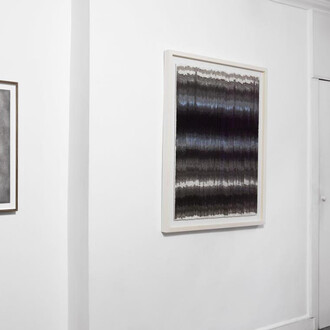
Circling graphite lines to exhaustion, floating in a cold sea, folding and throwing paper objects into space, responding to melting glaciers: within As long as it takes drawing originates from a body in motion. The line is created through sustained, performative actions that may unfold in front of an audience or take place without witnesses. Exhibition brings together four artists: Carali McCall (b. 1981, Canada), Jaanika Peerna (b. 1971, Estonia), Diogo Pimentão (b. 1973, Portugal), and Peter Matthews (b. 1978, UK), for whom drawing becomes a process shaped by duration while recording effort, vulnerability, and attention. The resulting works are not only images or objects, but traces of lived actions marked by movement, resistance and environmental conditions.
Time is integral to these practices. The works come into being within a defined duration, yet their length is never fixed in advance. Rather than measuring or monitoring time, the artists continue to draw for as long as it takes for the internal logic of each performance to unfold.
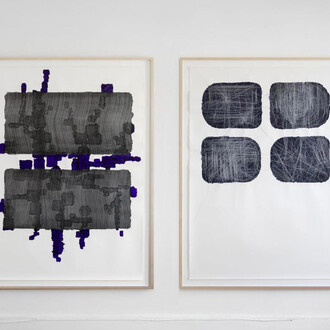
Carali McCall works across drawing, performance, sculpture, video and writing. Whether carving through the landscape while running, or drawing directly with graphite on paper, McCall treats the body as both subject and instrument, emphasising duration, endurance and physical presence. Central to her practice are the Circle drawings, which result from live performances. Each drawing is constructed from a single continuous line made while standing, holding the graphite at full arm’s length and moving in a circular motion until exhaustion. Through this process, McCall explores the physicality of mark-making, where drawing becomes both an action and a recording of lived experiences.
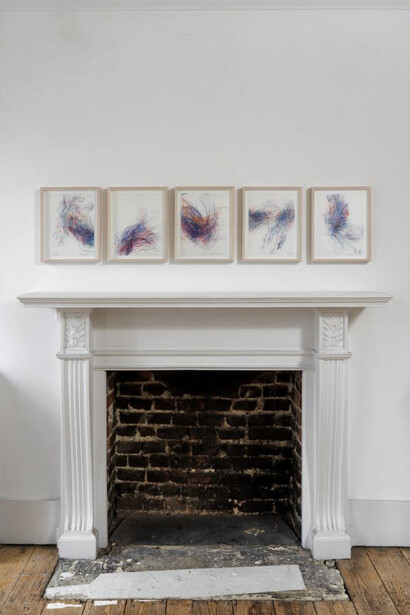
Jaanika Peerna engages with drawing, movement, sound and the fragile state of the natural world, particularly ice and glaciers. Her practice often emerges from direct physical and sensory engagement, transforming ephemeral environmental phenomena into visceral visual form. Peerna presents a series entitled I could hear the internal workings of the ice, created whilst listening to a soundscape of ice melting, shifting and breaking. Drawing instinctively with both hands, she responds to these recordings as if transcribing sound into movement, producing energetic marks that reflect deep immersion in the experience. The drawings act as intuitive chronicles of her emotional and physical response to melting glaciers.
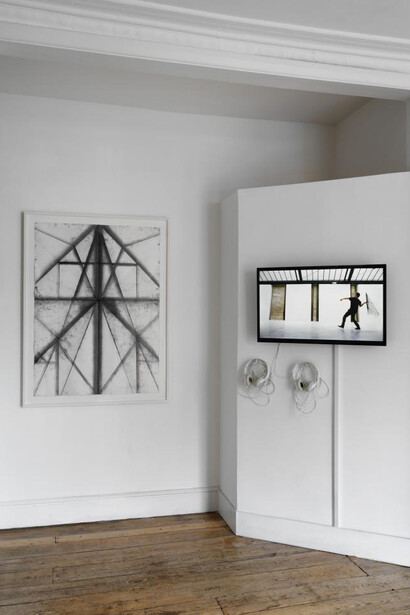
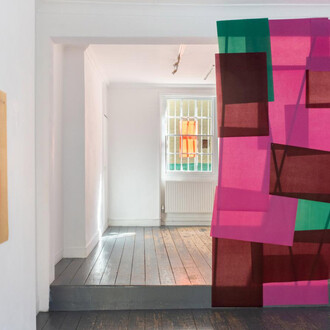
Diogo Pimentão focuses his practice on drawing as a material-based process that engages the whole body and the physical space it occupies. He explores the relationship between graphite and paper through repetitive, often procedural actions that lend a tactile, almost ritual quality to mark-making. Pimentão’s drawings extend beyond two dimensions: large sheets of paper are coated with solid graphite, then folded, layered and manipulated into three-dimensional forms. These works challenge expectations of paper as a flat support, allowing lines to become volumes and surfaces to inhabit space in sculptural as well as architectural ways. Performance plays a key role in Pimentão’s practice. One work in the exhibition documents Trajectory (2019), a performance in which he throws a large paper airplane through space after folding it and marking its creases with graphite. The unfolded airplane is on display as a paper object, underscoring how movement, gesture, and drawing are inseparable in his work.
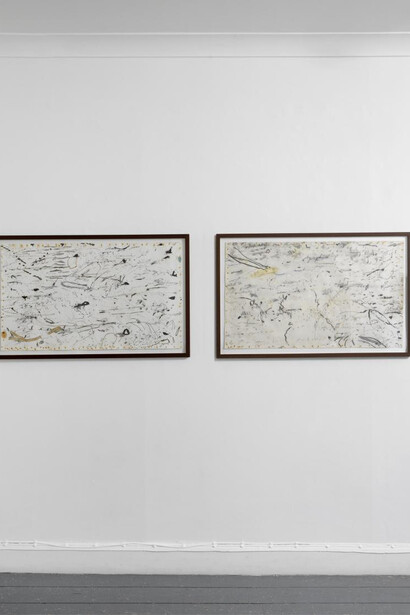
Peter Matthews works in and with the ocean. Rather than operating in a conventional studio, Matthews creates drawings while physically immersed in the water; the works on display, for example, originate from the Northern Scottish coast and Chile’s Pacific coast. For more than a decade, he has developed a method of drawing that embraces the unpredictable movement of water as a collaborator. He straps drawing materials to his body and pins paper or canvas to a piece of floating plywood, which serves as both drawing surface and flotation device. Floating or wading in the ocean for hours at a time, Matthews allows tide, wind and waves to influence the marks he makes, weaving his own gestures with those of the sea. This immersive process results in works that are intimate records of time, place and personal experience, where lines, smudges, stains and water-induced effects register the physical sensation of being exposed to the tempers of the sea.