English
 Español
 Français
 Deutsch
 Italiano
 Português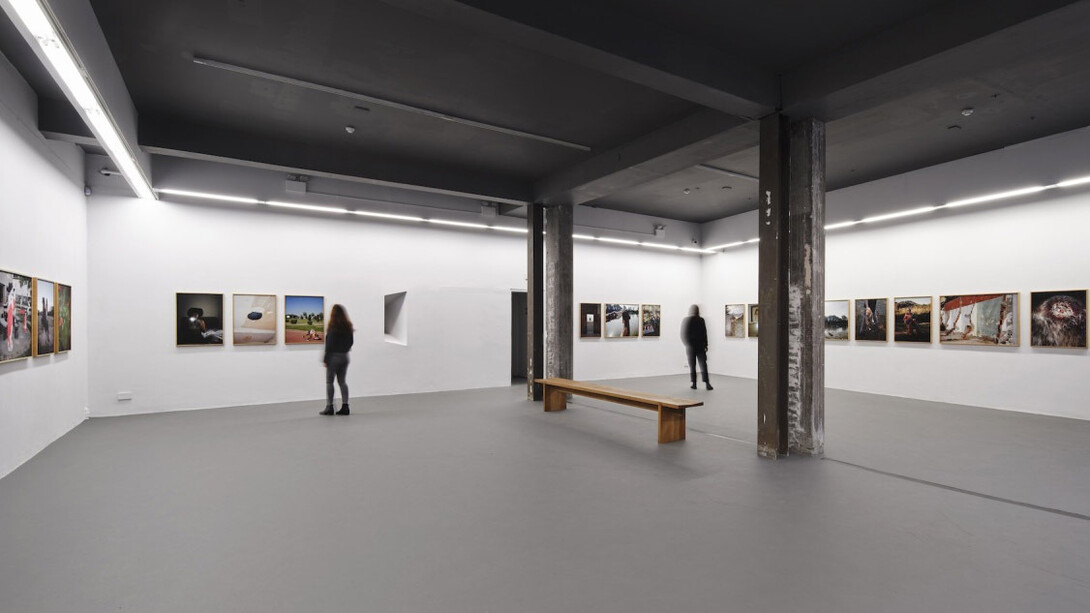
The last Balkan cowboy is a long-term project by Dragana Jurišić that follows the footsteps of cult Yugoslavian film director, Hari Džekson. Renowned for his interpretation of Wild West genre archetypes, Džekson lived a cowboy fantasy inspired by the rugged landscapes around Bijeljina in present-day Bosnia-Herzegovina. Using local people as his crew and cast, Džekson conjured worlds far from his reality and brought together people of different ethnic backgrounds, whom the Yugoslav Wars would bitterly divide.
Jurišić’s life has been intertwined with Džekson’s legacy and his mysterious fate since childhood. Her father was close friends with the filmmaker and learned how to use a camera under his instruction. In 1991, during the early months of the Yugoslav Wars, Jurišić’s family home was destroyed, and thousands of her father’s photographic prints and negatives were lost in the fire. From that day onward, she became a photographer herself, using her father’s camera and learning the power of the photographic medium over memory. Like Džekson, her artistic origin is inseparable from the history of Yugoslavia: Her practice attempts to understand what happened in her lost country, how to rationalise her identity and how to envisage post-conflict restoration through her work. In the case of Jurišić and Džekson, both the cowboy and the photographer use the ephemeral nature of memory to imagine heroic alternative narratives to those of loss and neglect, often connected to the traumas of war and dislocation.
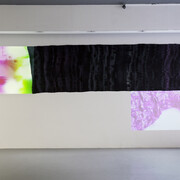
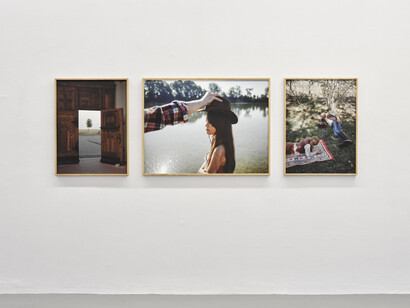
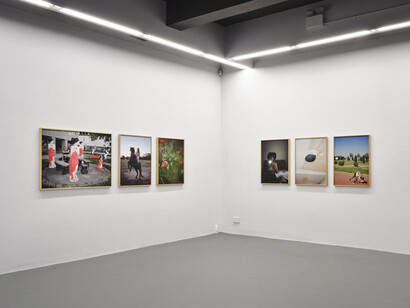
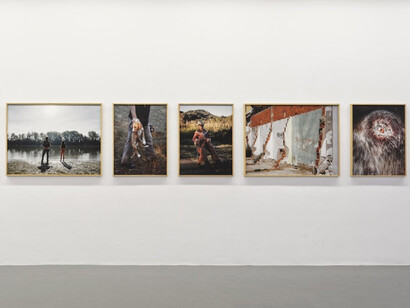
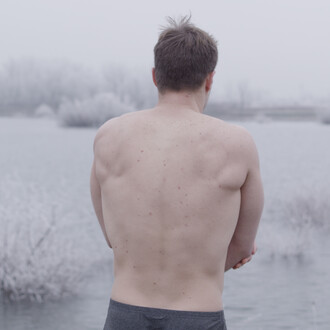
This exhibition precedes a feature-length documentary on Džekson directed by Jurišić, which will premiere later in 2026. The photographs were made during three cross-country trips throughout 2024-2025 in Bosnia-Herzegovina, Croatia and Serbia in between location scouting, research and filming. Following a trail of rumours and local folklore, Jurišić tracked down people who were close to Džekson, simultaneously tracing his life and disappearance in parallel with the fragmentation of the Balkan states. Her photographs draw on the practice of shooting production stills; instead of focussing on the critical moment of action, her approach captures actors relaxing between takes, landscapes that appear to exist outside of a fixed time period, and the aftermath of a fragmented nation. The exhibition presents itself as a cinematic panorama of photographs referencing the Western landscape’s horizon line; a symbol of opportunity and new beginnings. Resisting an urge to remain rooted in an era or pre-conceptions of a place and its characteristics, Jurišić presents a disjointed and incomplete storyboard rather than attempting to generalise or flatten a collection of experiences.
Like Džekson, Jurišić is drawn to the symbolism of the Wild West outlaw: a wandering outsider roaming the landscape for opportunity, romance, and adventure, albeit shadowed by the reality of migration, placelessness and the search for home. Like the heroes of many Westerns, Džekson’s cowboys sought justice and glory, existing on the margins of society, and living semi-nomadic lives, adjacent to lawless activities despite a strong moral compass. One of Džekson’s biggest influences was 1953’s Shane directed by George Stevens, a film that portrays a conflict between a group of modest farmers who are intimidated by a powerful cattle baron and his hired gunmen. Each party expresses a right to claim what they consider to be their own land.
At this very moment, our world continues to be compounded by devastating wars, political power plays and desperate attempts to control land and resources. Nationalism and pride in heritage and culture has become closely aligned with groups of people who want to violently remove those values from other members of that shared society. The reluctant gunslingers in Jurišić’s photographs offer a sense of positivity about reclaiming identity and a sense of belonging, while simultaneously rejecting the violence of the past. To quote Džekson’s words painted in a mural on the cinema in Bijeljina: "Neka tvoj san bude tvoje oružje/Let your dream be your weapon.”
Jurišić insists on reviving Džekson’s mythology and legacy in spite of these realities. Committing to his dream of independence, fortune, and heroism, she proposes a vision that is fundamentally liberatory in its nature. In a country that no longer exists, Jurišić walks a line between the once familiar ground of her home and the prospect of cultural kinship beyond borders.