English
 Español
 Français
 Deutsch
 Italiano
 Português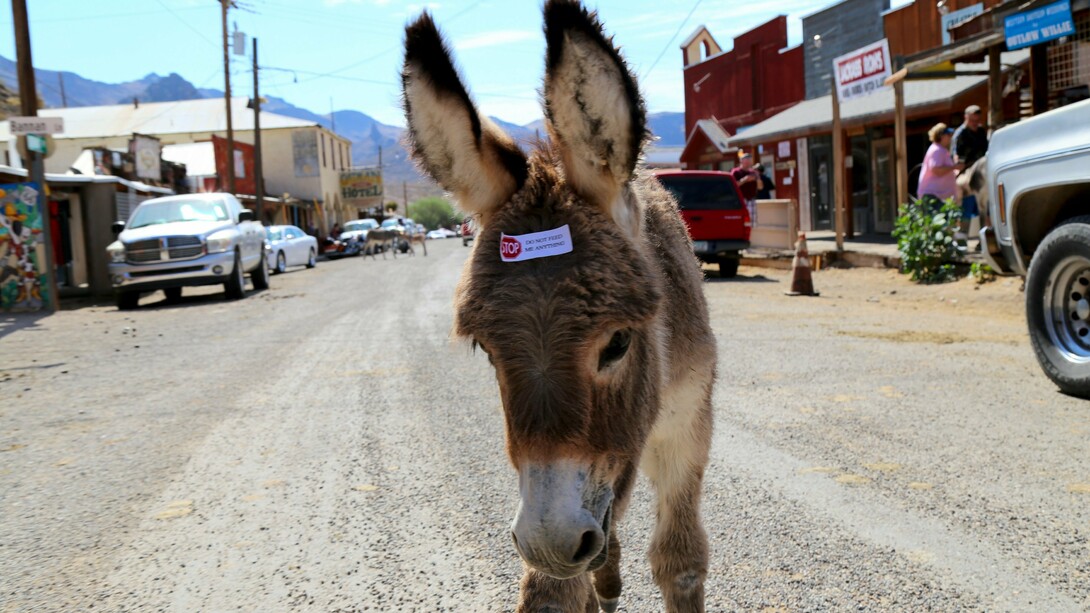
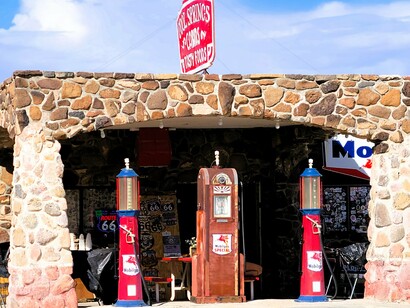
Cool Springs, Arizona, a stop on iconic Route 66, is the beginning of a trip into a Wild West that’s almost lost to time, a passage through the desert landscape and into the days of mining camps, gold mines, burros, saloons, tumbleweed towns, and even a ghost or two.
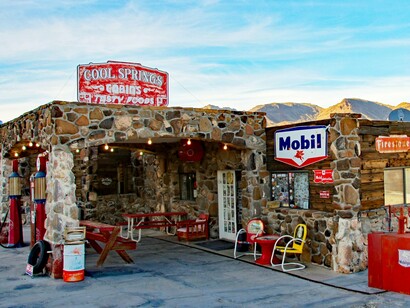
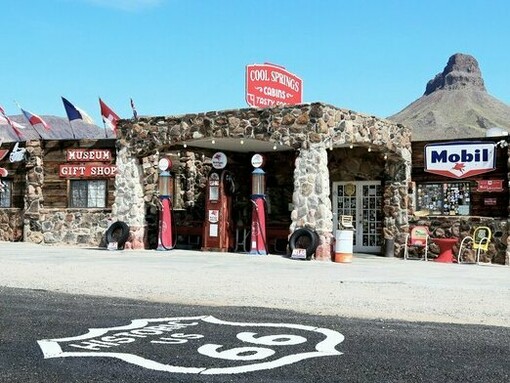
Completed in 1926, Route 66 was one of America’s first major highways connecting the Midwest to Santa Monica, where the Pacific Ocean laps the shore. Most of it is memory and lore now, but patches remain, and that includes the 8.5-mile stretch starting in Cool Springs, a historic gas station that opened in the 1920s and closed in 1966. Now restored and open again, the stone building with its vintage gas pumps is a museum and gift shop as well as a must-stop on the journey into the past and the perfect Route 66 photo op.
Then head west towards Oatman, up the steep and narrow roads curving their way through the Black Mountains, rising 3,586 feet and leading into Sitgreaves Pass, known for its spectacular views.
Plan your visit right, and you can arrive in time for one of the twice-daily shootouts on Route 66 in downtown Oatman. But even if you don’t get to see the sheriff finish off the bad guys, not to worry, you can hear him perform at the Oatman Hotel & Restaurant, one of many buildings in town seemingly little changed since they were built more than a century ago.
Oatman cycled between booms and busts beginning with the discovery of gold in 186,3 but when the mines played out, people moved on, and for years Oatman was a desolate stop in an out-of-the-way place.
All that changed in the early 1900s with the discovery of another lode of gold, kicking into gear the last of the Arizona Gold Rushes when two miners discovered some $10 million dollars in gold, or about $320 million in today’s spending power. The population swelled to 3500, and for a while, Oatman’s mines were the largest producers of gold in the U.S. But fortunes changed again, and by 1924, it was over.
The miners left, leaving behind the burros used to transport loads to and from the mines. Now, all these years later, the descendants of the original burros outnumber the townspeople (current population about 102), coming into town and wandering the streets waiting to be fed. Vendors sell burro food, and visitors feed them. In all, it’s a much better life than hauling equipment and gold in and out of mines.
Keep in mind, it’s their town, and if you’re walking on the old wooden sidewalks or crossing Route 66, you have to move out of their way because once they pick a place to stand, they stay. They’re burros after all, and no one is going to push them around.
Oatman became even more isolated when an interstate was built north of town, which was a good thing for history buffs and probably the burros as well. Many of the buildings are original to the late 1800s and early 1900s, since no fast food franchise or other chains set up shop here, and there was no need for burro removal. So Oatman stays as it was over a century ago.
There are gift shops, photo studios for vintage-like photos, and several places to eat in Oatman, but a favorite is the Oatman Hotel & Restaurant, which is on the National Register of Historic Buildings. Though it’s no longer a hotel, some of its original guests never checked out, including William Ray Flour, an Irish miner who over-imbibed and died behind the hotel. Known as Oatie, his footsteps sometimes sound on the stairs, and music from his bagpipes often echoes through the air.
Count on movie stars Clark Gable and Carole Lombard to add ghostly glitz and glamour. The two are said to have honeymooned at the hotel after marrying in nearby Kingman in 1939, and sometimes revisit the room where they stayed. Now open to visitors, it’s part of the museum on the second floor.
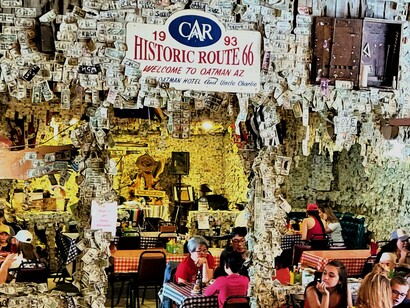
The sprawling first-floor restaurant with two dining rooms and the Dollar Bill Bar offers food with a Western flair. Think bison burgers, cowboy-style chili, prickly pear margaritas, and burro ears, thinly sliced house-made potato chips, fried and served with a sour cream/salsa dip. Burro Drops, a skillet dish of hash browns, onions, and green peppers topped with gravy and cheese, refers to the mess burros leave on the street. It’s cowboy humor.
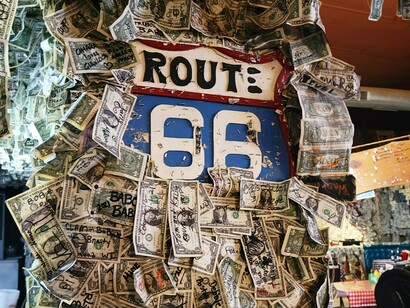
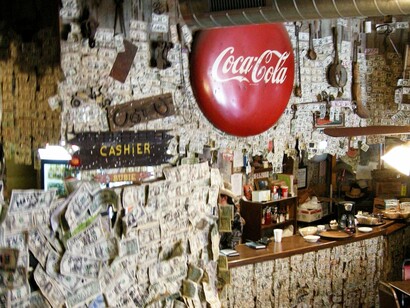
Besides its ghosts and burro ears, the Oatman is best known for the numerous dollar bills pinned to the walls and ceilings (they have staplers on hand to make it easy). Said to total around $300,000, the money will go to charity once all the bills are paid.
Oatman is named after Olive Oatman, who was 13 in the 1850s and traveling with her family when they were attacked by Yavapai Indians. Of the nine family members, six were killed at once, the seventh, her brother Lorenzo, was left for dead, while Olive and her seven-year-old sister Mary were taken prisoners.
A year later, the Yavapai traded the sisters for two horses, beads, some vegetables, and a few blankets to the Mohaves, now spelled Mojave. Their new captors were kinder, but life turned deadly once more when, during an extended drought, Mary died of starvation. Olive survived, and though she denied it later, there were stories that she married and had two children with one of the Mohave men. Whether that was true or not, a blue cactus tattoo was etched on her chin, a sign of being part of the tribe. Lorenzo, who never stopped searching for his sisters, discovered she was alive and helped arrange her freedom.
Now here is the intriguing part. Olive never lived in Oatman. After her release, she married a wealthy rancher who founded a successful bank, and the couple, who adopted a child they named Mary, lived in Texas.
Despite this, she’s said to haunt the town.