English
 Español
 Français
 Deutsch
 Italiano
 Português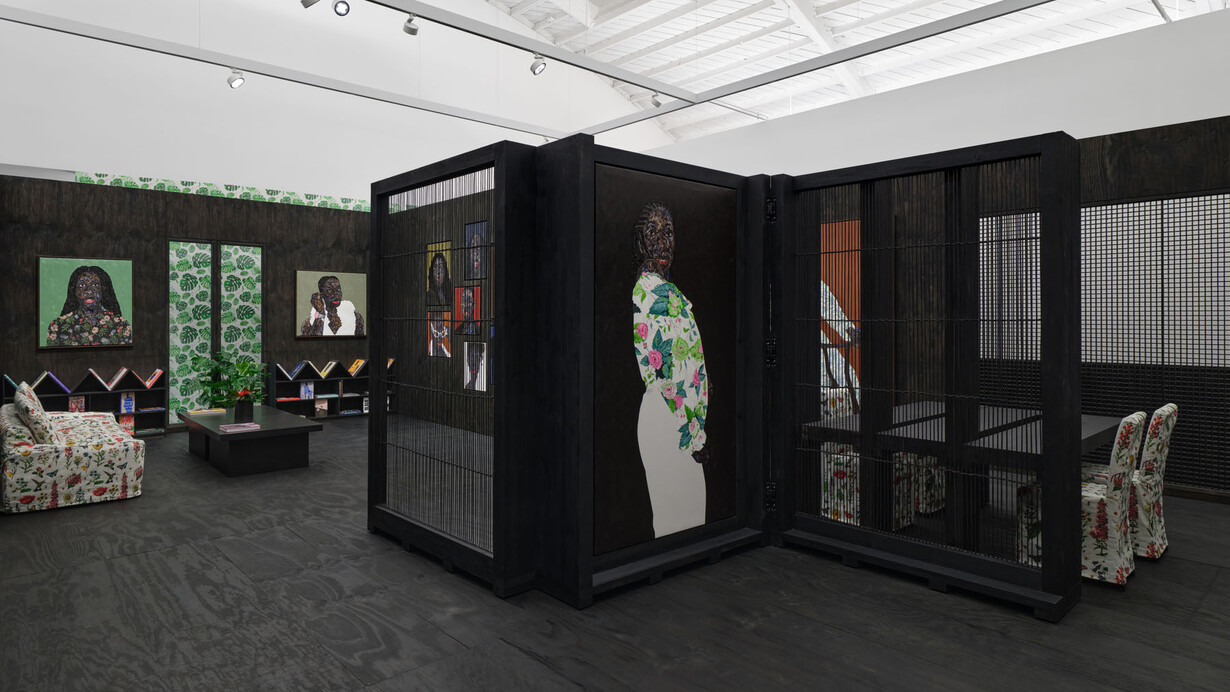
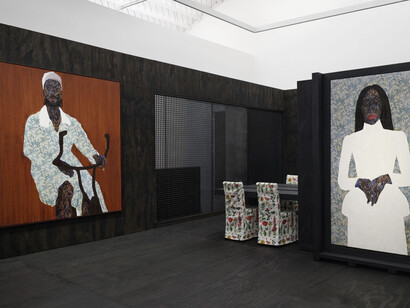
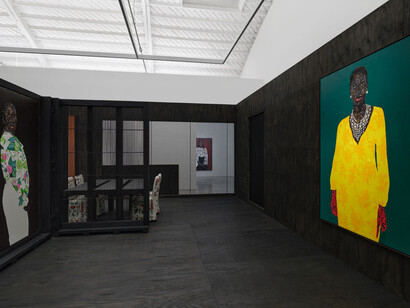
Roberts Projects is pleased to present I bring home with me, an exhibition of new work by Amoako Boafo and the artist’s third solo show with the gallery. Expanding on Boafo’s exploration and celebration of Blackness and its diverse subjectivities, the exhibition features a group of new paintings that are integrated within an architectural re-creation of the artist’s studio in Accra, Ghana, built to scale inside the gallery. Conceived by Boafo in collaboration with architect and designer Glenn DeRoche of DeRoche Projects, the installation reflects the creative energy of his cultural background, highlighting how his community personally influences his practice and holds formative emotional significance for the artist. The title of the exhibition, I bring home with me, refers to Boafo's process of documenting images, sounds, people, stories and events that shape his sense of place.
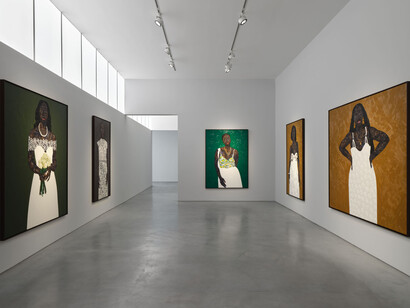
Boafo’s portraits of Black subjects—ranging from friends and acquaintances to public figures and fictional characters—are exquisitely rendered in his graphic compositional approach, which incorporates patterns and paper transfers as well as a distinctive gestural mark-making that evokes 20th-century modernism from a contemporary point of view. The variety of subjects that Boafo depicts, as well as his method of applying paint with his fingertips, is a testament to the rich complexity of Black subjectivity and self-expression generated throughout the cultures of contemporary Africa and its global diaspora. Rather than directly engaging with the stereotypical representations of Black figures that have long dominated historical narratives and public discourse, Boafo instead focuses his attention on creating a space where his subjects can express their authentic selves and interior lives. This conceptual “space”—and the importance it holds for both the artist and his community—is materialized in the architectural structure of Boafo’s studio, which is then activated as a site of gathering and creative exchange by inviting contemplation and conversation among visitors.
Introducing the theme of “elsewhere within here” that connects individual components of the exhibition, the entrance to the gallery is adorned with monstera wallpaper, which echoes the vibrant patterns commonly seen in Boafo’s paintings. The boundaries between interior and exterior, intimate and ubiquitous, are taken apart and reassembled through architectural details such as grid windows and room dividers, which allow levity and lightness to fill the space. Paintings are embedded into the walls of the studio itself and similarly displayed within a wooden sculpture of folding panels that captures the spirit of nkyinkyim, an Adinkra symbol that represents ‘twisting.’ More than just a frame for Boafo’s paintings, this adaptive structure is a tribute to the resilience of his subjects as they navigate the challenges and changes of life.
Reflecting the multifunctional nature of Boafo’s studio in Accra, this architectural reimagination creates an open and fluid space where visitors can move freely and engage with each other as well as the paintings displayed within. The studio not only welcomes viewers to encounter Boafo’s work in a space that reflects the environment of their creation but also conjures the memory of gatherings that took place there and their undeniable impact on the artist’s work.
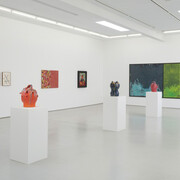
Unfolding on the walls surrounding the studio and in the two adjoining galleries are paintings that weave together Boafo’s family story with local Ghanaian history, demonstrating the interconnectedness of personal and historical narratives. Many of the figures portrayed in the works alternate between enjoying moments of rest and introspection or acts of play and recreation. Whether they meet the viewer’s gaze in a state of repose or dynamic tension, Boafo renders his subjects with an emotional and psychological depth that radiates through the surface of his paintings. Across the shifting yet interrelated group of subjects, settings and themes, this exhibition reveals the continued evolution of Boafo’s figurative language and his keen understanding of the many ways that history shapes the present and imagines the future.