English
 Español
 Français
 Deutsch
 Italiano
 Português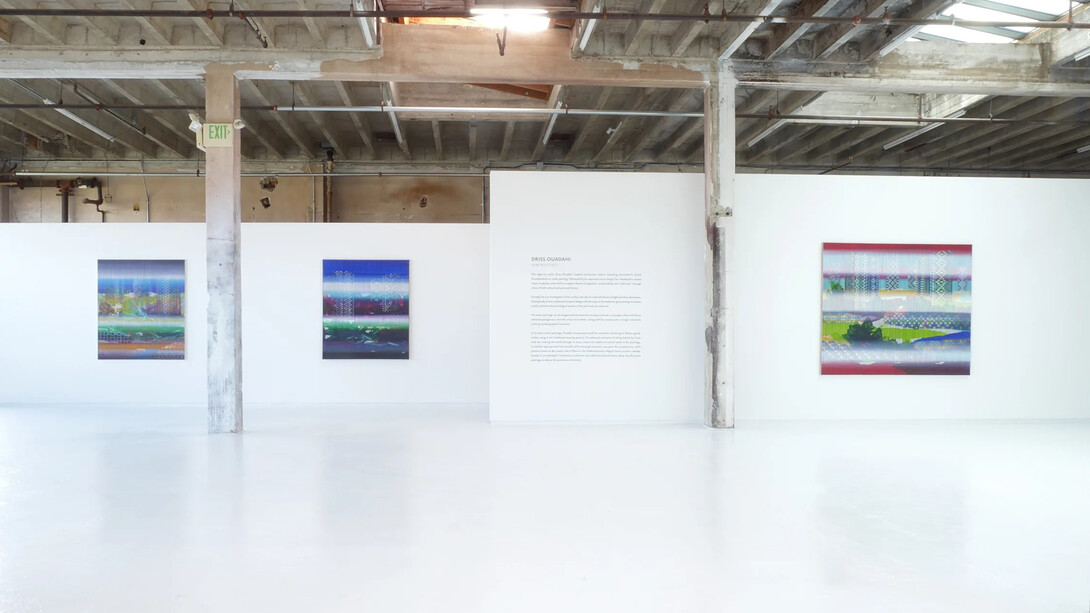
The Algerian artist Driss Ouadahi studied architecture before attending Düsseldorf's famed Kunstakademie to study painting. Influenced by his experience as an émigré, he’s developed a unique visual vocabulary with which to explore themes of migration, social mobility and “otherness” through a lens of both cultural and personal history.
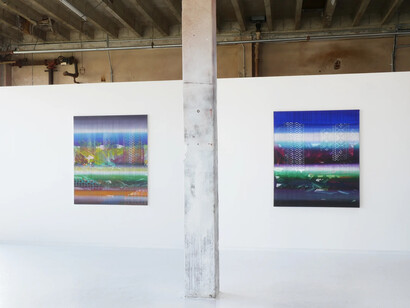
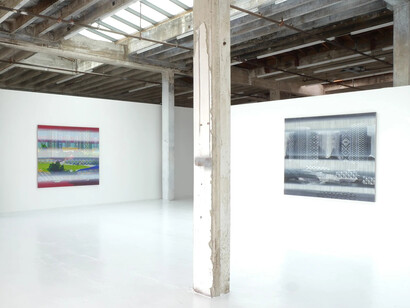
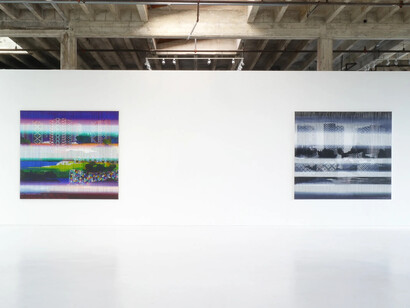
Formally, his is an investigation of line, surface and color to create the illusion of light and three dimensions. Conceptually, he has synthesized structural design with the trope of the modernist grid painting to examine social, political and psychological aspects of the 20th and 21st century.
His earlier paintings can be categorized into three discrete types of work -- cityscapes, chain–link fences and tiled passageways -- but the artist sees in them -- along with his newest work -- a single, constantly evolving autobiographical narrative.
In his most recent paintings, Ouadahi incorporates motifs he remembers observing his Berber grandmother using in her traditional weaving practice. Foundational memories of sitting behind her loom with her, viewing the world through its warp, inspire the rhythm of vertical marks in the paintings. Leitmotifs appropriated from textiles of his Amazigh ancestors syncopate the compositions, while patterns based on the ceramic tiles of floors in his childhood home in Algiers form a counter–melody. Studies in an individual’s involuntary recollection and collective/cultural history, these very Proustian paintings are about the persistence of memory.




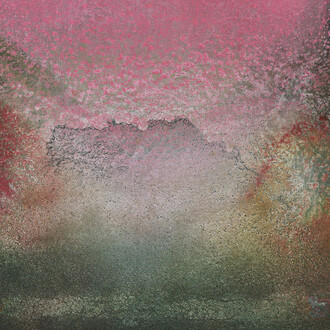
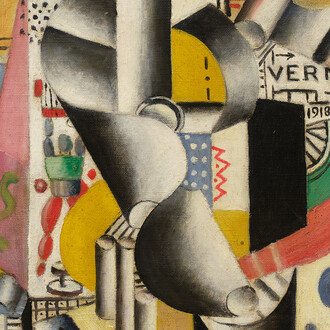
![Paul Klee, Komiker (Comedian) [Invention 4] (detail), 1904. Courtesy of San Francisco Museum of Modern Art](/attachments/04df4ade6b4e470f095f311cf9fe61061207f309/store/fill/330/330/9c191f0baf62001530291521d7da91c9dc6cfcfa380da17510698c809d2c/Paul-Klee-Komiker-Comedian-Invention-4-detail-1904-Courtesy-of-San-Francisco-Museum-of-Modern.jpg)