English
 Español
 Français
 Deutsch
 Italiano
 Português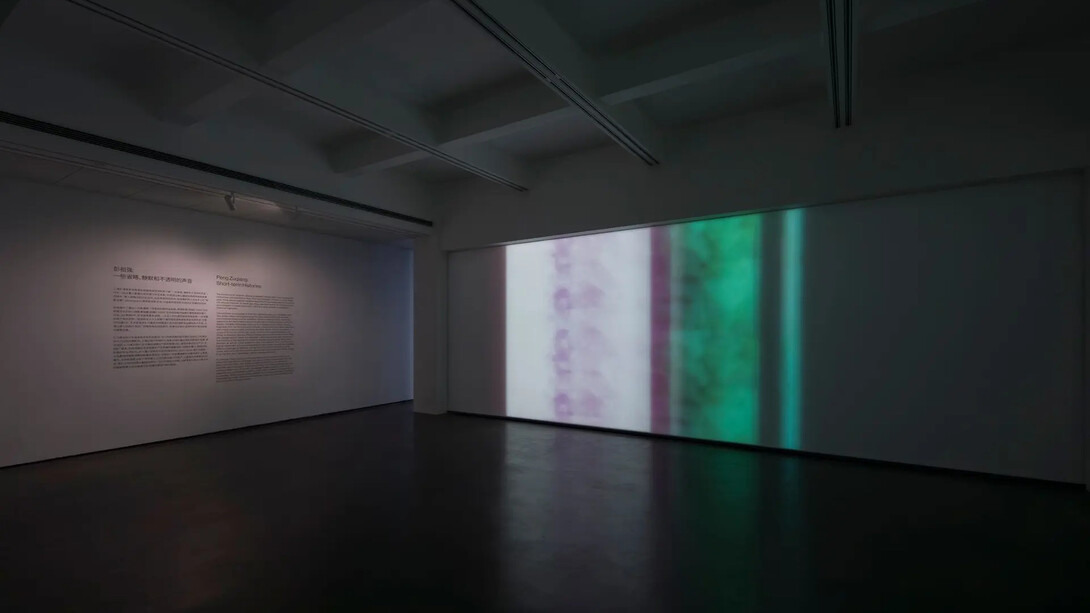
The Rockbund Art Museum presents Chinese artist Peng Zuqiang’s first institutional solo exhibition in Asia: Short-term histories. Working primarily with moving image and installation, Peng (b.1992, Changsha, China), based in Paris, experiments with the history of film and media, with an attention to the affective resonance within histories, bodies, and language.
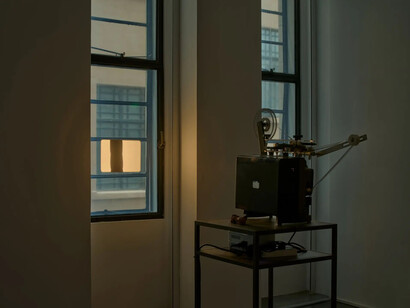
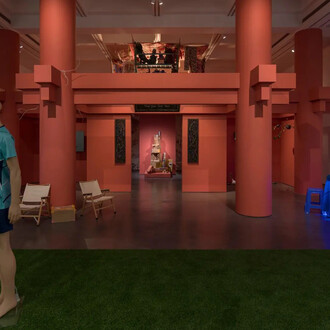
The exhibition responds to the improvised and abrupt fractures characteristic of short-lived and ephemeral media histories, such as the unique 8.75 mm film format that circulated in rural China from the 1960s to 1980s in Peng’s newly commissioned centerpiece Afternoon hearsay (2025), as well as the underground Malayan radio station featured in another video installation Cyan garden (2022). Peng further rearranges ambiguous carriers of memory by experimental film techniques that create abstraction, such as the handmade “photogram” process in the darkroom, thus challenging the linear narratives of time-based media while questioning the ethics of camera and contemporary image-making. The handmade cameraless photographic process itself acts as a mirroring gesture, reflecting that the invention of 8.75 mm film was an experiment for the state-led portable film screening project. The fragile nature of the 8.75 mm projector also speaks for the limited material resources in China, enshrouded by the gloom of the Cold War.
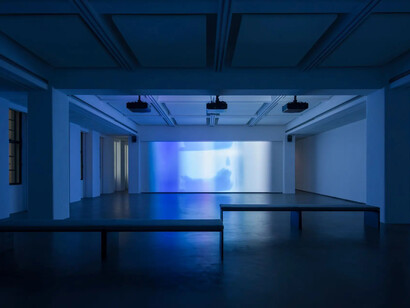
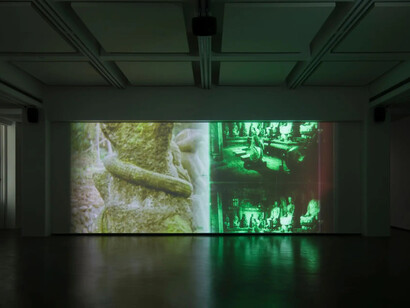
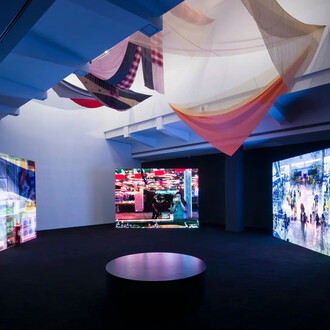
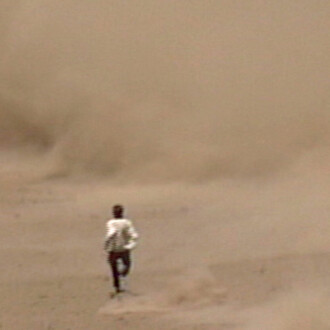
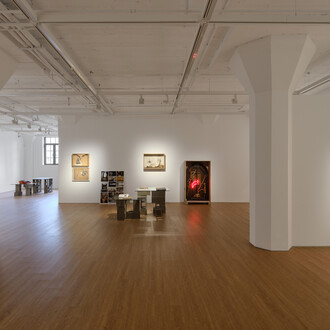
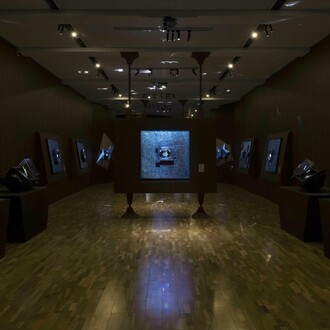
The exhibition is composed of three film installations, and one chromogenic print. In The cyan garden, the artist weaves a fictional history, drawing from his home province of Hunan, the forgotten history of an underground radio station, a friend’s Southeast Asian-styled Airbnb, and a hotel where rumoured revolutionaries briefly stayed. The clandestine radio station Voice of the Malayan Revolution operated out of Yiyang, in Hunan Province, from 1969 to 1981. Almost concurrently, a unique 8.75 mm film format was widely used for mobile film screenings in rural China. In the newly commissioned three-channel video installation Afternoon hearsay, the artist presents a “site of memory” for resistance to historical amnesia. He juxtaposed hand printed archival 8.75 mm films with footage shot on Super 8 to assemble a disjointed narrative that extends from the invention of this specific film format to the now-unrecognizable film printing factories, as well as mobile projections in the countryside, border lands and other rural regions. In media studies, 8.75 mm film is remembered as a state-led production tool. Peng focuses instead on the resistant rhetoric of the media itself, thereby reflecting on the limitations of history and the inaccessibility of archives. The film stock is experimental by nature: at its inception, the 8.75 mm standard had no corresponding camera, and its circulation for screenings in remote areas relied on a process of reduction printing from other film format copies. In other words, since 8.75 mm film could not produce new visual memories through filming, it can be seen as a “cameraless” medium resisting production.
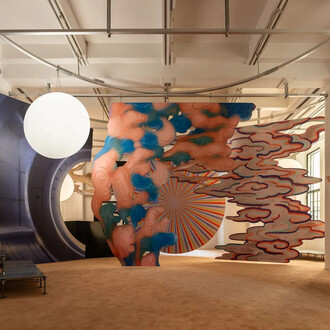
But what contemporary meanings do cameraless images possess? Peng Zuqiang reflects on the power structures and violence hidden in the production and diffusion of images and returns to their photochemical form. The first piece the viewer sees upon entering the exhibition is Déjà vu (2023–2024), the artist’s first complete use of photogram techniques: he directly exposed a 30-meter-long metal wire onto 16 mm film. This process of photogram was further experimented with in Afternoon hearsay, where he exposed 8.75 mm archival film reels on 16 mm and 35 mm color print stock. With controls in light, color and chemicals to manually bring out a shifting, abstract imagery—this becomes a metaphor for the intimacy and provocation of film itself as an affective medium. Today, memories of mobile film screenings are gradually fading, yet the hidden emotions and dissenting rumors outside of official records find a resonance in Peng’s exhibition.