English
 Español
 Français
 Deutsch
 Italiano
 Português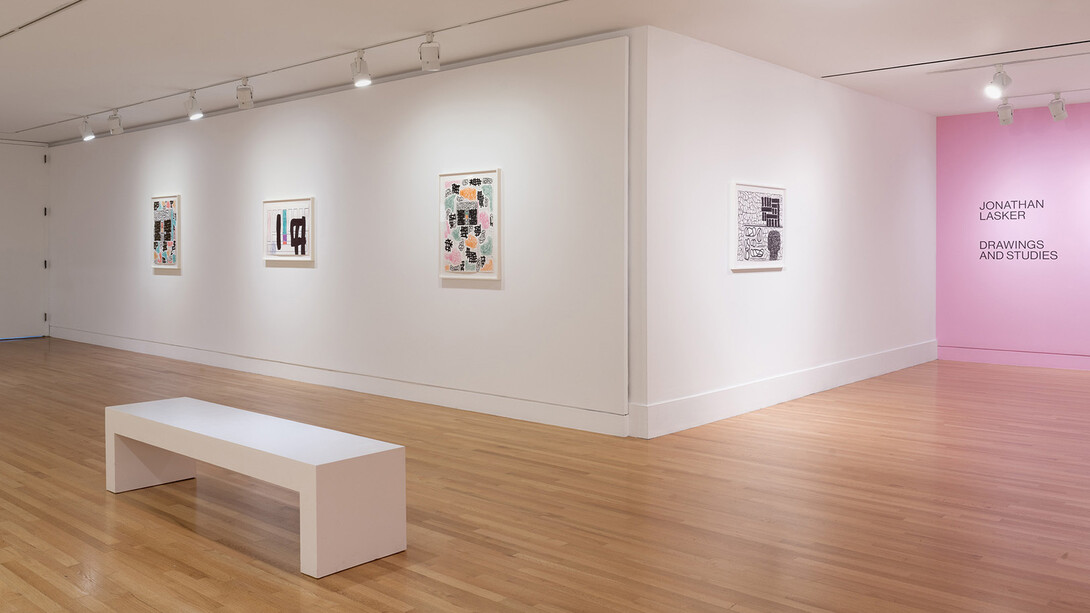
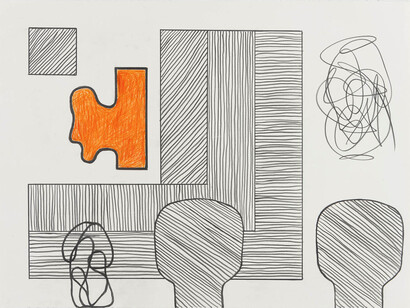
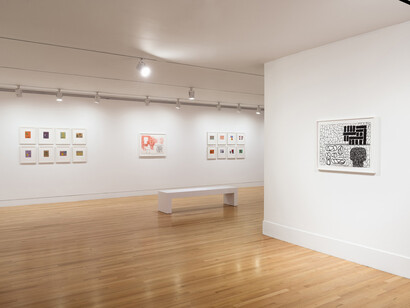
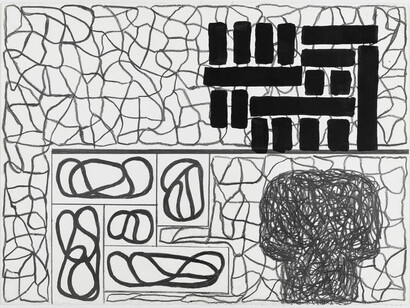
For more than five decades, American artist Jonathan Lasker has approached the fundamentals of painting as if they were components of a puzzle—something to dismantle, examine, and reassemble in unexpected configurations. Drawings and studies offers an intimate window into this process, focusing on works on paper created between the 1980s and the 2020s. These drawings reveal how Lasker tests ideas, experiments with structure, and refines the visual vocabulary that would come to define his paintings. Seen together, they chart a continuous evolution, demonstrating the rigor and curiosity that animate his practice.
Across these works, Lasker’s compositions balance analytical precision with expressive freedom. His biomorphic forms, looping gestures, and layered shapes behave almost like characters in a visual drama, occupying spaces that suggest portraits, landscapes, or still lifes without fully describing them. Through this play of implication and suggestion, Lasker destabilizes conventional distinctions between abstraction and figuration. The viewer is invited into the act of deciphering—recognizing hints of representation only to have them dissolve back into pattern and structure.
In this way, Lasker transforms seeing into a central theme of the work. Each drawing becomes a site of negotiation between perception and interpretation, encouraging viewers to consider how images acquire meaning. The resulting tension—between clarity and ambiguity, structure and spontaneity—is what gives Lasker’s visual language its enduring vitality. Drawings and studies underscores how these seemingly modest works on paper form the backbone of a practice that has consistently challenged and expanded the possibilities of contemporary abstraction.