English
 Español
 Français
 Deutsch
 Italiano
 Português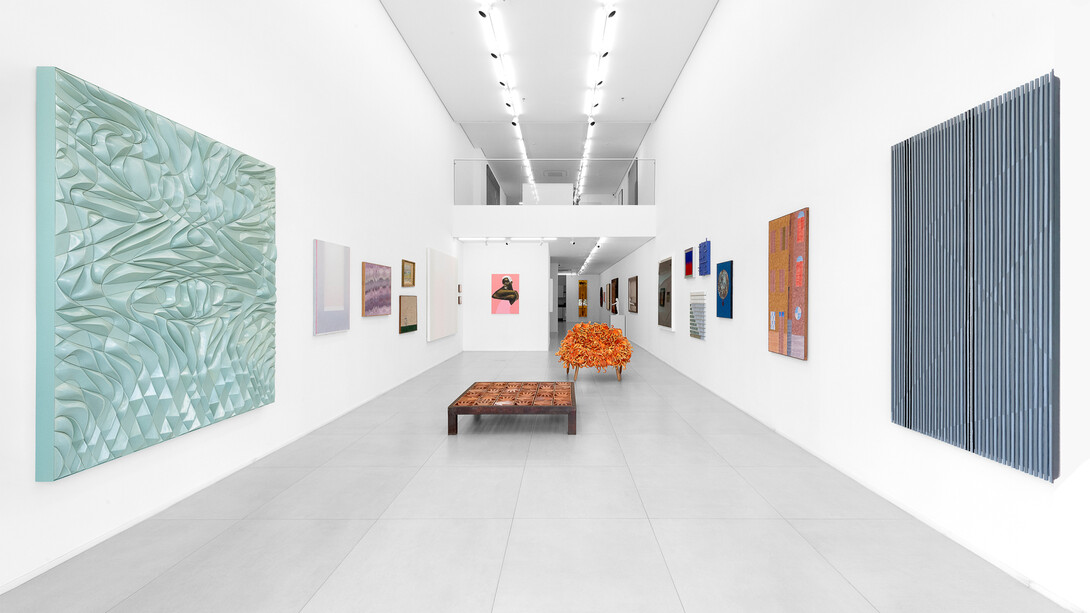
An art collection is a combination of diverse mediums, places, and backgrounds in which the works are interconnected by a symbolic thread that unifies them: the act of collecting. The exhibition “A collector's gaze: Laurita Karsten Weege” is an invitation to bring together stories, from Simões de Assis' solid trajectory to the refined choices of collector Laurita Karsten Weege. The exhibition materializes the intersection between the gallery's exhibition space and the collector's specialized eye, a partnership that recognizes Weege's significant contributions in projecting an enchantment with art.
The Weege family is recognized for its contribution to Brazilian industrialization and and for its role in the development of cities in the state of Santa Catarina, as well as for its charitable initiatives and support for art and culture, consolidating an extraordinary trajectory and legacy for the country. For the occasion of this exhibition, we highlight another facet of the singular Laurita Karsten Weege: her deep interest in artistic production. Strongly influenced by the art history classes taught by Professor Otto Francisco de Souza, Laurita began to focus on acquiring works of art, with a painting by Anita Malfatti becoming the first in her collection. However, when she enrolled in the course to learn and get informed about art, she already had a prior interest, an admiration that came from the perception of being in front of a painting that hung in her parents' kitchen, a landscape with a goose that enchanted her and remains with her to this day.
Her archive grew, building an unparalleled collection, a dialogue between the modern and the contemporary, between national and international production, in which each added work reflects Laurita and her way of choosing based on interest and identification. Collecting is a practice, the development of a research, and hers is one of the largest art collections in Brazil, both symbolically and quantitatively. It includes renowned names such as kinetic artists Abraham Palatnik and Carlos Cruz-Diez, modernist icons Cícero Dias, Eleonore Koch, and Alberto da Veiga Guignard, alongside with contemporary names who experiment with different languages such as Zéh Palito, Ascânio MMM, Schwanke, Julia Kater, and audacious furniture designers such as the Campana brothers.
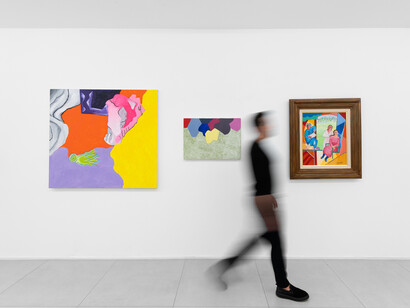
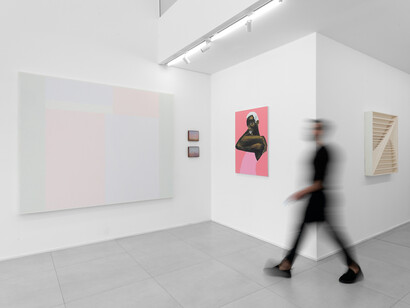
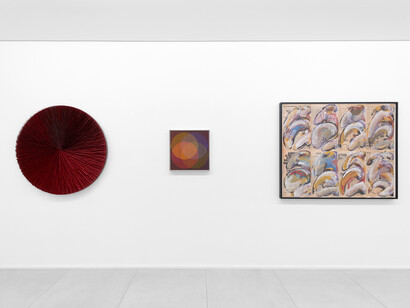
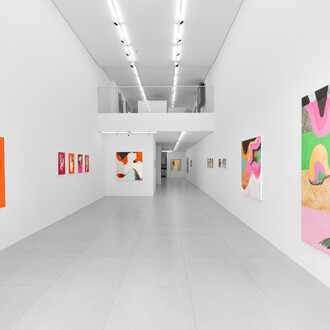
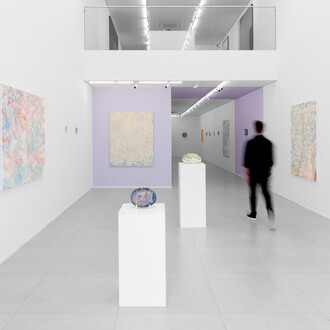
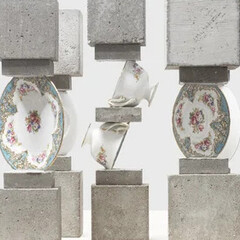
This exhibition is a kind of memory device, curated in constant motion through relational possibilities, in order to demonstrate how choices take on a dimension beyond the private space of the collection and take shape in the gallery space. Participating artists include Alfredo Volpi, Gonçalo Ivo, Paulo Pasta, Eleonore Koch, Mano Penalva, Abraham Palatnik, Antonio Malta Campos, Ascânio MMM, Emanoel Araujo, Alberto da Veiga Guignard, Siron Franco, Vik Muniz, Zéh Palito, Estúdio Campana, Carlos Cruz-Diez, Flávio Cerqueira, Juan Parada, Marcos Coelho Benjamim, Julia Kater, Schwanke and Sergio Lucena. Echoing the spirit of the collection, the exhibition reveals a varied expression of form, with furniture, objects, sculptures and paintings. The works demonstrate profuse poetic research with operations on various media such as fabrics, plush, wood, ceramics, cardboard, bronze and newspaper sheets.
The selection of works suggests a delineation of the collector's aesthetic choices and affinities, creating a formal dialogue between the pieces and, above all, a spatial design that awakens a material connection, like a glimpse of a collector's house designed for the exhibition space. It evokes formal and thematic relationships, especially chromatic investigations, an emphasis on gesture, the concreteness of geometry, and two-dimensional and three-dimensional coexistence.
The exhibition highlights the collector's role as a mediator between the public and the Simões de Assis collection, presenting a selection of works that reveal chromatic similarities, artists, and artistic expressions. Rather than following a chronological order, we are immersed in the collector's poetic interpretation, projected into the gallery space. The group show is conceptually based on Laurita Karsten Weege's perspective, revealing how the act of collecting also constitutes a curatorial gesture, a visual projection. The dialogical composition brings together artists from different generations, highlighting the private collection as an effort of research and encounter. The show is a created situation that reproduces a certain mirroring of Weege's collection, an affective scenography of her residence, a space where the works inhabit and are inhabited.
(Text by Mariane Beline)