English
 Español
 Français
 Deutsch
 Italiano
 Português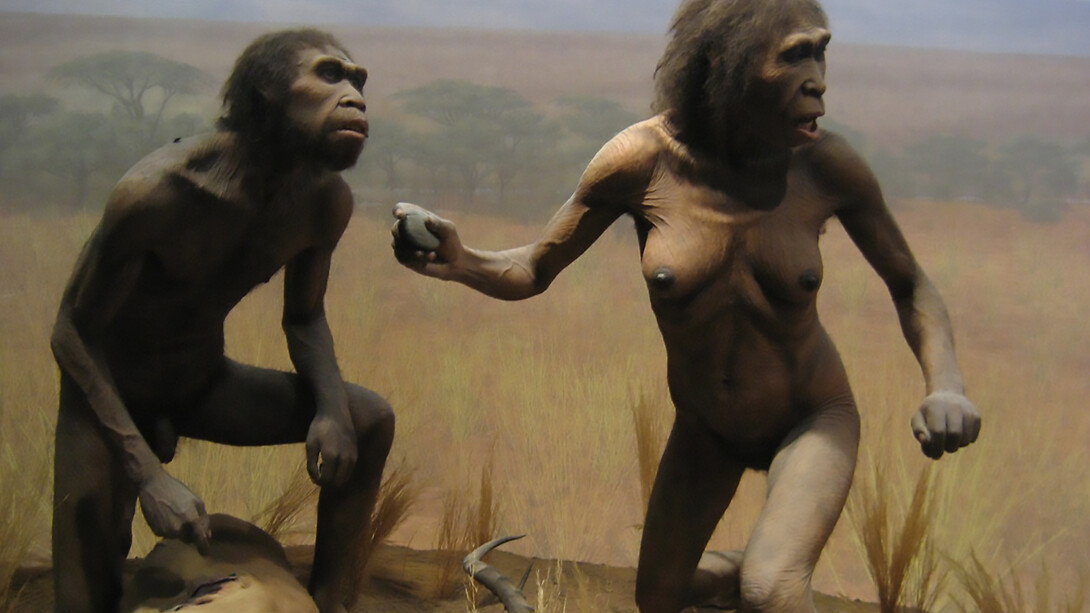
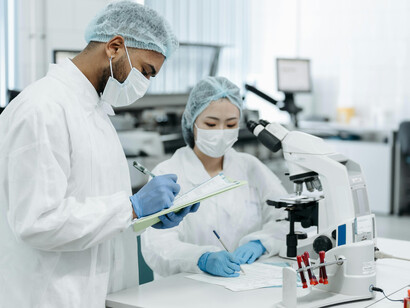
July 2025 may go down in history as the month humanity took a step science fiction has warned us about for decades. Deep inside a secured biotech lab in Kunming, China, a group of geneticists quietly created something almost unthinkable: a living embryo composed of 98% human and 2% monkey cells. It lived for 19 days before being deliberately terminated. The goal? Not to play God, but to explore whether primates could one day host and grow transplantable human organs—a possible solution to the devastating global organ shortage.
But what happened in that lab didn’t stay there. The announcement triggered an immediate storm of ethical, philosophical, and legal questions. Are we inching closer to solving one of medicine’s greatest challenges—or are we rewriting what it means to be human?
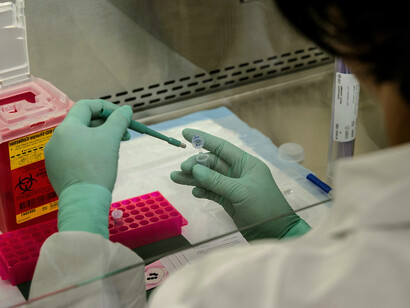
The mastermind behind the project was Dr. Juan Carlos Izpisua Belmonte, a pioneer in the field of human-animal chimeras who previously experimented with human-pig hybrids. This time, his team pushed further, employing a process called blastocyst complementation. They began by disabling critical organ-forming genes in monkey embryos using CRISPR technology, effectively creating a blank biological canvas. Into that, they injected extended pluripotent human stem cells—capable of developing into any tissue. To track their progress, they tagged the cells with fluorescent markers.
By the 15th day, human cells accounted for roughly 7% of the embryo. That may not sound like much, but in the high-stakes world of chimeric science, it was an extraordinary leap. Human cells typically struggle to survive in non-human environments—especially in species as genetically distant as pigs. But monkeys? That’s a different story.
Macaques, the chosen host species, share about 93% of our DNA. That genetic closeness allows for better “interspecies crosstalk”—a biological rapport, if you will. In this case, it worked with startling efficiency.
Then came the headline that turned heads around the globe: “98% Human.”
OrganForge Inc., the biotech company funding the research, claimed that key parts of the embryo’s biology—early brain structures, developing heart tissue, even primitive liver cells—were largely made up of human cells. Most alarming of all? Some human cells were detected in early-stage reproductive tissues. That revelation pushed the debate far beyond science into the realm of ethics, religion, and existential dread.
Could such a being ever develop consciousness? What if it could think, or feel, in ways we associate with humans? If allowed to be born, what would it be?
Dr. Angel Raya from the Barcelona Regenerative Medicine Center didn’t mince words: “If human neurons are forming in a monkey’s brain, could it start having human thoughts?”
Religious institutions weighed in swiftly. The Vatican condemned the research outright, calling it a “violation of human dignity” and accusing scientists of “playing God.” Meanwhile, the European Patent Office took a clear stance: it would not grant patents for human-animal hybrids, branding them morally unacceptable.
Still, behind all the outrage lies a hard, urgent truth: tens of thousands die every year waiting for donor organs that never come. Earlier attempts to grow organs in pigs were promising but hit major roadblocks—immune rejection, cross-species viruses, and cellular incompatibility. Monkeys, however, might offer a closer match and a better shot at success.
But the dangers aren’t just medical. The idea of human cells contributing to brain development in primates raises fears of cognitive enhancement. What happens if these animals start showing signs of complex emotion, memory, or even rudimentary language? And if human DNA winds up in the reproductive system, could it be passed on?
These aren’t questions from science fiction anymore. Dr. Hank Greely of Stanford sounded the alarm: “Once we start growing human organs in monkeys, what’s to stop someone from engineering human-monkey workers—or soldiers?”
As the backlash grew, so did the funding. Silicon Valley, always quick to spot a disruptor, has poured billions into chimera biotech. OrganForge reportedly raised over $2 billion. With its more relaxed regulations, China is rapidly positioning itself as the epicenter of this bold—and deeply divisive—new field.
Meanwhile, the U.S. FDA has issued a temporary halt on all human-animal chimera trials. Protests are spreading under banners like #StopTheChimera. Demonstrators have rallied outside biotech firms from Boston to Barcelona. Even universities, such as Spain’s Catholic University, are being scrutinized for collaborating with the researchers behind the project.
Governments are scrambling to catch up. The European Patent Office’s ruling in 2025 set strict limitations—no IP rights for chimeras showing signs of human-like cognition or fertility. Japan, long a leader in biotech, extended the legal limit for chimera embryo development to 19 days but stopped well short of allowing birth.
So what now?
In the near term, expect more of this work to go underground—moved to labs in countries with looser oversight. Scientists are already working on “ethical safety nets,” like designing human cells that self-destruct if they start forming neural tissue. But in the long term? Humanized organs grown in animals might become routine. We could one day see animals raised specifically to grow transplantable kidneys, hearts, or livers. Some tech companies are even eyeing hybrid brains for use in advanced computing or neuroscience research, blending wet biology with AI.
And here’s the question no one really wants to answer: If something is 99% human… is it still just an animal?
As Dr. Marta Shahbazi from Cambridge put it, “We’re not just crossing a line—we’re erasing it. And once it’s gone, we can’t undo what comes next.”
What started as a scientific attempt to save lives may have opened a door that humanity can never fully close.