English
 Español
 Français
 Deutsch
 Italiano
 Português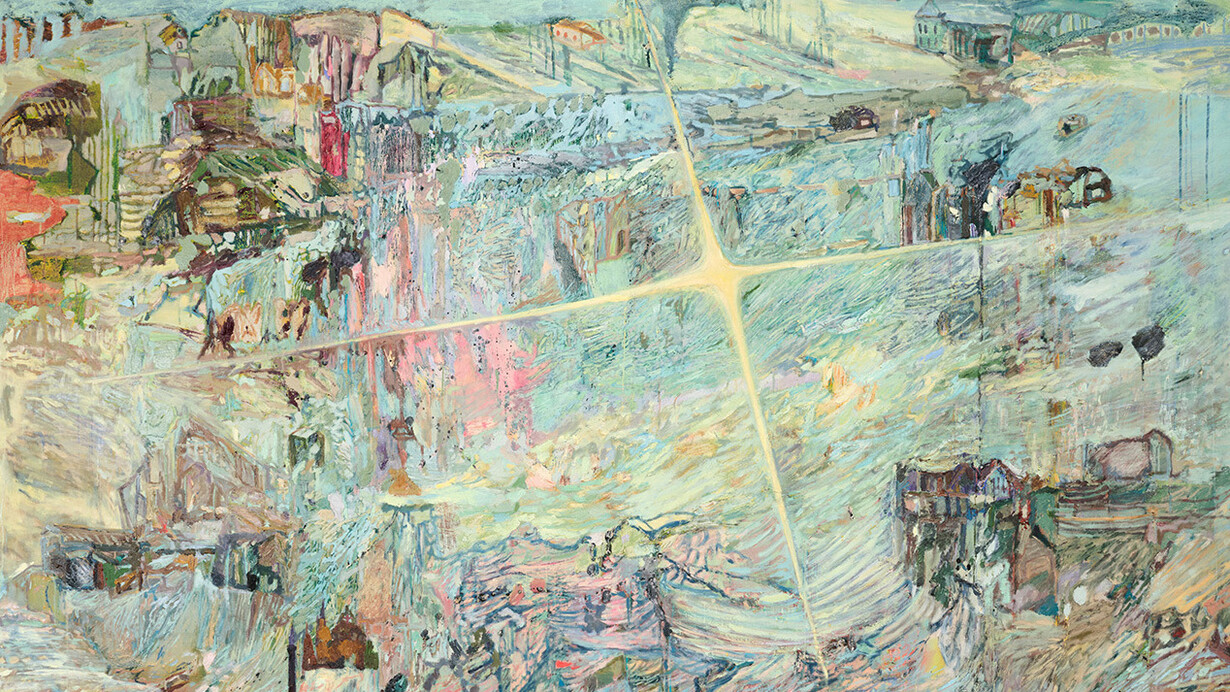
Blindspot Gallery is pleased to present Un Cheng: bedroom paintings, from 2 December 2025 to 31 January 2026, marking the artist’s fourth solo exhibition with the gallery. The exhibition will debut her newest body of works and coincide with the book launch of her first artist monograph titled Now, and then?, encompassing her works from 2017 to date.
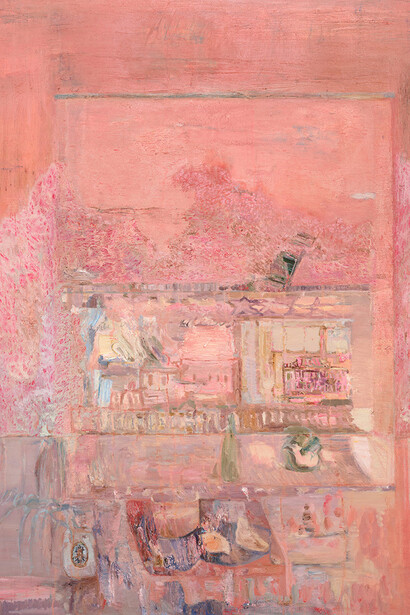
Un Cheng is known for her distinct palette capturing the quotidian details of city life, each scene brimming with psychological depth and emotional fervor, depicting a universal longing for human connection. The exhibition is anchored on the notion of the “bedroom painting”, a term coined by the artist, alluding to the intimacy of vignettes where Cheng lays bare her introspective observations on the surroundings within her studio, domestic space, and the world beyond. It connotes a sphere of solace and healing, and it is a further nod to the art historical depiction of the bedroom and bed, recursive motifs that embody the inner landscape of the artist. Each painting transforms ordinary moments into emotive compositions – being locked out, bathing, resting, praying or reminiscing, capturing the quiet depth of lived experiences.
In contrast to these interior scenes are works inspired by Cheng’s travels: fleeting yet poignant encounters with strangers, glimpses of magical moments, and the quiet sense of familiarity found in distant places. Together, these experiences point to the shared interconnection of human emotion.
Drunk dawn, keys gone (2025) looks through the barred gate into the artist’s flat, dividing the interior into fragmented planes like a cathedral stained glass. The artist wakes up by the door from a night spent locked outside her home, only to find her cat sitting beside her, wedged between the bars. A lenticular card on the gate contains the double image of the Virgin Mary and Jesus Christ. Cheng projects herself into the picture, as if gazing back into her own present predicament. What did I puke? No clue (2025) presents a hallucinatory blue dreamscape, reminiscent of Marc Chagall’s atmospheric spiritual landscapes, depicting a bathtub with water swirling in undulations, as if purging the body of its uncleanliness and impurities.
In The final puff (2025), the artist is buried beneath thick layers of sheets, evoking metaphysical weight. A rattan chair sits alone in the corner in Turned out like skittles (2025), tattered and rife with scratch marks. The artist’s house cat, the guilty culprit, hides cheekily beneath the furniture which dissolves into saturated green, the ragged pillow seemingly giving off jewel-like glints. Nearby, a vase of flowers withers and wilts, transformed into a memento mori in a triptych: If anything happens I love you (2025), flanked by the figures of a man (Him, 2025) and woman (Her, 2025), recalling archangels in a church altarpiece. In Future coming or what? (2025), we follow the artist’s gaze as she looks outwards from within. While fidgeting with the cup adorned with the image of the Virgin, which she associates with the figure of Guanyin, the Bodhisattva of compassion, she grapples with existential questions.
Escapism is a through line in Cheng’s paintings, and travel becomes a nourishment for visual language. It brings to mind the Grand Tours of the 17th to 19th centuries, when artists and aristocrats would journey to Europe to study classical culture and art, or even post-impressionist painters, including Henri Matisse and Paul Gauguin, who went abroad to collect new ideas and iconographies. In Mr. S off the train (2025), we follow the artist into a receding train corridor, where she meets a stranger who spends the ride from Munich speaking about his personal story of betrayal. Cheng reflects on how we often find resonance in others’ encounters, regardless of background or locality.
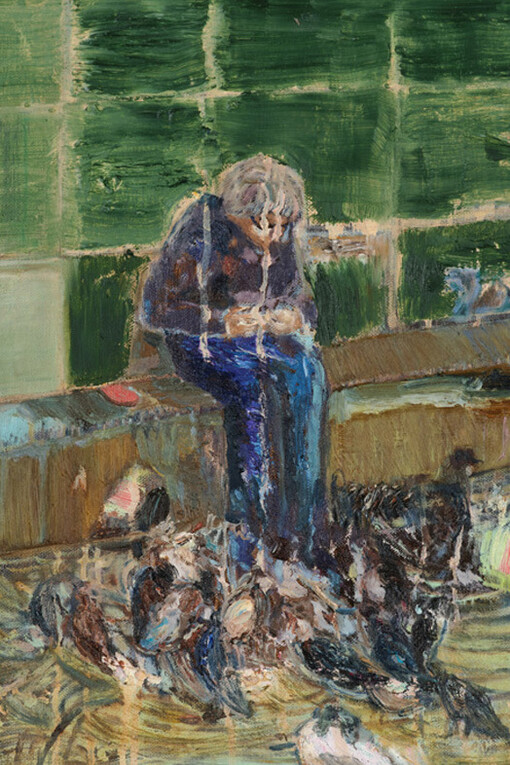
In Paris, outside the Centre Pompidou, Cheng stumbled upon the poignant sight of an elderly woman clipping the nails and applying moisturizing cream to wild pigeons, encapsulating her tenderness in Paris’s dove nailist (2025). The scene is rendered in loose brush strokes, with drips of paint trickling down her body, capturing a momentary visual impression.
Alien in a foreign landscape, the lonesome traveler is left to her own devices in Pizza bee (2025), where she rides a bike in Venice in the dark of night clutching a half-eaten pizza. Without a streetlamp in sight, she struggles her way back, watching the romanticized city vanish further into the distance. The itinerant wanderer finally finds rest in the Alps, where she awakes to the arresting view of the mountains, unencumbered and at ease. In A nap in the Alps (2025), Cheng blankets the mountainous terrains in snow through rhythmic strokes that coalesces the Alps and houses into a kaleidoscopic expanse, where details are engulfed within a cacophony of marks.
In a winter landscape in Warsaw, portrayed in First snow in lok. 1106 (2025), Cheng encapsulates a slanted rooftop ladened with snow, alongside quietly parked cars nestled next to the woods. Adopting color palettes of pastel purple, turquoise and yellow, Cheng adorns the canvas with splotches of paint, allowing drips to cascade down the picture plane and transforming the snowy vista into a melted, dreamlike winter wonderland. The tranquil scene is enlivened by dashes of movements, inviting the audience to immerse themselves in the artist's enchanting, imaginary world.
Through the years, Cheng has developed a distinct visual lexicon in which interior landscapes are excavated from the mundane. Her autobiographical “bedroom paintings” serve as intimate meditations that embody the vulnerability and manifoldness of the human condition