English
 Español
 Français
 Deutsch
 Italiano
 Português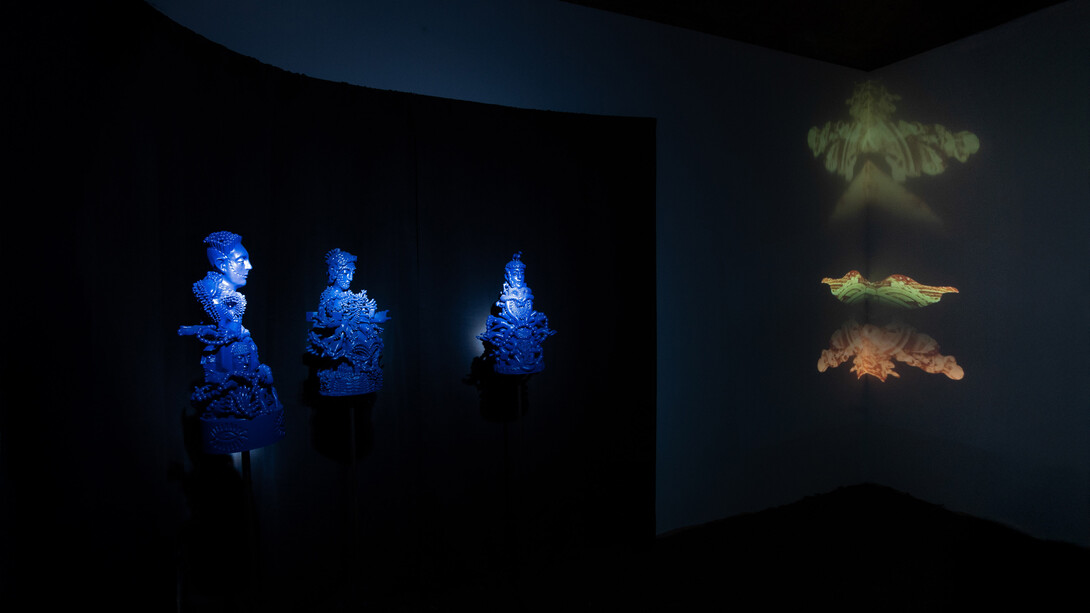
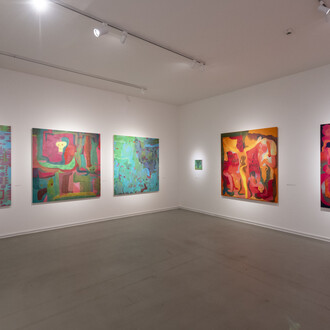
The exhibition If you're afraid of wolves, you may go to the woods is inspired by the psychoanalytical theory of Carl Gustav Jung, specifically that every person harbours within themselves a suppressed, unconscious and often “dark” side of their personality – their Shadow. In Jung’s view, becoming aware of the Shadow is the first, most difficult and at the same time most important step we can take in order to consciously manage and integrate it into our personality, thereby preventing it from controlling us all the more strongly on an unconscious level. Each one of us has our own darkness within us, which we need to confront – to go out into the forest and embrace what we fear.
Reflecting upon our Shadows is of crucial importance not only for our personal lives, but also on the level of politics. Jung points out that we often project our suppressed Shadows onto others in order to justify all kinds of violence against them. For example, it is precisely through this prism that Jung in his time analysed the Nazis, who projected their own brutality onto minorities as a means of “eradicating” it. Similar mechanisms can be seen at work also today – in the rising trends of transphobia, right-wing extremism or the dehumanisation of entire sections of the population and ethnic groups. The exhibition therefore overall opens up a space for an essential introspection – for confronting the Shadows we carry within ourselves as individuals, as a society, and which we inherit, as well as for seeking a way to live with them more consciously.
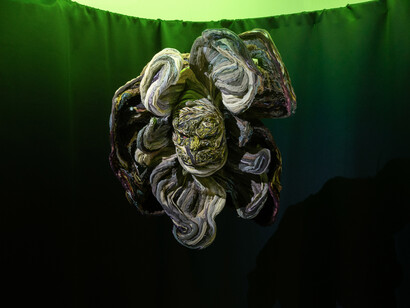
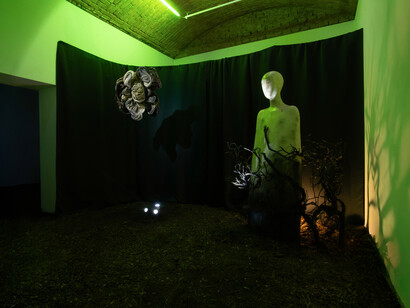
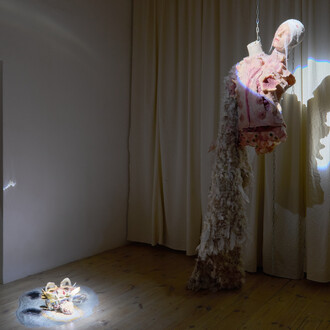
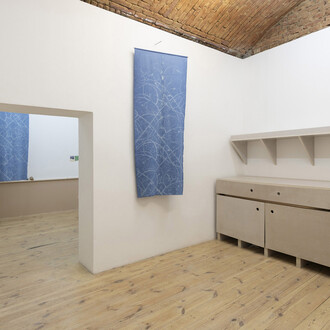
The exhibition is divided into two parts. The first, focusing on navigating a path through the forest, presents contact with our surroundings and with the fear of what might lurk within them – as in the space of projection of Shadows. This part of the exhibition features the work of Jana Schlosserová and Dominik Styk. Here Schlosserová investigates the legacies, relationships and upbringing that shape our own personal and shared Shadows. Her works present a parallel between her own personal story and that of an apple tree growing in her garden that bears the scars of callous treatment, which becomes a metaphor for generational wounding and healing. Within this context, the tree becomes a force that is simultaneously in a process of both taking root and transformation, in which pain and destruction can be the seeds of growth. The Shadow of destructiveness (of the old) may therefore become the force that gives birth (to the new).
Dominik Styk in his works then explores the relationship between the individual and society, between the cultivation of the body and the shaping of identity. Just as humans cultivate plants or animals, they also cultivate themselves – according to the ideas of others and their own projections and expectations. The need to control one’s life and to put it on display, not as it actually is but rather as it is supposed to be seen, is projected here onto the body, which becomes a subject, object and mask all in one. Through modification and masking, as individuals we thus both conceal and reveal ourselves – the mask might hide the face, but at the same time it presents to the public various aspects of the person. Styk draws inspiration from the historical figure of the ornamental hermit, a man who was employed in 1795as a living decoration in a private garden.
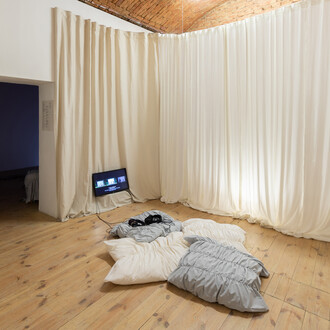
After our journey through the forest, the second room urges us to engage in introspection. The works of Radka Bodzewicz and Darina Alster are more consciously inward looking. In her sculptures modelled in virtual reality and printed on a 3D printer, Radka Bodzewicz explores the relationship between the persona and the Shadow – two inseparable levels of the human psyche which together constitute the wholeness of being. Her intuitive process of modelling, reminiscent of working with clay, brings together the archaic and digital, the material and spiritual. Her blue coloured models, evoking totems or gargoyles, combine the sacred and the profane, beauty and depravity. Bodzewicz thereby captures the essence of the symbols that awaken within us our collective memory and ancient myths, and illustrates that the dark and hidden may at the same time provide the key to understanding our own wholeness.
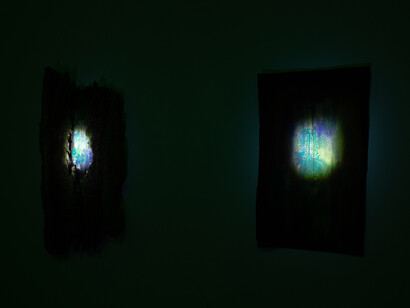
In her project entitled Timelessness, the artist Darina Alster develops the motif of the Shadow as a space in which layers of personal and collective memory encounter the unknown, absent or unconscious. From the inheritance of her mother, an art historian specialising in baroque, Alster has created a series of Rorschach images which function as a mirror – a projection screen for the unconscious. Fragments of the past disintegrate and are reassembled, just like our own identity, which is formed also by those parts of the collective unconscious that have been absent, suppressed or unknown in our lives. The projection thus becomes an encounter with inherited and personal Shadows – with what was previously displaced, and which therefore continues to influence our perception of time, memory and ourselves.
(Curatorial text by curator Tomáš Samek)