English
 Español
 Français
 Deutsch
 Italiano
 Português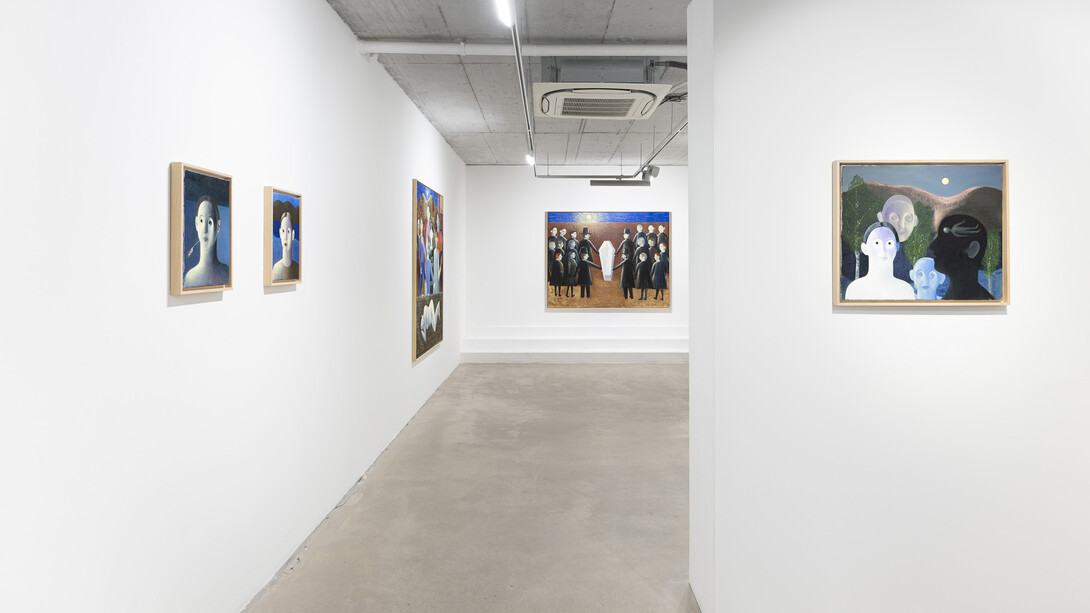
Everyday actions slip further from our control. Injustice and death have become the scenery of our lives. We seek comfort in quick hits of dopamine or in any faith that speaks to us. We long for a merciful gesture; we believe in sudden rescue, and search for redemption in escape – or in hope of transformation. Waiting for a miracle does not mean surrender. It is an acceptance of a tough reality, a yearning for change, or a reconciliation with what fate, higher powers, chance, or our own choices have bestowed upon us.
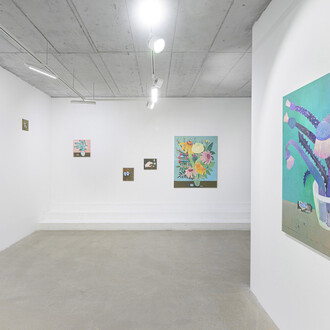
Krivošíková’s art has always been deeply personal. Instead of addressing grand universal narratives, the Vienna-based Slovak painter turns her attention inward, processing her most intimate memories and experiences. She draws and paints what lies before and around her, often though within her. In recent years, her visual language has evolved from reduced forms, geometric themes, and stylised figures toward a more expansive figurative expression. Complex figural scenes, landscapes and distinctive domestic still lifes that recall specific places, people and moments now dominate her canvases. Discernible self-portraits and depictions of loved ones alternate with images from her childhood home, the reservoir Môťová, or her endeared landscape of Sekier in central Slovakia. Krivošíková’s hand remains assuredly distant from realism, gravitating toward a dreamlike, cinematic atmosphere and a modernist deconstruction of figure. Yet, the way she paints can shape complete stories, fully intelligible in a broad context, even from the most intimate corners of her mind.
Krivošíková’s solo exhibition Waiting for a miracle arrives at a moment when it was not supposed to. It stands as both a memento and a moment of transformation – before and after. The works speak of the strength to endure even the unendurable. They capture distant memories, evoke unsettling atmosphere and a spectrum of emotions. Yet, above all, they respond to what the artist is experiencing right now. By nature, paintings are mute; nonetheless, within this present silence one hears void and pain, the slow rhythm, and the mounting tension. The way she confronts loss and trauma through her work allows her paintings to remain mementos of pleasant moments and hope.
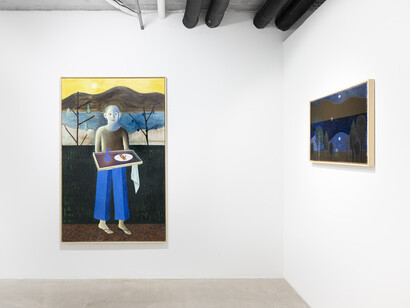
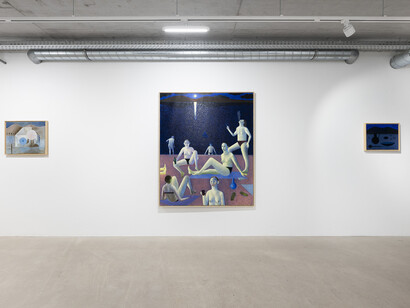
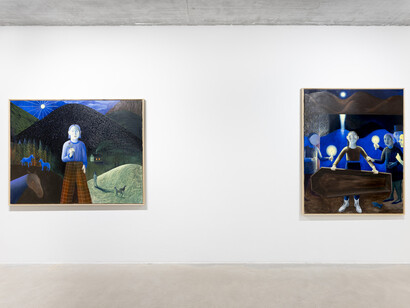
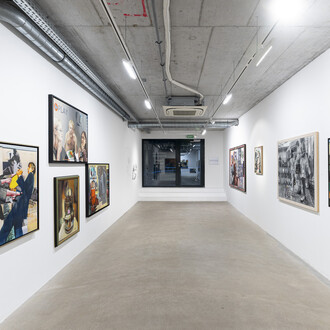
The selection of works from 2024–2025 reflects Krivošíková’s gradual turn toward a fully articulated figurative expression. We see solitary self-portraits and larger groups of figures. The focus shifts naturally from psychological introspection and the exploration of an individual’s inner world to the relationships and collective stories. Though the figures appear together, they remain distant – together, yet alone. Their presence is felt through restrained gestures and glances that reveal inner tension and emotional divergence. They resemble puppets suspended in separate dimensions. Sharing kindred features, they suggest a single masked presence behind them all. A sense of unity emerges – and with it, the echo of a universal human experience.
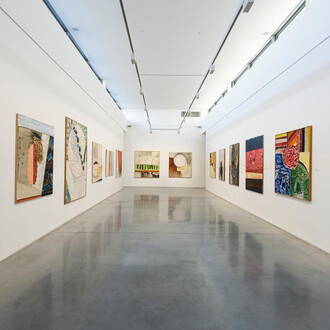
Direct encounter with Krivošíková’s recent works reveals her exceptional command of colour and texture, which become autonomous carriers of emotion. Muted tones intertwine with deep blues and greens, with subtle accents of warm red, ochre, and yellow. Nocturnal scenes evoke melancholy, tension and heavy, romantic spleen. Her use of impasto and texture lends the works a tactile expressiveness and a quiet dynamism within otherwise tranquil scenes. Alongside the pronounced use of symbolism of individual elements, one senses a turn toward nostalgia and visual poetry. Krivošíková’s paintings are psychological landscapes where inner worlds merge with outer realities, and the boundaries between dream, memory, and nightmare dissolve. Waiting for a miracle invites us to seek light within darkness – and to find beauty where it seems absent.