English
 Español
 Français
 Deutsch
 Italiano
 Português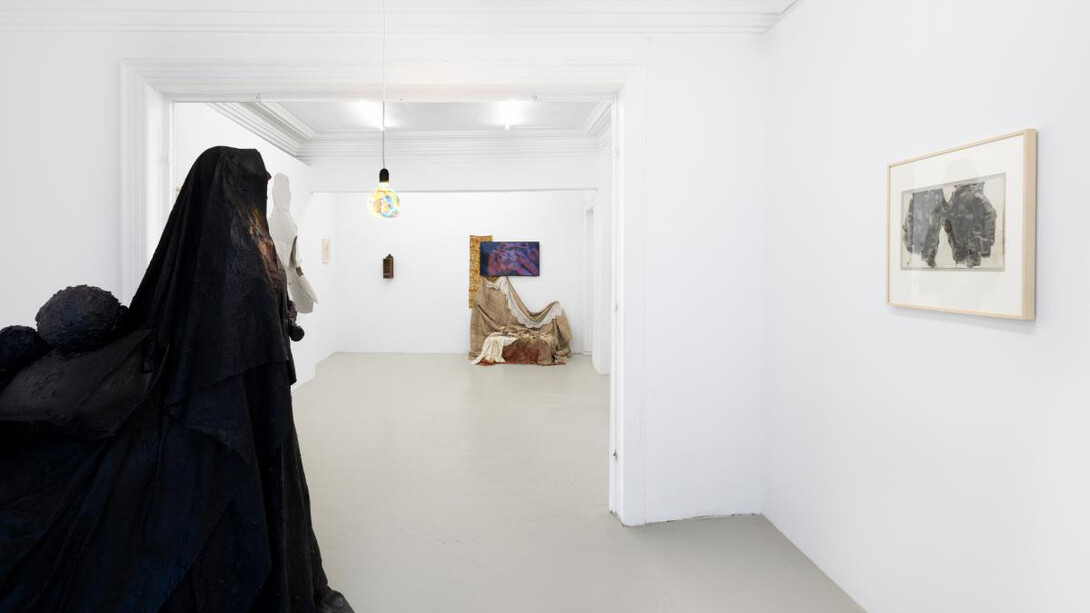
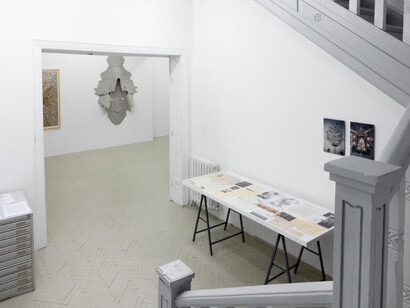
This exhibition was conceived starting from the Steaua story and serves as an introduction to its presentation at the National Museum of the Romanian Peasant.
In the winter of 1968, a group of students from the Scenography Department of the Institute of Fine Arts built a Christmas Star from various materials gathered for use in theatre sets and costumes, and set out through the streets of Bucharest to carol their professors. Their journey was abruptly interrupted by the Securitate while they were leaving the building where one of the professors resided, the other one that was accompanying them being brought in for questioning. But the star was saved and it was recently rediscovered and restored. The main initiators of the 1968 Steaua action were Miruna and Radu Boruzescu, a couple of scenographers who emigrated to Paris in the 1970s and went on to have an international career that left a lasting mark on the history of contemporary theatre.
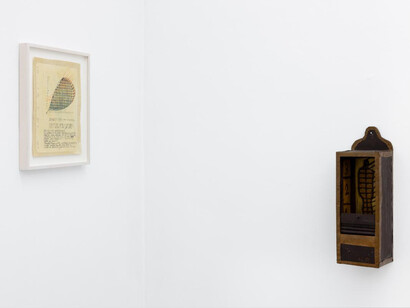
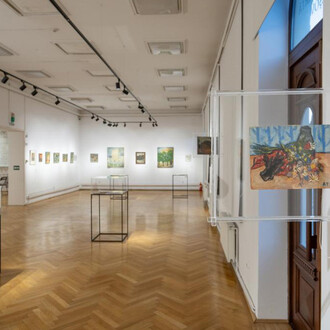
The exhibition brings together contributions from artists with whom the Boruzescu family maintained long-term connections, such as Horia Bernea and Paul Neagu, or Iulian Mereuță and Doru Covrig, both settled in France as well. The late 1960s represented the moment of Romania’s opening toward the Western context and the beginning of cultural exchanges between East and West, as well as an and an important step for the young generation of artists toward new means of expression aligned with international artistic movements. As a result of this brief political, cultural, and economic relaxation, they gained access to up-to-date publications, were able to travel, and laid the foundations for a dialogue that, on the one hand, infused their practice with new concepts, and on the other, made it possible for some of them to settle in the West over the following decade. The bonds of friendship and solidarity among them have endured through time and distance, being reflected in the exhibition through various materials from Radu Boruzescu’s personal archive.
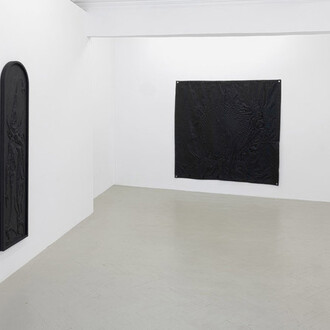
Alongside these contributions that highlight significant artistic practices emerging during the political thaw, three contemporary artists have been invited to create new works inspired by the 1968 Steaua and the social context in which it appeared.
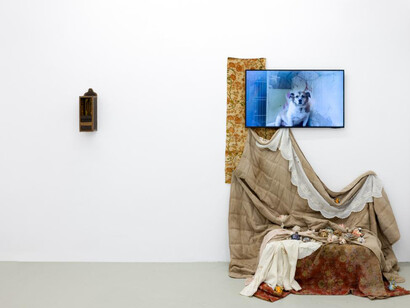
From her first encounter with the object itself, Giulia Crețulescu perceived it as a“silent manifesto of craftsmanship,” being moved not only by its structural intensity but also by the alchemy of the everyday materials that compose it. Her work refers to the concept of hyper-manuality, understood as a tool for introspection, a form of therapy through which the hostility of the outside world can be neutralized, a process of healing that can help us regain the courage to return to the communities without which we cannot survive. Ioana Mincu is interested in the performative aspect of the Steaua episode, in the tension between a simple collective gesture, its ritualistic interpretation, and its politicization in public space. Her project involves a participatory element and imagines a fictional celebration as an alternative to today’s consumerism, which has replaced the community spirit with the accumulation of objects and experiences. The ritual proposed by Ioana redirects attention toward people as well as other urban living beings, affirming a form of solidarity with the fragile lives that surround us. Mono Mihai directs his research more explicitly toward the political sphere, investigating the mechanisms through which a spontaneous action in public space comes to be perceived as a protest — a gesture of rebellion against authoritarian power, which will always respond with force. He draws a parallel between the biblical story evoked by the Christmas Star and the situation of today’s refugees, proposing a “monument to the refugee mother,” symbolically anchored in the dramatic realities of the present, such as the humanitarian crisis in Gaza and the transnational acts of solidarity with the Palestinian cause.