English
 Español
 Français
 Deutsch
 Italiano
 Português
Slow living is a quiet movement, a gentle rebellion against the rush. It invites us to live more balanced, meaningful lives by slowing down and learning to appreciate both the world around us and what we already have. It is a lifestyle that values mindfulness, intentionality, and presence over the constant acceleration of modern life. It asks us to simplify our routines, choose quality over quantity, and give our time to the things that hold true meaning, such as creativity, connection, and calm.
The philosophy of slowness is not new. It can be traced back to ancient teachings like Taoism and Buddhism, both of which honor simplicity, stillness, and harmony with nature. Across cultures, we find echoes of this wisdom in Spain’s siestas, Sweden’s fika, and Denmark’s hygge. Each tradition, in its own way, reminds us of the same truth: life is richer when we give it room to breathe.
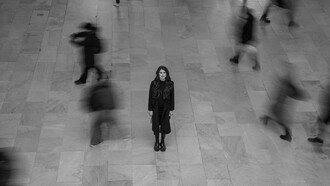
In our fast world, we often forget this. We live in constant motion, rushing from one goal to the next, rarely pausing to notice the quiet details that shape our days. The pace of our habits numbs our awareness. We stop seeing what is around us, and slowly, we stop feeling grateful for it. Living slowly, to me, means choosing to be conscious of the small, invisible things our hearts touch every day: the light on a wall, the sound of rain, the presence of someone.
There is something deeply human about the act of slowing down. When we stop rushing, we begin to listen, not only to others but also to ourselves. In that stillness, we often find what speed had made us forget: our own rhythm. A slower life gives space for depth, for softness, for being instead of only becoming. It allows us to notice how time feels when we are truly present, when we stop chasing what is next and start cherishing what already is.
Living a slow life, for me, means being conscious of the small details, the kind of awareness that makes ordinary moments feel extraordinary.
Have you ever watched a rainy autumn Sunday through your window and felt a quiet peace wash over you, that gentle reminder that beauty does not ask to be noticed; it simply exists?
Have you ever met someone who feels light to you, whose presence alone reminds you how simple kindness can feel like sunlight on the skin?
Have you ever achieved something you worked so hard for, yet found yourself strangely unfulfilled, wondering if the chase had replaced the joy of creation?
Have you ever looked back on a difficult chapter and, instead of bitterness, felt gratitude, realizing that every challenge carved a version of you that is stronger, softer, and wiser?
Have you ever stood in front of the mirror and, for a moment, simply accepted yourself, not as who you should be, but as who you already are?
Have you ever worn something that carried a memory—a coat passed down, a handmade piece, or a dress that has lived with you—and felt a quiet sense of connection, as if the fabric itself remembered your story?
Maybe this is what slow living truly means: not doing less, but feeling more. Not escaping the world, but returning to its rhythm.
Being able to see and feel the world we live in, in its simplest, most ordinary form, is the greatest gift we possess. It is a kind of inner wealth that no one can take from us. It becomes our quiet strength, the thing that keeps us grounded even in our most uncertain days.
The philosophy of slowing down reaches into every corner of our lives, even the way we dress. Slow fashion, much like slow living, is not only about sustainability; it is about connection. It invites us to buy less but better, to choose pieces that hold emotion rather than trend. A handmade piece, a vintage coat, or a dress we have worn for years—these are not just clothes; they are stories. They remind us that beauty takes time, that care leaves a trace, and that what is made with attention carries soul.
To dress slowly is to choose consciously, to understand that what we wear carries energy. The clothes we keep close to our skin hold fragments of our days: laughter, movement, and touch. When we choose them with intention, we create meaning. Slow fashion is a reflection of how we wish to live: patient, thoughtful, and aware. It reminds us that elegance is not found in excess but in essence.
In a world that celebrates newness, wearing something that lasts becomes a quiet act of resistance. Slow fashion teaches us that our choices are not just about style but about impact. Every fabric we wear and every stitch we choose is a reflection of the world we wish to create. When we dress with intention, we move with intention. And in doing so, we bring mindfulness into motion, transforming even the simplest act of getting dressed into a statement of awareness.
Perhaps the deeper beauty of slow living is that it helps us fall in love again with time, with patience, with our surroundings, and with ourselves. It reminds us that we are part of something larger, that the world is not waiting for us to catch up, and that it is waiting for us to notice it.
Little by little, we have lost touch with this awareness. We confuse speed with progress and busyness with purpose. But slow living reminds us that life is not something to win or optimize; it is something to experience. To slow down is not to fall behind; it is to finally align with the natural rhythm of things and our own timing.
Maybe this is the new form of elegance: not perfection, but presence. Not having more, but feeling more deeply what we already have.